By EdCaptain editorial desk · Published
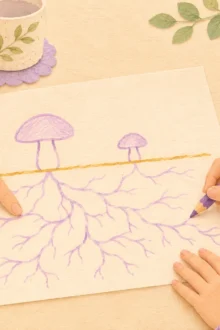
A BioBlitz is a focused effort to record many kinds of living things in a defined place and time. A family version can be as small as fifteen minutes in a garden, courtyard or park corner. It is not a complete census and it does not require collecting specimens. The value comes from careful observation, consistent boundaries and questions that invite a return visit.
Define the count
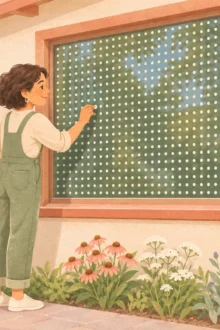
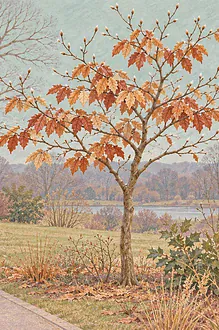
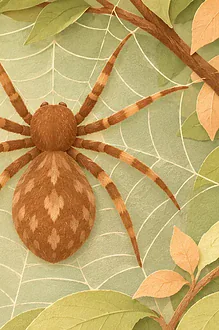
Choose an adult-approved area with clear edges: one flower bed, a ten-metre path or the view from a balcony. Set a start and finish time. Decide which broad groups you will notice, such as plants, birds, insects, spiders, fungi and other animals. Check local rules before observing in a protected area.
Useful equipment
- Notebook or simple tally sheet
- Pencil and clipboard
- Phone or camera used without location sharing
- Magnifier used above the ground
- Sun protection, water and weather-appropriate clothing
- Optional local field guide
Leave wildlife, nests, eggs, fungi and plants where they are. Do not turn logs, reach into holes, feed animals or handle an unknown organism. Stay on permitted paths and supervise children near water, traffic, steep ground or stinging insects. Wash hands after outdoor exploration.
Run the mini BioBlitz
- Record the date, time, weather and exact observation boundary.
- Spend two quiet minutes looking and listening before moving.
- Make one tally for each distinct kind you notice. If you cannot identify it, use a description such as “small green beetle.”
- Take a clear photograph when it can be done without disturbance.
- Mark uncertain identifications with a question mark rather than guessing.
- Stop at the agreed time and review the list away from sensitive wildlife.
Two observations may be the same species seen twice, so decide whether you are counting individual sightings or distinct kinds. For a short family activity, distinct kinds are usually simpler. A formal BioBlitz may involve experts who confirm species; a family list should be described as preliminary.
Give everyone a role
One person can watch high places, another can inspect leaves without touching, and another can record sounds. Preschoolers can match colours or shapes. Children aged 6–9 can tally broad groups. Ages 10–12 can compare microhabitats, while teenagers can research identification features and data quality. A participant with limited mobility can lead a stationary count, manage photographs or listen for birds from an accessible viewpoint.
Ask questions the count can support
- Which group had the most distinct kinds?
- Where did we notice more life: sun or shade, high or low, dry or damp?
- What could we not identify from our evidence?
- How might time of day or weather change the result?
- What would we keep exactly the same on a return visit?
Do not conclude that an area has low biodiversity because a short count found few organisms. Season, weather, observer skill and animal movement all influence the list. Repeat the same method later and compare cautiously.
Follow up with animal and nature movement games, the seed germination investigation, or clean-up and recycling games. If litter is present, an adult should assess it; children should never pick up sharp, medical or unknown waste.
Share responsibly
If you upload observations to a community-science platform, an adult should review privacy settings and hide precise locations for homes, schools and sensitive species. Share habitat details without identifying a child or routine. Finish with one stewardship action appropriate to the place, such as staying on paths, leaving leaf litter where permitted or joining an organised clean-up.
Repeat with one question
Return at a different time of day or after a weather change, keeping the same boundary and duration. Before starting, write one prediction. Compare the lists without claiming that the time or weather alone caused every difference. A repeated mini BioBlitz is strongest when it produces better questions and more careful identification.