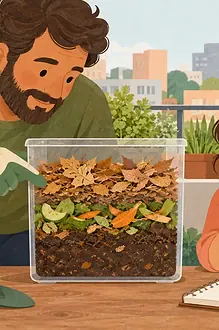
Seeds are often planted in soil, so it is reasonable to predict that soil is required for the first sprout. NASA’s “Do Plants Need Soil?” investigation shows a more interesting answer: seeds can begin germinating on moist cotton, while soil helps hold water and nutrients needed for longer growth. Children can test the claim rather than simply accepting it.
Materials
- Four clear cups or jars
- Cotton balls or folded paper towel
- Potting soil
- Four to eight large, untreated seeds of the same type, such as beans
- Water and a dropper or measuring spoon
- Labels, ruler and observation sheet
- A tray for spills
Check seed and mould allergies before starting. Use seeds too large to swallow with young children. Experiment seeds, soil and cotton are not food; do not eat them.
Ask a precise question
“Do seeds need soil to begin sprouting?” is different from “Can a plant live forever without soil?” Define germination as the early stage when the seed coat opens and a root or shoot emerges. Decide what counts as sprouted before the test begins.
Set up two conditions
- Put equal amounts of damp cotton in two cups and equal amounts of moist soil in two cups.
- Place the same number and type of seeds in each cup at a similar depth or position.
- Add the same measured amount of water. The materials should be moist, not flooded.
- Place all cups together so light and temperature are as similar as possible.
- Label cotton and soil without hiding which is which; this is a comparison, not a guessing trick.
Using two cups per condition gives a small repeat. If one seed is damaged, the whole conclusion does not depend on it.
Observe without disturbing
Check once a day at about the same time. Record:
- How many seeds have sprouted
- Days until the first root appears
- Root or shoot length
- Colour, moisture and any mould
Draw, photograph or dictate observations. Add equal water only when needed, using the same rule for each condition. Do not pull seeds out daily; movement can damage delicate roots.
Handle mould safely
Keep cups ventilated and avoid soaking them. If fuzzy growth appears, an adult should seal and discard the contents without sniffing or touching the mould. Clean the area and wash hands. Children with significant mould sensitivity should observe a sealed setup or use another activity.
Interpret the result carefully
If seeds sprout on cotton, the evidence shows that this seed type did not require soil for initial germination under these conditions. It does not show that plants need no nutrients or that every seed behaves identically. A seed contains stored energy for an early start; continued growth needs suitable water, light, air, space and nutrients.
After roots and first leaves appear, transplant some seedlings carefully into soil and continue observing. Leave one on cotton only if it can be maintained hygienically, then compare later growth.
Variations by age
- Ages 3–5: Use two cups, count sprouts and draw daily changes with an adult.
- Ages 6–9: Use repeats, measure roots and make a simple table.
- Ages 10–12: Calculate germination percentage, graph average length and identify uncontrolled variables.
Accessible participation
Use a large-print or tactile observation chart, pre-measured water, a stable tray and easy-grip dropper. A child can direct setup, photograph results, dictate notes or be the daily timekeeper. For low vision, use pale beans against dark cotton or dark beans against white cotton and describe changes aloud.
Reflection
- Did both repeated cups behave similarly?
- What did soil change, and what did it not change?
- Which conditions did we actually keep equal?
- What new test would separate light, water or temperature?
Continue scientific comparison with four quick kitchen experiments, build-and-test challenges or the magnet detective activity. A fair test does not need a dramatic result; it needs a clear question, careful conditions and honest observations.