By EdCaptain editorial desk · Published
Your child calls a spider an insect. Correcting the word takes a second; helping them understand the difference is more interesting. Both animals may be small, have jointed legs and turn up around plants. Why put them in different groups?
Spiders are arachnids. Insects belong to a different group. Both are arthropods: animals with jointed limbs and an external skeleton. A useful comparison looks at the whole body plan, rather than treating “small and crawling” as a scientific category.
For children aged 6–12, photographs in a reliable book or museum resource are enough. You do not need to catch, touch or bring an animal indoors to find the clues.
Three features to compare
Begin with a clear picture of an adult insect, such as a beetle, and a spider. The Smithsonian’s introduction to insects describes the insect body plan. The Australian Museum’s spider resource explains the spider’s two main body sections.
| Feature | Adult insect | Spider |
|---|---|---|
| Walking legs in the body plan | Six: three pairs | Eight: four pairs |
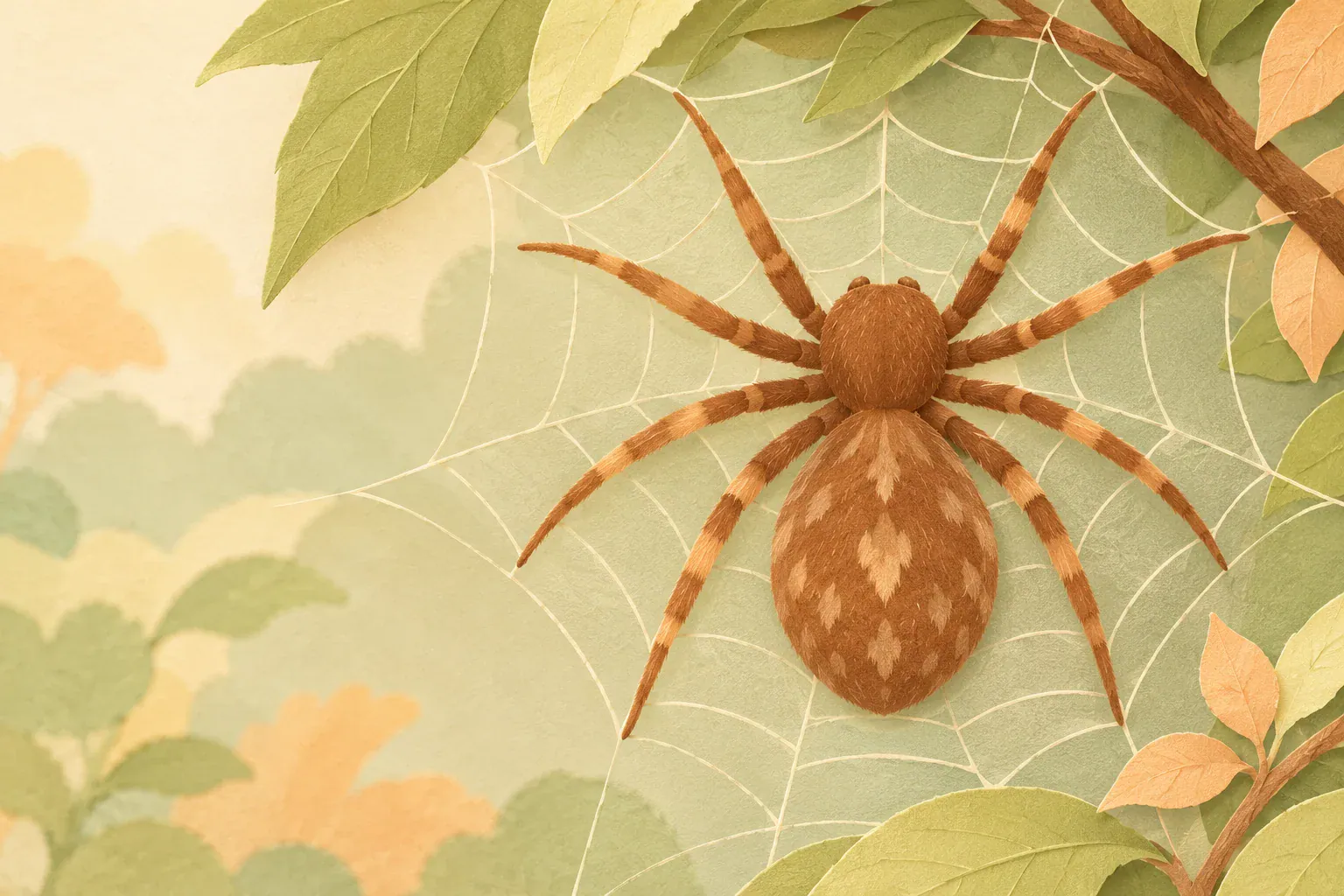
| Main body sections | Head, thorax and abdomen | Cephalothorax and abdomen |
| Antennae | One pair | None |
You can call the spider’s cephalothorax its “front body section” at first. There is no need to pronounce a long word correctly before noticing that the layout differs. The insect’s legs attach to its thorax; a spider’s walking legs attach to its front section.
Try: “Let’s check more than one clue. How many leg pairs can we see? Where do they join the body? Can we find antennae?” Your child can learn the technical names after they understand the comparison.
Use pictures that give the question a fair chance
A side view may hide half the legs. A curled-up animal, a blurred photograph or an illustration with invented features may be hard to interpret. Choose a labelled museum photograph or an accurate body diagram with the main features visible. An adult should preview any page or video so unexpected close-ups do not become a distressing surprise.
For the first comparison, use adult insects. Young stages can look quite different from adults, so a caterpillar is a more complicated starting example than an adult beetle. Also avoid using wings as the deciding clue: some adult insects are wingless.
The Australian Museum’s spider identification guide notes that spiders have no antennae or wings. It also describes pedipalps, small appendages near the mouth that can look leg-like. If a picture seems to show extra legs at the front, check its labelled anatomy rather than changing the walking-leg count.
A short compare-and-check activity
Gather: scrap paper, a pencil, and reliable pictures of one spider and two different adult insects. A clear adult beetle and grasshopper make a useful pair. View images in a book you have or at the source website; you do not need to download or republish museum pictures.
Work somewhere comfortable with space to enlarge a picture. Draw three headings: “Leg pairs,” “Body sections” and “Antennae.” Add a fourth space marked “Cannot tell.”
- Start with one insect. Follow the legs in pairs if the view allows it. Mark what is visible, then check the source’s description of the animal’s body plan.
- Compare the spider. Look for its front section and abdomen. Trace the walking legs with a finger near the page or with an on-screen pointer, without touching a real animal.
- Explain the difference. Invite a sentence using two clues: “The spider is not an insect because its body plan has four pairs of walking legs and two main body sections.”
- Try the second insect. Ask whether it shares the first insect’s basic plan even though its shape or size is different. Return to the features, rather than deciding from colour.
- Practise uncertainty. Cover part of a picture with plain paper. Ask which clues are now hidden. Put those features under “Cannot tell,” then uncover the view and check again.
For ages 6–9, an adult can read the labels and write down the child’s observations. Start with legs and body sections; add antennae when they are clearly visible. For ages 10–12, ask which evidence supports the group and which details remain uncertain. As a variation, let the child choose which part of a picture to cover and explain why that makes identification harder.
Use high-contrast pictures, enlarged views, spoken descriptions or raised lines in your own simple drawing. A child can direct a partner’s pointing or dictate the comparison. If a close-up feels uncomfortable, use a small labelled diagram or read the feature descriptions without displaying a photograph. Nobody needs to prove bravery to take part.
Eight legs is a clue, not the whole answer
The Burke Museum’s explanation of the eight-leg myth points out that other arachnids, including scorpions and harvestmen, also have four pairs of legs. Animals can lose legs too. A count in one photograph is not always the complete body plan.
So avoid turning the table into “anything with eight legs is definitely a spider,” or “anything with six visible legs must be an insect.” Multiple features and a reliable identification source matter. For a family observation, “not enough detail to tell” is often the most accurate answer.
Keep curiosity separate from handling
Knowing an animal’s broad group does not identify its species or establish whether it is safe to touch. Leave spiders, webs and egg sacs undisturbed. Do not put hands under bark, into holes or beneath objects to find a better example. If an unfamiliar animal is in a place that needs attention, keep children back and let an adult seek appropriate local advice.
For a wider outdoor observation, the family mini BioBlitz explains how to record broad groups without collecting wildlife. The pollinator container-garden guide offers another way to watch visiting insects from a suitable viewing place. Carry the same habit into either activity: describe what the evidence shows, leave the animal alone and keep uncertain labels provisional.
Sources and further reading
- Smithsonian National Museum of Natural History: the insect body plan.
- Australian Museum: spider anatomy and identification features.
- Burke Museum: why eight legs alone do not prove spider.
Read our editorial policy and review methodology.