An electronic toy can begin talking when someone walks past, repeat the same song after every touch or flash faster than a child expects. One child may love the effect; another may cover their ears, lose track of the play or become distressed. The useful question is not whether the toy is “good” or “bad.” It is whether its sound, light and timing can fit the child and the room.
Test it before the child does
Move out of the shop’s noisy demo area and use the toy in a quiet space if returns are still possible. Test every button, motion sensor, volume level and idle mode. Check whether it restarts by itself, plays continuously, uses sudden sound effects or flashes when switched off but still powered.
The AAP warns that toys for infants and toddlers can be loud enough to risk hearing because young children may hold them close to the face or ear. Listen at the distance the child will actually use it, not only from across the room.
Find the real off switch
Look for separate settings for power, volume, lights and demo mode. Confirm whether the switch can be reached by the child and whether it stays in the chosen position. If the toy has an app or remote, the physical toy should still have a clear way to stop.
Remove batteries only when the manufacturer allows the toy to be used unpowered and the compartment remains securely closed. Never leave loose batteries where a child can reach them.
Reduce sound safely
Choose the lowest useful volume. If the manufacturer permits it, a small piece of firmly attached tape over the speaker grille may reduce output; check frequently that the tape cannot detach and become a mouthing hazard. Do not cover ventilation openings or modify internal electronics.
Stand an arm’s length away and see whether the child can still hear an ordinary voice during play. If the toy causes ringing, pain, muffled hearing or difficulty hearing afterward, stop using it and seek qualified medical advice.
Make light and movement predictable
Use a steady-light setting instead of rapid flashing where available. Turn the toy so lights are not directly at eye level, and avoid using it in a dark room where contrast is stronger. Show the child how to start and stop each effect before independent play.
A child with a history of photosensitive seizures needs individualized medical guidance; a household setting is not a substitute. If any child has a seizure, follow their emergency plan and seek urgent help as directed.
Offer consent and a quiet alternative
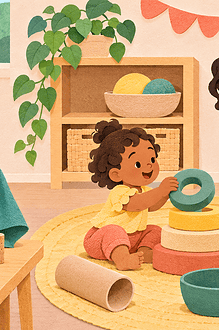
Say, “The song starts when I press this. Ready?” Respect no, stop or moving away. Do not repeatedly activate a disliked feature to “get them used to it.” Keep a non-electronic version nearby: plain blocks, a soft doll, a push vehicle, drawing materials or a toy instrument the child controls directly.
The AAP’s toy guidance favors materials that match a child’s abilities and interests and leave room for interaction. EdCaptain’s sensory-overload recovery plan can help families respond if play becomes overwhelming. The safer toy buying guide covers batteries, magnets, construction and age labels.
Change the environment, not only the toy
Use one sound-making toy at a time, turn off background television and store noisy toys where they do not activate accidentally. A soft mat can reduce impact noise. Build quiet periods into the day without treating silence as a reward or punishment.
Review whether the toy still serves the play
Watch what the child actually does. Are they making choices and inventing play, or only pressing the same sensor because the toy demands attention? Can they stop without a struggle? Would the toy be more useful with sound off?
A successful adjustment makes the toy more controllable, not the child more tolerant. If the essential feature cannot be made safe and comfortable, return, replace or retire the toy.