By EdCaptain editorial desk · Published
A toy library can let a family try something new without finding permanent shelf space for it. But the first visit involves more than choosing an appealing box. Someone needs to understand the membership, collect the right pieces and get the loan back in the condition and time agreed.
Give those jobs a little attention before joining. This guide is for the adult arranging a loan; it does not recommend a particular toy or age range. Use the actual item’s age guidance, warnings and instructions when deciding whether it fits your household.
Find out what the service actually offers
Toy Libraries Australia describes toy libraries as community services lending toys, games and puzzles for home use. Its overview also makes clear that membership costs, borrowing periods and arrangements for loss or damage vary. A service described as a toy library may have quite different stock and operating hours from another nearby.
Ask whether you can browse before joining, see the catalogue or speak with someone about access. Check which ages and interests the collection serves. If you need large handles, quieter toys or equipment that can be used from a seated position, describe that need rather than relying on a catalogue category such as “sensory”. Ask what is actually available.
Check the journey too: opening hours, steps, parking or public transport, carrying distance and the size of the item. A large toy that cannot travel safely in your vehicle is not a manageable first loan. You can start with one small, complete set even when membership permits more.
Read the membership duties before paying
Ask for the current terms that apply to your chosen membership. Make a short private note:
- What does membership cost, and is there a deposit or other charge?
- Are volunteer shifts required, optional or linked to a reduced fee?
- How many items may be borrowed, and do puzzles or large toys have different limits?
- Who may collect or return items on the member’s behalf?
- What happens if you cannot attend a shift or need to stop membership?
Consider the time commitment alongside the price. A volunteer option may suit one household and be impossible for another. Ask about alternatives before agreeing to duties you cannot realistically complete; there is no need to justify your family’s circumstances to other members.
Keep the library’s contact route with the membership record. If different adults will handle the loan, agree who checks messages, requests any renewal and completes the return. Share the practical details without sharing account passwords unnecessarily.
Do not import another library’s return rules
The difference can be substantial. Minnesota Toy Library’s FAQ recommends a four-week borrowing period while stating that it has no late fees or due dates. By contrast, Carnegie Toy Library’s terms specify borrowing periods by membership, renewal conditions and overdue charges. These are local examples, not rules for your loan.
Before taking anything home, confirm the return date, place and opening session. Ask whether a reservation limits renewal and how to request extra time. Put the actual return arrangement in your calendar, allowing for collection hours rather than assuming you can drop a box off at any time.
If the date clashes with travel or a difficult week, choose another item or wait. Borrowing fewer things is a reasonable way to make the arrangement work.
Check one complete item together
At checkout, ask how the service records contents and existing damage. Keep the item identifier, inventory and packaging with the loan. A useful first check is:
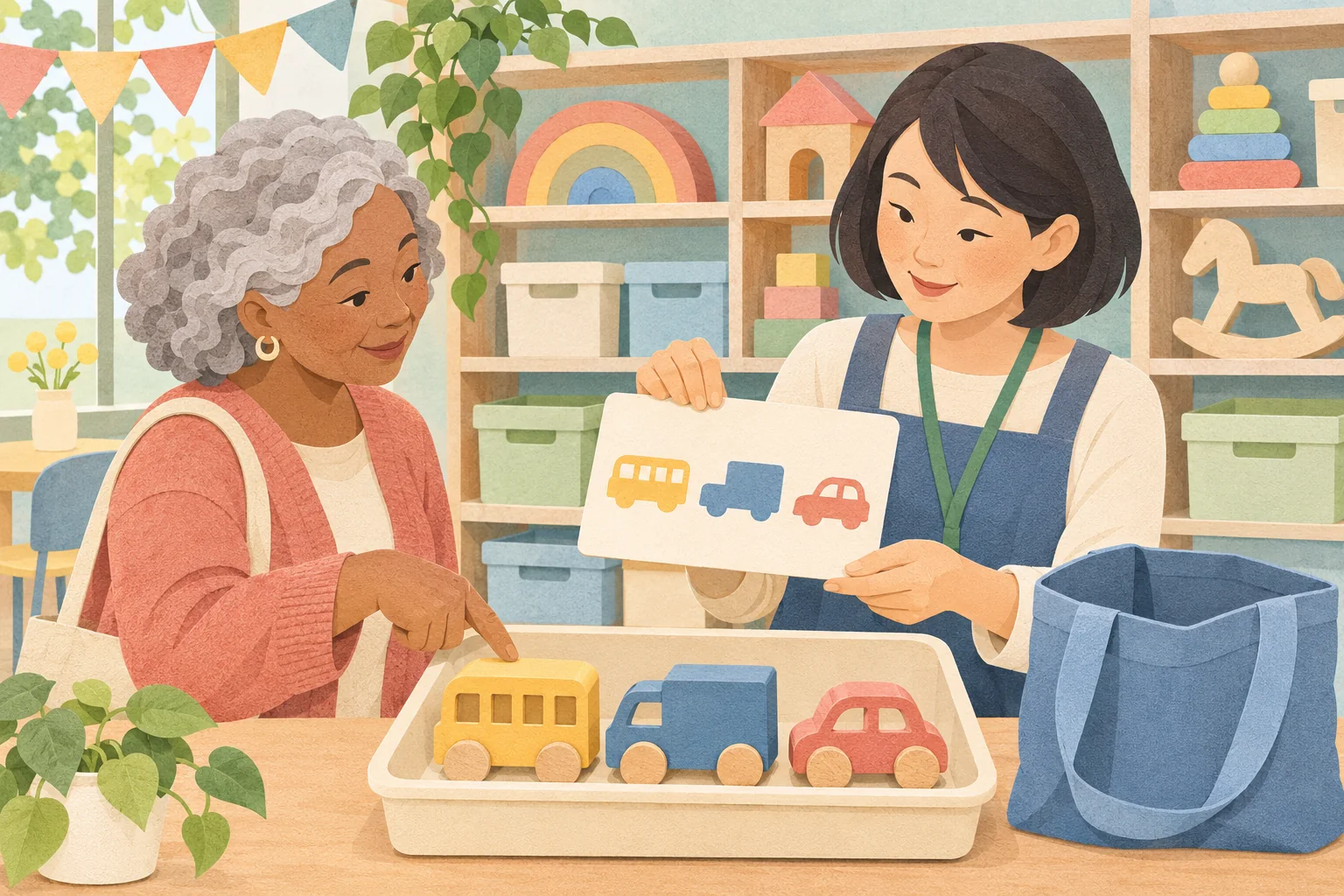
- Compare the pieces with the supplied list or photograph.
- Locate instructions, accessories and any container that must be returned.
- Ask about damage, wear or a discrepancy you notice.
- Confirm when and how to report something discovered at home.
- Record the agreed return and care instructions before leaving.
Carnegie, for example, requires members to check contents within 24 hours and report missing pieces. Your library may use a different process. Do not assume that a general “complete” label replaces the check it asks members to make.
If a toy looks damaged or an essential safety component is missing, set it aside and ask staff before use. Borrowing does not make age warnings or supervision instructions optional. For a board game, our mixed-age and ability guide can help you examine the actual reading, reach and waiting demands once the set is complete.
Keep care instructions with the borrowed toy
Ask for the library’s cleaning directions for that item and check its own care instructions. Do not assume everything can be soaked, sprayed or put in a dishwasher. If the two sets of directions appear inconsistent, ask the service to clarify before trying a method.
Choose a place for the supplied bag, tub, lid and inventory where adults can find them. Keep packaging inaccessible where it could create a hazard for a child. Separate borrowed pieces from similar toys already owned, and keep small parts out of reach of younger children.
Plan where the loan will be used and stored without blocking routes through the room. Our toy-rotation guide offers ways to make choices visible while protecting favourite belongings and ongoing projects. The loan does not require a complete reorganisation of your home.
If something goes missing, tell the library
Use the agreed contact route promptly, giving the item identifier and an accurate description. Say whether the discrepancy was present on arrival or noticed later; if you do not know, say so. Minnesota’s FAQ describes case-by-case decisions about missing or damaged items, illustrating why a replacement outcome should not be guessed.
Do not quietly replace a piece from another set, attempt a repair or keep the whole loan indefinitely while searching. Carnegie expressly prohibits unapproved substitutions and attempted repairs. Ask your service what to do, including whether to return the remaining pieces now and continue looking at home.
Before return, follow the agreed care process, count against the inventory and include the container and instructions. Report unresolved problems at handover and confirm that the loan has been checked in. A final question can be simple: “Is anything still outstanding on this item?”
After the first loan, review the whole experience: did the toy fit, could you manage collection and care, and was returning it straightforward? That answer is more useful than borrowing the maximum number next time.
Sources and further reading
- Toy Libraries Australia: how toy libraries work and why arrangements vary
- Minnesota Toy Library: membership, care and missing-item FAQ
- Carnegie Toy Library: membership duties and borrowing conditions
Read our editorial policy and review methodology.