By EdCaptain editorial desk · Published
“Can you glue it so it never breaks?” is an understandable request after a carefully built roof falls off. It may also be an adult’s idea after moving the same model off the dinner table for the third time. Before reaching for adhesive, work out what needs protecting: the assembled shape, a particular detail, the story behind it or the chance to play with it again.
For LEGO bricks, the manufacturer’s answer is clear. Its guidance on bricks and glue advises against any type of glue, explaining that it can change the bricks’ shape. It also values being able to take pieces apart and rebuild. A preservation plan can respect the finished creation without making a permanent change to the pieces.
This guide is for caregivers deciding what to do with an existing build. It is not a recommendation for a particular set or child age. Follow the actual product’s age guidance and warnings. A craft kit designed to use adhesive needs its own instructions; do not apply advice about removable building bricks to every kind of model.
Ask what “keep it” means
Show that you have noticed the work before discussing storage: “You worked out how to make that tower lean. Which part do you most want to keep?” The answer may change the plan. A child might want the whole scene left untouched, the small vehicle available for play or a picture of a version they are about to redesign.
Then explain what you can offer accurately: “I can help find a steadier place and take pictures. I can’t promise that no piece will ever come off.” Avoid promising that a display case, tray or adhesive makes the model unbreakable.
Keep other people’s property separate. A borrowed set, a sibling’s bricks or a shared collection cannot become permanently committed to one model without agreement. The child’s attachment matters, and so do the other owners’ choices.
Choose a place before choosing a container
Look at where the model will actually wait. Check its footprint, height and any parts projecting beyond its base. Choose a stable location where it will not be repeatedly knocked, pulled or shifted to open a cupboard. Keep doorways, walking routes and everyday work surfaces usable.
Do not create a climbing temptation by putting a valued toy somewhere the child can only reach by standing on furniture. If the safest location requires adult help, make that clear and agree how the child can ask for access. Keep small pieces inaccessible to babies, toddlers and anyone who mouths objects.
A suitable shallow tray may help keep a small model and any detached parts together, provided the entire base fits and the tray can support it. It is not a guarantee against collapse. Adults should handle a heavy or awkward assembly rather than expecting a child to carry it by a roof, wing or tower.
For a large or fragile build, pause before moving it. Check its instructions for intended sections or handling guidance. Do not lift experimentally by a decorative piece or improvise a suspension system. If it cannot be moved safely as one piece, photograph it in place and plan the next step with the builder.
Make a record that could actually help later
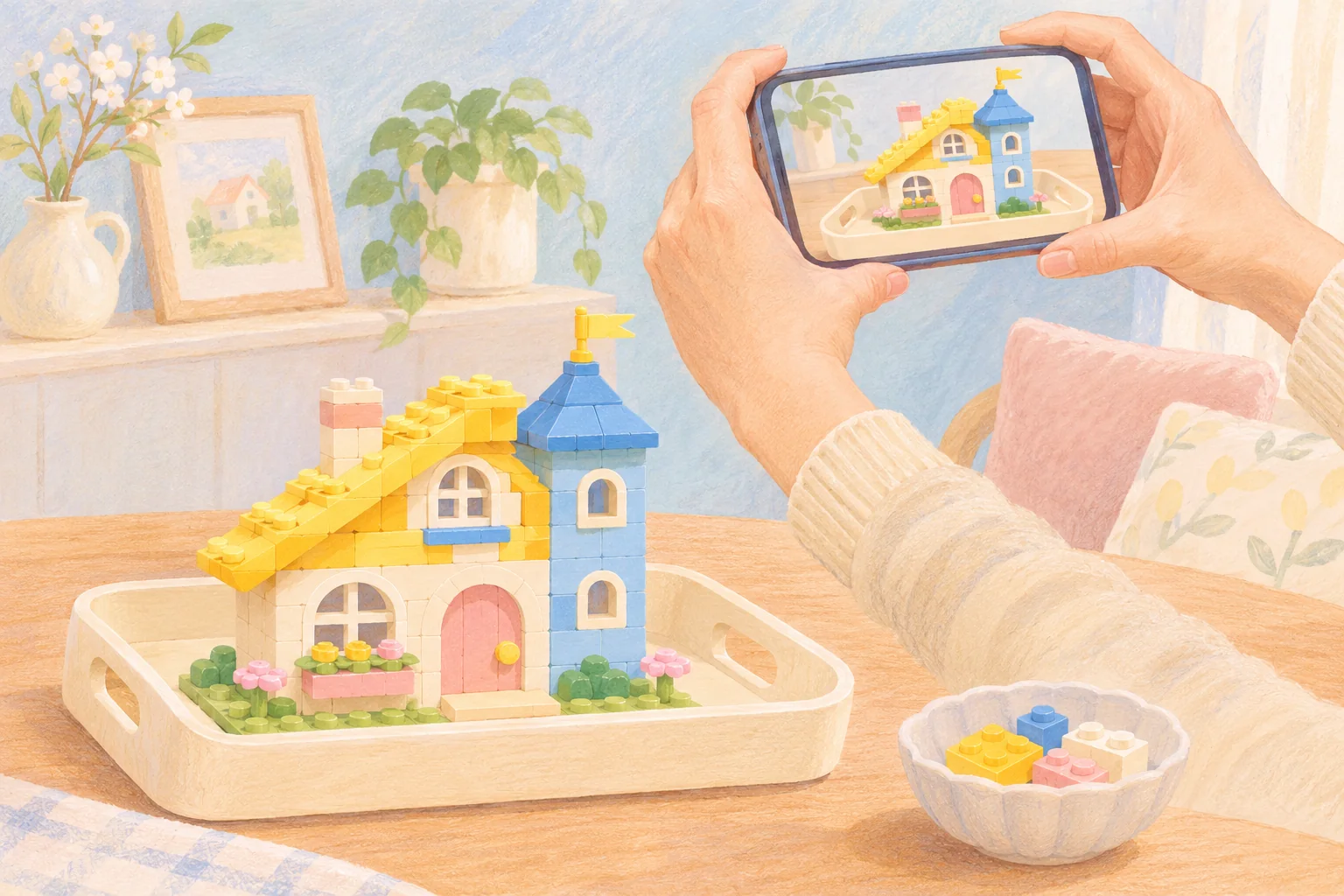
A single distant photograph may preserve the feeling of the build but miss how the back was made. If the child wants a useful rebuilding record, try this short sequence:
- Take an overall view with the whole model visible.
- Photograph the other sides without turning or lifting it precariously.
- Capture the details the builder identifies as important.
- Record a short explanation of an unusual connection or hidden section if the child wants to describe it.
- Keep the pictures together with the set identifier or original instructions, where relevant.
Use an adult’s device and keep the record private unless there is a separate decision to share it. The child does not need to appear in the photographs. A drawing or spoken description is another option. Be honest that these records may help, but do not guarantee an exact reconstruction.
Agree what happens when space runs out
Set a concrete boundary around the actual available space: “This tray fits here. Before another large build uses this spot, we need to decide what happens to this one.” Agree when to revisit the choice. That is different from quietly dismantling a model because it looks finished to an adult.
The options need not be only permanent display or complete disassembly. The builder might keep a favourite section, adapt the scene or choose a different version after recording this one. LEGO’s rebuilding ideas suggest changing an existing creation before taking it apart altogether. Treat that as an invitation, not a reason the child must be ready today.
Our toy-rotation guide covers the wider storage system. For this decision, keep attention on the particular build and what its maker wants to preserve.
If the decision is to take it apart
Keep the record and relevant instructions first. Work on a clear surface with a container for loose elements. An adult can do the physical separating while the builder directs what stays together; participating does not have to mean pulling every piece personally.
For tight connections, use the manufacturer’s appropriate tool and directions. LEGO’s Classic Brick Separator guide illustrates different methods for different connections and stresses keeping the rest of the assembly steady. Follow the matching illustration rather than treating the tool as something to force into any gap.
If parts have already been glued, do not use those ordinary separation instructions as an adhesive-removal method. Avoid experimenting with solvents, heat or sharp tools around a child’s toy. Ask the manufacturer about the actual parts and adhesive, and keep the altered assembly out of play while its condition is uncertain.
Likewise, glue is not the answer to cracked, brittle or damaged pieces. Our damaged-toy decision guide addresses that separate safety question.
Finish with a plan everyone can describe: where the model stays, who moves it, what has been recorded and when the next decision happens. Keeping a creation valued does not require promising to keep every brick joined forever.
Sources and further reading
- LEGO: manufacturer advice on bricks and glue
- LEGO: options for adapting and rebuilding existing models
- LEGO: illustrated Classic Brick Separator instructions
Read our editorial policy and review methodology.