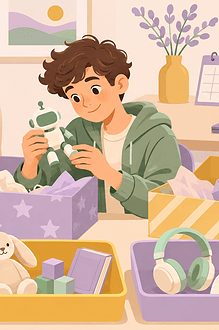
An older child may enjoy simple cause-and-effect play, large pieces or repeated sensory experiences while strongly preferring themes that match their actual age. Choosing a toy marked for a much younger child can solve one access problem and create another: the design, sound or packaging may feel babyish or expose the child to teasing.
Start with dignity and interest. Adapt the mechanics without shrinking the child’s identity.
Separate three different questions
- Safety age: Does the label identify choking, battery, magnet, projectile or other hazards?
- Access: Can the child see, hear, understand, reach and operate the toy?
- Interest: Does the theme, look and social context appeal to this particular child?
CPSC guidance says families should follow age and safety information while matching toys to a child’s interests and abilities. Safety warnings are non-negotiable; a broad developmental marketing label is not a definition of the child.
Ask the child in an accessible way
Offer real options using objects, photos, demonstrations, signing, speech, eye gaze or the child’s communication system. Ask about themes and activities: music, vehicles, animals, cooking, building, sport, fashion, stories or collecting. Do not ask only, “Do you like this?” after an adult has already bought it.
Observe what the child returns to, but do not interpret repetitive play as a request for more baby toys. They may enjoy predictability, sound, movement or a specific texture that can be found in an age-respectful design.
Write an access profile
Note useful features such as:
- large or high-contrast components;
- one-step activation or switch access;
- adjustable volume and lights;
- stable bases and easy-grip handles;
- clear beginnings and endings;
- rules shown with pictures or demonstrations;
- durable pieces that tolerate the child’s way of handling them.
Also note what to avoid: sudden sound, tiny text, tight assembly, rapid timers, fragile parts or materials the child mouths. An occupational therapist or other qualified professional may help with access when needed, but a toy does not need to become therapy to deserve a place in the child’s life.
Adapt without taking over
Use a nonslip mat, card holder, larger knob, switch interface or container that presents fewer pieces at once. Ask permission before physical assistance. Preserve decisions: the child chooses the song, character, colour, target or next step even if another person performs part of the movement.
Special Olympics play resources emphasize valuing children for their talents and abilities and creating inclusive participation. The same principle applies at home: support should expand the child’s role, not turn them into a spectator.
Consider the social setting
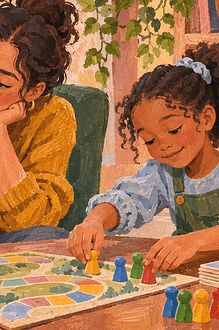
A toy used privately may not need the same presentation as one taken to school or a youth group. For shared play, choose themes peers recognize and roles that matter. Explain adaptations to other children without sharing a diagnosis: “This holder keeps the cards steady,” or “Everyone can choose how to roll.”
EdCaptain’s guide to opening the whole toy box beyond stereotypes supports interest-led choice. The game accessibility trial offers a task-based method that also works when comparing physical toys.
Trial before committing
- Borrow, demo or buy from a seller with a clear return policy.
- Test one real task in the intended environment.
- Watch effort, comfort, independence and enjoyment.
- Ask what the child wants changed.
- Return or adapt the toy if the essential activity remains inaccessible.
Review as interests change
Do not freeze a child at the age when adults first found a toy that worked. Revisit music, colour, characters, challenge and social use. Keep beloved items without shame while offering new choices that reflect the child’s growing identity.
An age-respectful toy is not necessarily complex. It is safe, accessible and presented in a way that recognizes the older child as the person they are now.