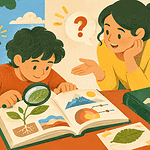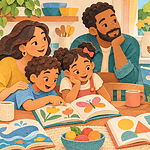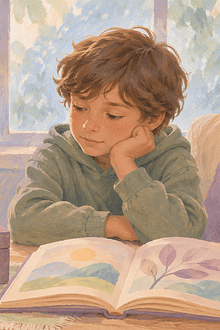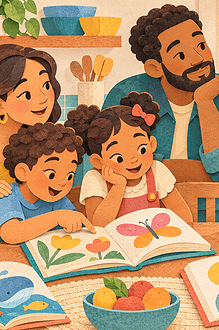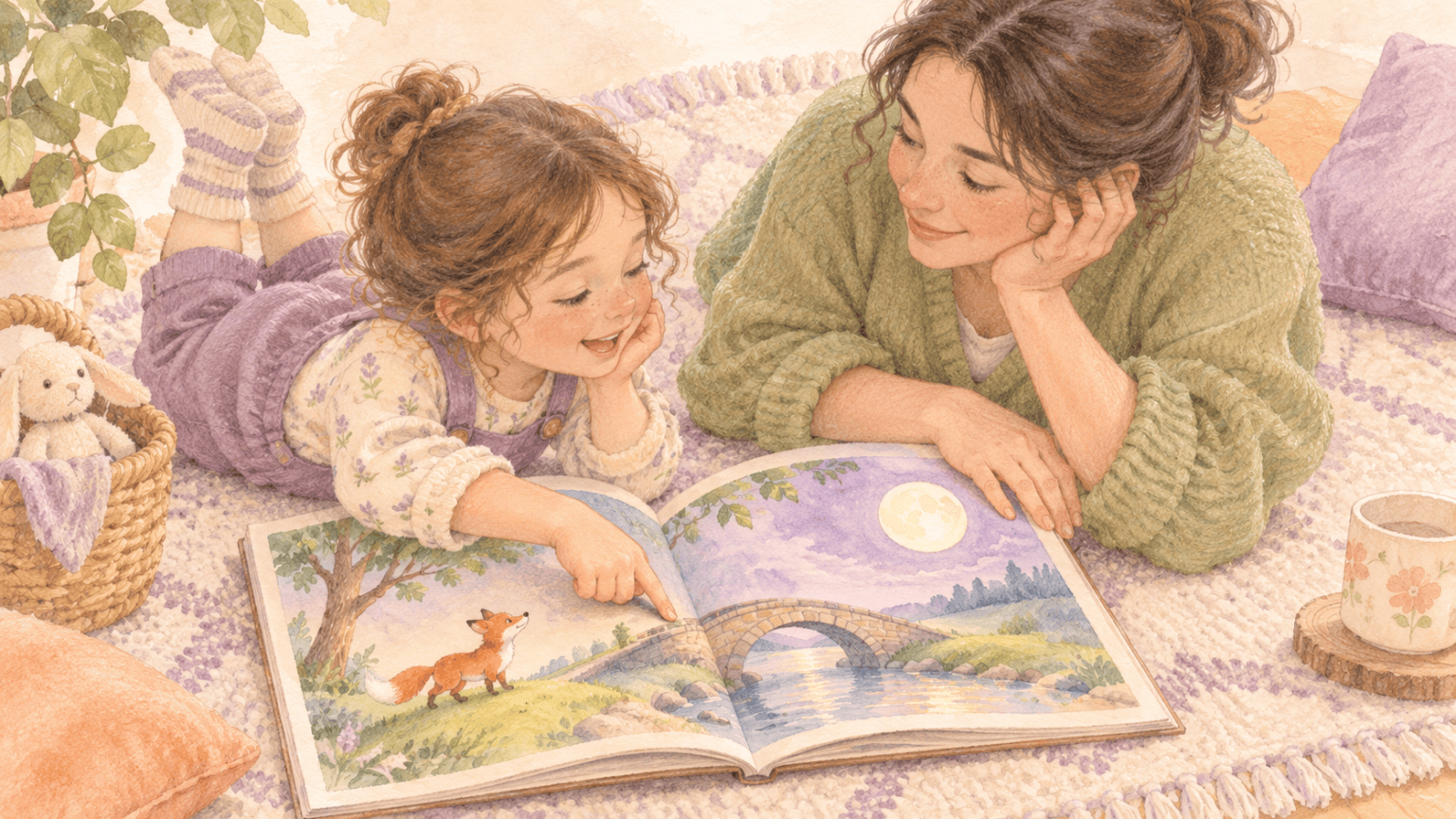
A wordless picture book is not a test with a hidden answer. It is a sequence of images that gives readers room to notice, predict, disagree and tell a story in their own words. That freedom can feel inviting to a child—and surprisingly uncomfortable to an adult who is used to reading the text exactly as printed.
The useful question is not “What am I supposed to say?” It is “What can we notice together?” A good wordless book supports more than one route through the pictures while still giving the reader enough visual clues to follow actions, feelings and change.
Choose a book the child can enter
Look through the whole book before borrowing or buying it. The pictures should be clear enough that the child can identify some people, places, actions or objects without needing a long adult explanation. Complexity is welcome, but confusion should lead to curiosity rather than make every page inaccessible.
- For babies and toddlers: choose sturdy pages, familiar actions, expressive faces and a short visual sequence.
- For preschoolers: look for a problem, journey or transformation they can retell in several ways.
- For school-age children: try layered scenes, visual jokes, shifts in viewpoint or details that become meaningful on a second reading.
Representation matters too. Notice who gets to act, solve problems and belong. A child should sometimes see familiar family life, language, disability, skin tone or community, while also meeting lives beyond their own. For more on evaluating representation, see how to choose disability-inclusive children’s books.
Start with looking, not performing
Sit where both of you can see the page. Open the cover and pause. You might say, “I’m looking for clues,” or “What do you notice first?” If the child points without speaking, name what they selected and wait. If they invent a name or event, treat it as a proposal rather than something to correct.
- Notice: name one concrete detail: “The bag is open.”
- Wonder: offer a real question: “I wonder where the bird is going.”
- Connect: link pages: “That red scarf was on the chair earlier.”
- Invite: ask for the child’s idea, but accept “I don’t know” or silence.
- Continue: turn the page before the conversation becomes an interrogation.
A child may want to narrate every page, listen to you, make sound effects or simply scan the pictures. All are legitimate ways to participate. If spoken language is hard, invite pointing, gestures, acting, drawing or arranging simple objects to show what happened.
Use the family’s strongest language
Wordless books are especially flexible in multilingual homes because the story does not arrive locked to one printed language. Tell the story in the language that carries warmth, humour and detail most naturally. A child can use one language on one page and another on the next. There is no need to translate every sentence word for word.
You can also take turns: one person describes the setting, another gives a character a voice, and someone else supplies sounds. The goal is shared meaning, not a polished bilingual performance. The multilingual family storytelling pack offers related ways to collect the words a family actually uses.
Reread with a different purpose
On the first reading, follow the main action. Next time, track one character, search for a repeated object or tell the story from another point of view. A toddler may simply enjoy naming the same things again. An older child might challenge an earlier interpretation after spotting new evidence.
Do not force a moral or vocabulary lesson onto every page. Conversation is most useful when it remains connected to the child’s interest. If you want a little more structure, choose just one prompt for the whole book: “What changed?”, “How can we tell?” or “Whose idea was that?”
When the child says your version is wrong
Ask what they saw. The answer may reveal a detail you missed. You can say, “Show me your clue,” and compare interpretations. If the pictures clearly establish an event, gently return to the evidence: “I thought the dog left, but this page shows the tail under the bed. Maybe it hid.” This models revision without turning story time into a contest.
For a child who finds seated reading difficult, movement and short visits to the book are fine. The guide to shared reading with a child who does not sit still has flexible participation ideas.
A simple finish
End before attention is exhausted. Ask the child to choose a favourite page, give the story a temporary title or leave the book open for independent looking. A different story tomorrow is not inconsistency; it is one of the strengths of the format.