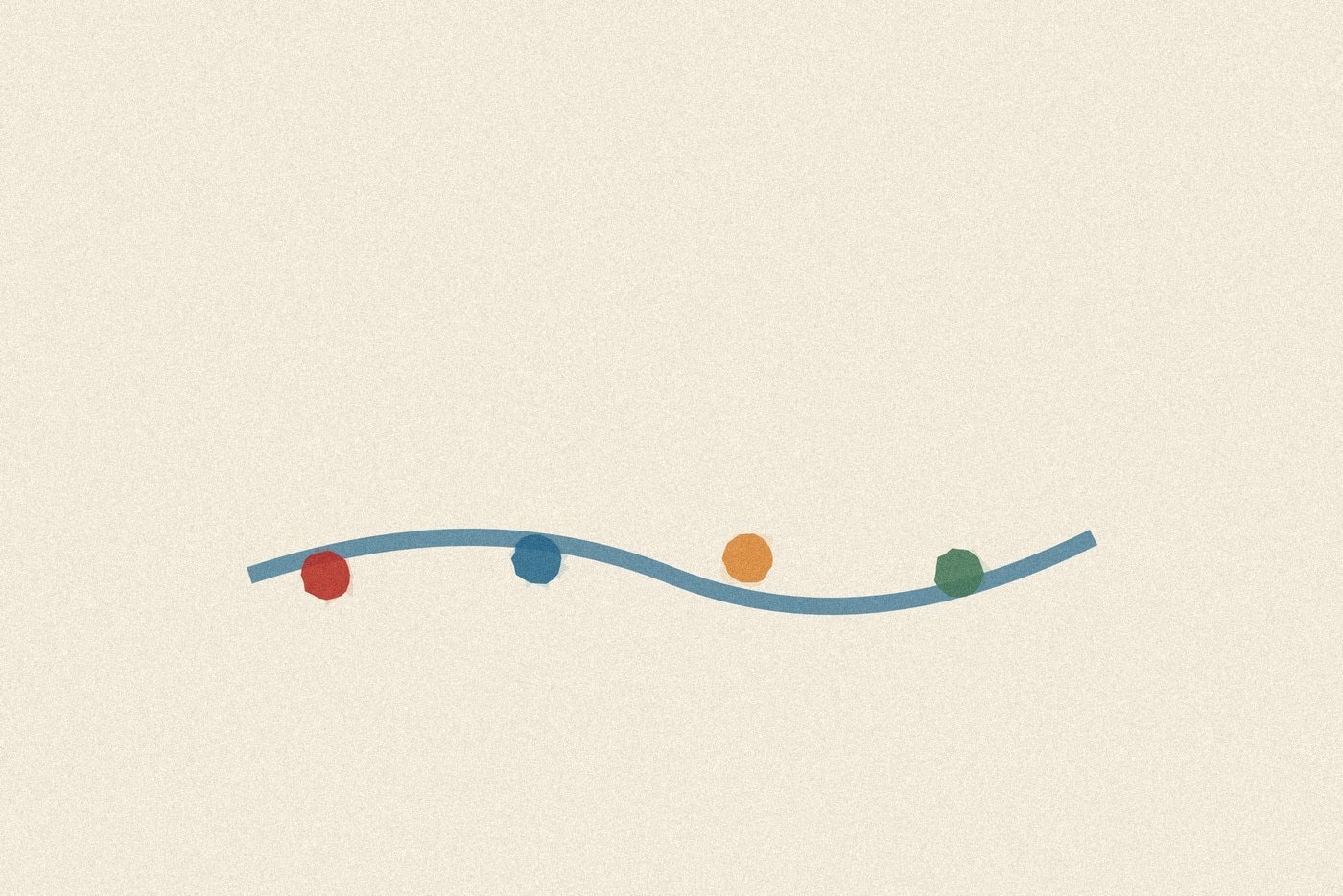
A single line drawn across a page, a handful of markers along it, and a child’s whole life laid out as a timeline they can actually see. The River of My Life borrows a nice image, a life flowing like a river from one place to the next, to help a child understand where they’ve been and start thinking about where they’re headed.
What you need
Paper and a pencil or crayon.
How to play
Explain the idea simply: a life is a bit like a river, it starts somewhere, flows through many different moments, and keeps moving forward. Ask your child to draw a long line across their page, this is their river.
Starting from one end, mark the year they were born. Then work together through the milestones and memories they can recall: starting school, a sibling being born, a favourite holiday, learning to ride a bike, moving house, whatever genuinely stands out to them. Let your child place each memory on the line roughly where it belongs in time, adding a small drawing or a few words next to each one.
Once the past is mapped out, extend the river a little further: ask your child to add one or two things they’re looking forward to, or hoping for, in the months or years ahead, placing them further along the line as a gentle, hopeful extension into the future.
The conversation worth having
Once the timeline is done, talk through it together: which memory on here is your favourite, and why? Is there anything you’d like to happen in the next part of your river? Does looking at your whole life drawn out like this feel any different from just thinking about it?
Keeping this a positive activity
This works best kept gently positive, focused on milestones, achievements, and happy memories rather than difficult ones. If your child brings up something harder on their own, a loss, a hard year, follow their lead rather than steering away from it, but there’s no need to prompt for difficult memories deliberately; the activity holds up perfectly well, and arguably works better for most children, as a celebration of where they’ve been rather than an inventory of everything that happened.
Why it works
Young children often have a fairly shaky grasp of time at a larger scale, understanding that “last year” and “when I was a baby” and “next year” sit in a real, ordered sequence relative to each other is a genuine developmental skill, not something they’re simply born knowing. Physically placing memories along a line gives that abstract sense of time something concrete to hang onto, and tends to make a child’s own history feel more like a real, continuous story they are living, rather than a collection of disconnected moments.
A single sheet of paper with a wobbly line and a handful of drawings on it is a small thing. But a child who has physically mapped out their own life, seen how far they’ve already come, and added a hopeful mark or two further down the river, tends to carry a slightly stronger, steadier sense of their own story forward with them, long after the page itself has been put away.