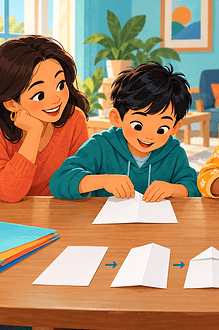
A list of questions a child writes themselves, and a grandparent, or any older relative, sitting down to actually answer them. The Grandparent Interview turns family history from something a child is simply told into something they go out and discover for themselves.
What you need
Paper and a pencil, to prepare questions and record answers. Access, in person or by phone, to a grandparent or another older family member.
How to play
Start by asking your child: how do we know about things that happened before we were born? Let them come up with their own answers, books, old photos, asking people who were there, before suggesting the most direct option: asking a grandparent directly about their own life.
Help your child prepare a short list of questions in advance, written in their own words. A few good starting points: Where and when were you born? Did you go to school, and what was it like? What games did you play as a child? What is your happiest childhood memory? Has anything surprising or difficult ever happened in your life? What was different about the world when you were my age?
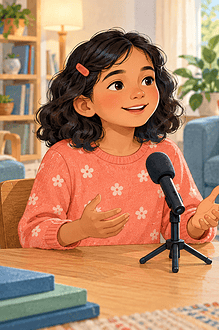
Sit down together, in person if possible or by phone or video call, and let your child ask their own questions directly, with you there to help if the conversation needs a gentle nudge. Encourage them to listen closely and ask a natural follow-up question if something interesting comes up, rather than simply moving down a fixed list.
Afterward, help your child turn what they learned into a simple timeline of their grandparent’s life, similar in style to their own “river of life,” marking out the events and memories they were told about.
Why doing this with more than one relative is worth it
If your child has more than one living grandparent, or another older relative willing to take part, repeating the interview with a second person often produces a genuinely interesting result: different people frequently remember the same shared period quite differently, emphasise different events, or recall details the other left out entirely. This is worth naming directly to your child as its own small lesson: history is not one single fixed story, it is made up of many people’s different memories of the same time.
Why it works
A grandparent is, to most children, simply “grandma” or “grandpa,” a familiar, somewhat fixed figure in their own life. An interview like this does something genuinely useful: it reveals that this same familiar person was once a child too, with their own adventures, friendships, and hard times, which tends to shift a child’s sense of their family history, and their place within it, considerably.
A list of questions and an afternoon of listening is a small undertaking. What a child walks away with, a real, first-hand sense of where their family actually comes from, straight from the person who lived it, is the kind of thing that tends to matter more with every year that passes, long after the conversation itself is over.