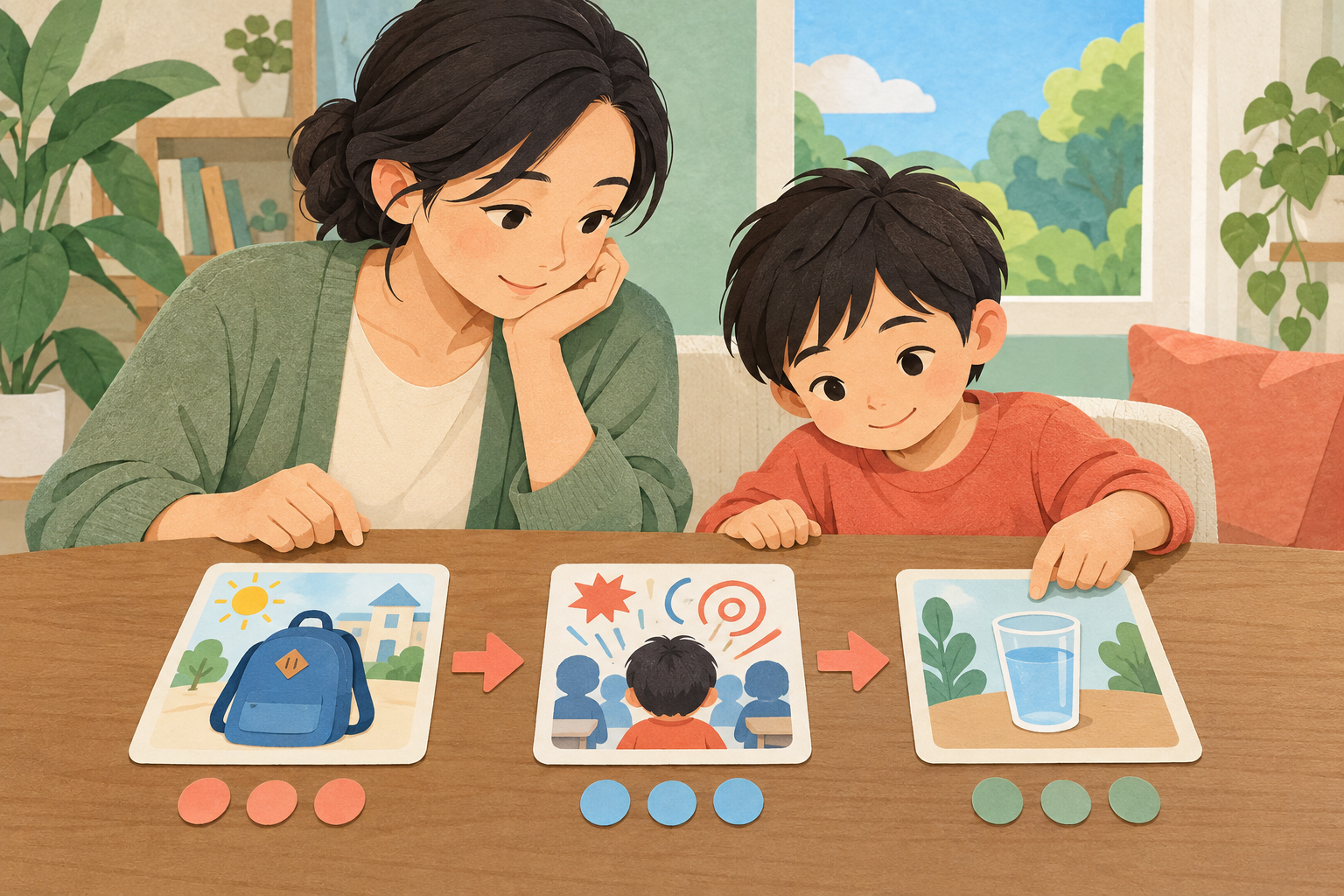
“It came out of nowhere” is how many difficult moments feel. Yet when families look back calmly, they often find a pattern: hunger before homework, noisy transitions, being corrected in front of others, a rushed goodbye, or a game that ends without warning. Spotting a pattern is not about finding someone to blame. It is about finding an earlier place where support could help.
A simple pattern map turns one upsetting episode into information. It asks what happened before, what the child noticed during, and what helped afterward. It should feel like detective work done with the child, never an interrogation conducted on them.
Wait until the weather has passed
Do not map a moment while your child is shouting, frozen, hiding or unable to listen. First deal with safety and help everyone settle. Later might mean after dinner, the next morning or several days later for a teenager. The CDC recommends coaching emotions when both caregiver and child are calm enough to connect.
Ask permission: “Could we look at what made that moment hard, so next time is a little easier?” A child can say not now. If a debrief becomes another battle, pause and return briefly later.
Draw three spaces: before, during, after
Fold paper into thirds or use three notes. Keep entries short and observable.
- Before: Where were we? What had just happened? Was there noise, waiting, hunger, uncertainty, teasing, a change of plan or a difficult task?
- During: What did you notice in your body, thoughts, voice or actions? What did the situation seem to mean at that moment?
- After: What made things better, worse or simply different? Did space, information, food, movement, humor, repair or time help?
Separate observation from judgment. “You threw the pencil after I said it was homework time” is more useful than “You were being dramatic.” “You went quiet when the group laughed” gives you something to explore; “You are too sensitive” turns a moment into an identity.
Look for a repeat, not a verdict
One hard afternoon does not prove a pattern. Compare a few moments across days. Perhaps homework is manageable after a snack but not immediately after the bus. Perhaps the problem is not “parties” but arriving after everyone else. Perhaps a child copes with correction privately but feels exposed when peers are present.
Use language such as:
- “I notice this is harder when…”
- “Does that fit, or am I missing something?”
- “What was different on the day it went more smoothly?”
- “Which part could we change first?”
Let the child reject your theory. The map belongs to both of you, and their experience matters.
Choose one early support
The most useful change usually sits in the “before” column. Try one small adjustment rather than rebuilding the whole day:
- give a five-minute warning before a transition;
- preview who will be at an event and where the child can take a break;
- move a difficult conversation away from siblings or classmates;
- offer food, water or movement before a demanding task;
- agree on a discreet signal that means “I need help”;
- break the first step into something the child can start.
Then review: “Did that make the moment 1% easier?” The goal is useful knowledge, not a perfectly calm child.
Keep responsibility without shame
Context helps explain behavior; it does not make harmful behavior acceptable. You can say, “Being laughed at made you furious. Hitting still was not safe. Let’s plan what you can do at the first sign and how to repair the harm.” EdCaptain’s guide to separating feelings from actions can help with this balance.
It is also worth mapping adult patterns. Perhaps you give too many instructions when rushed, or your voice gets sharper near bedtime. Saying, “I see my part, and I’ll work on it,” models accountability without making the child responsible for your emotions.
Different ways to participate
Young children can arrange picture cards for “before, big moment, better.” Children who dislike talking might draw, type, point or use objects. Older children may prefer to keep the “during” column private and share only the support they want. The CASEL guidance on reflection emphasizes curiosity, self-compassion and context rather than perfection.
Body clues can add useful detail, but they are only one part of the map. See Help Your Child Notice Body Signals Before Feelings Get Big. For a ready set of coping choices after a pattern is found, try building a calm-down box.
When a map is not enough
Do not use the exercise to investigate suspected abuse, force disclosure, or explain away sudden major changes. If a child tells you they are unsafe, take them seriously and seek appropriate safeguarding help. If distress is frequent, severe, worsening or disrupting daily life, a pediatrician, school counselor or qualified mental health professional can help assess what is happening.
A good pattern map ends with a humane sentence: “Now we know one thing that makes this harder and one thing that might help.” That is insight a child can use—without becoming the problem.