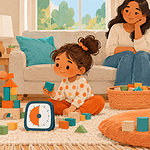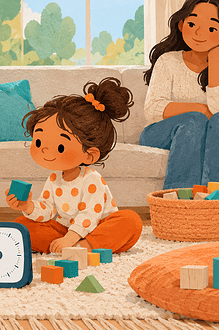
Children notice differences quickly: one sibling stays up later, another gets more help, and someone else has a private activity. Trying to make every minute and rule identical can create more tension. Fairness means each child has what they need within clear family limits.
Explain the reason without private details
Say, “Bedtimes change with age,” or “Your brother needs help with this task; you get help with other things.” Avoid discussing a child’s diagnosis or difficulty without permission. Keep the explanation brief and return to what the listening child needs.
Stop comparisons at the source
Replace “Why can’t you be organised like your sister?” with “Please put your bag by the door.” Avoid fixed roles such as the smart one, easy one, sporty one or difficult one. Roles trap both the praised and criticised child.
Protect individuality
- Let each child keep personal belongings that are not automatically shared.
- Respect bedroom, message and body privacy appropriate to age.
- Notice separate interests and friendships.
- Make one-to-one time part of ordinary routines.
- Give responsibilities based on ability, not gender or birth order.
Individual time need not be expensive or perfectly equal. A bedtime chat, grocery walk or ten minutes cooking together can communicate, “I enjoy who you are.” Keep promises and rotate opportunities over time.
Respond to “That’s not fair”
Do not rush to prove your case. Try, “Something feels uneven. Tell me what you wish were different.” The answer may be attention rather than the object or rule. You can acknowledge disappointment while keeping the boundary.
Review family systems
Sometimes the child is identifying a real imbalance. Check whether one sibling is routinely expected to give way, provide care or tolerate intrusion. Disability or age differences should not make one child responsible for another child’s wellbeing. Adjust chores, space or attention where needed and explain the new plan.
Related: new-baby jealousy and brief child-led time.
Make attention visible over time
Children often compare the moment in front of them, while adults are balancing a whole week. Use a simple family calendar for individual activities or turns when useful, without turning affection into an accounting system. If plans change, name it and reschedule. Reliability matters more than minute-for-minute equality.