Siblings can argue about a toy, a bedroom, a joke or who sat where. Your job is not to deliver a courtroom verdict every time. It is to keep everyone safe and teach a process they can gradually use without you.
Know when to step in
Intervene immediately for hitting, choking, threats, dangerous objects, repeated intimidation or a child who cannot leave. Separate calmly and attend to safety first. Do not force equal blame when one child used power or fear against another.
For a noisy but safe disagreement between older children, pause before entering. They may solve it. Younger children need more active help because turn-taking and impulse control are still developing.
Use a neutral reset
- Stop unsafe behaviour: “I won’t let anyone hit.”
- Give bodies time to settle.
- Hear each child briefly without interruption.
- Name the shared problem, not the bad child.
- Ask for two possible solutions.
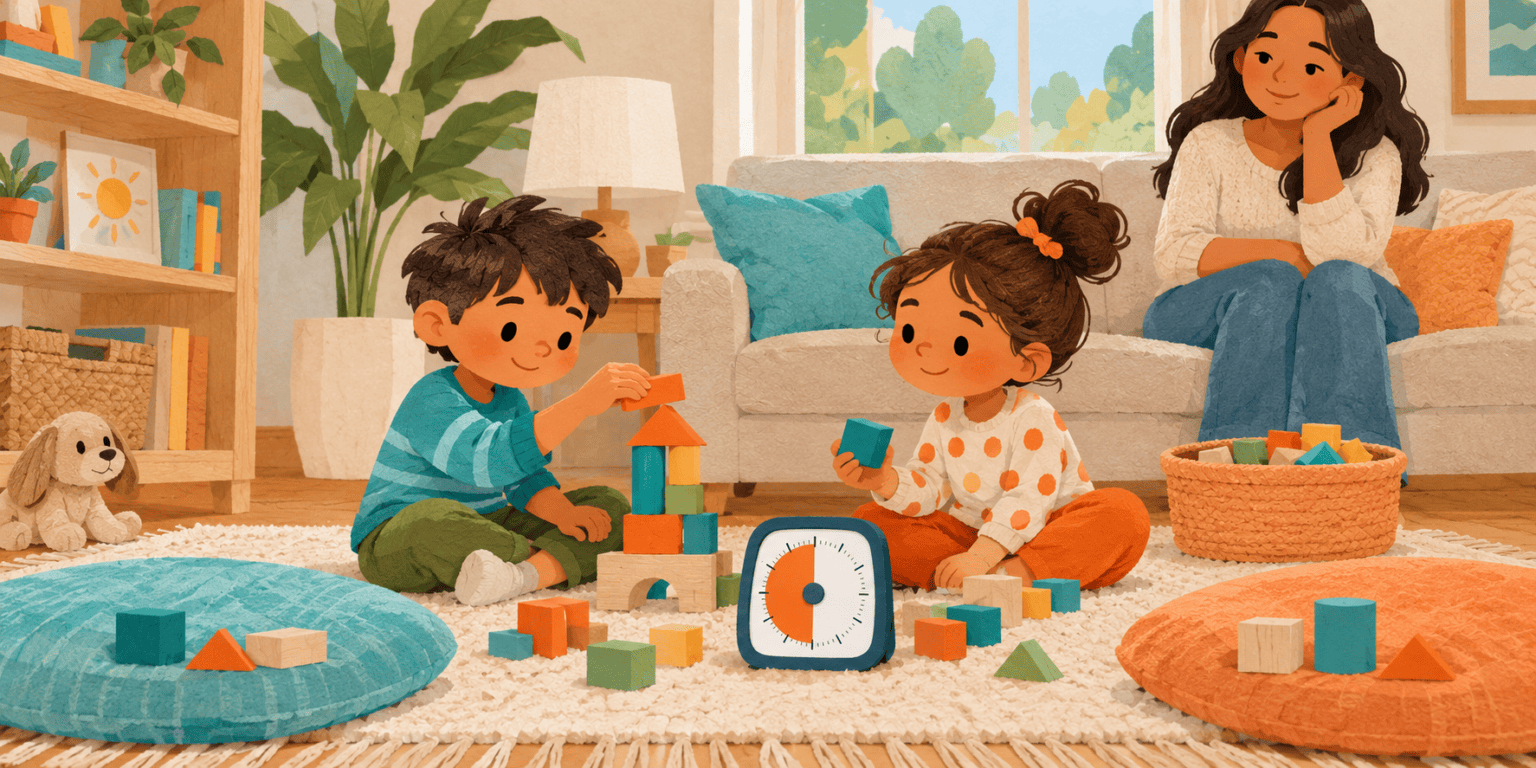
You might say, “Two people want one set of blocks. What could make the next ten minutes work?” A timer, separate materials, trading tasks or pausing the game are concrete options.
Do not chase perfect equality
Fair does not always mean identical. A toddler may need adult help while a teen needs privacy. Explain the reason for a different response without comparing personalities. Avoid always assigning the older child to give way.
Repair after conflict
Do not demand an instant apology while anger is high. Later, help each child repair what they did: rebuild, return an item, check on a sibling or practise a clearer request. Notice cooperation when it occurs.
Change the setup
Repeated fights often reveal a practical problem. Protect personal belongings, create separate spaces, schedule turns and use cooperative activities. Family rules should include no hitting, no humiliation and respect for privacy. Seek qualified help if fear, injury or coercion repeats.
Related: a calm-down plan and new-baby jealousy.
Hold short family practice sessions
Choose one calm moment to rehearse the process with a harmless dispute. Keep it playful and stop before anyone is bored. Children learn more from many brief repetitions than a long lecture after a fight. Post two or three family rules where everyone can see them, and make sure adults follow the same respect rules.