Siblings argue, compete and sometimes say things they regret. Conflict becomes more concerning when it is not a contest between children with roughly equal power, but a repeated pattern in which one child controls, frightens, humiliates or hurts another.
You do not need to diagnose “sibling abuse” before taking a child’s fear seriously. Safety comes first.
Look for the pattern, not one isolated argument
Ordinary conflict can still be loud and unpleasant. Both children may provoke, protest and recover. In a harmful pattern, you may notice:
- one child is consistently afraid, trapped or forced to give in;
- hitting, threats, sexualised behaviour, destruction or humiliation repeats;
- the behaviour continues after clear requests to stop;
- one child uses age, size, access to friends, secrets or possessions as leverage;
- the targeted child avoids rooms, changes routines, loses sleep or becomes unusually withdrawn;
- retaliation follows when the child seeks help.
A single serious assault, coercive sexual behaviour or credible threat also requires immediate action even without a pattern.
Separate first, investigate later
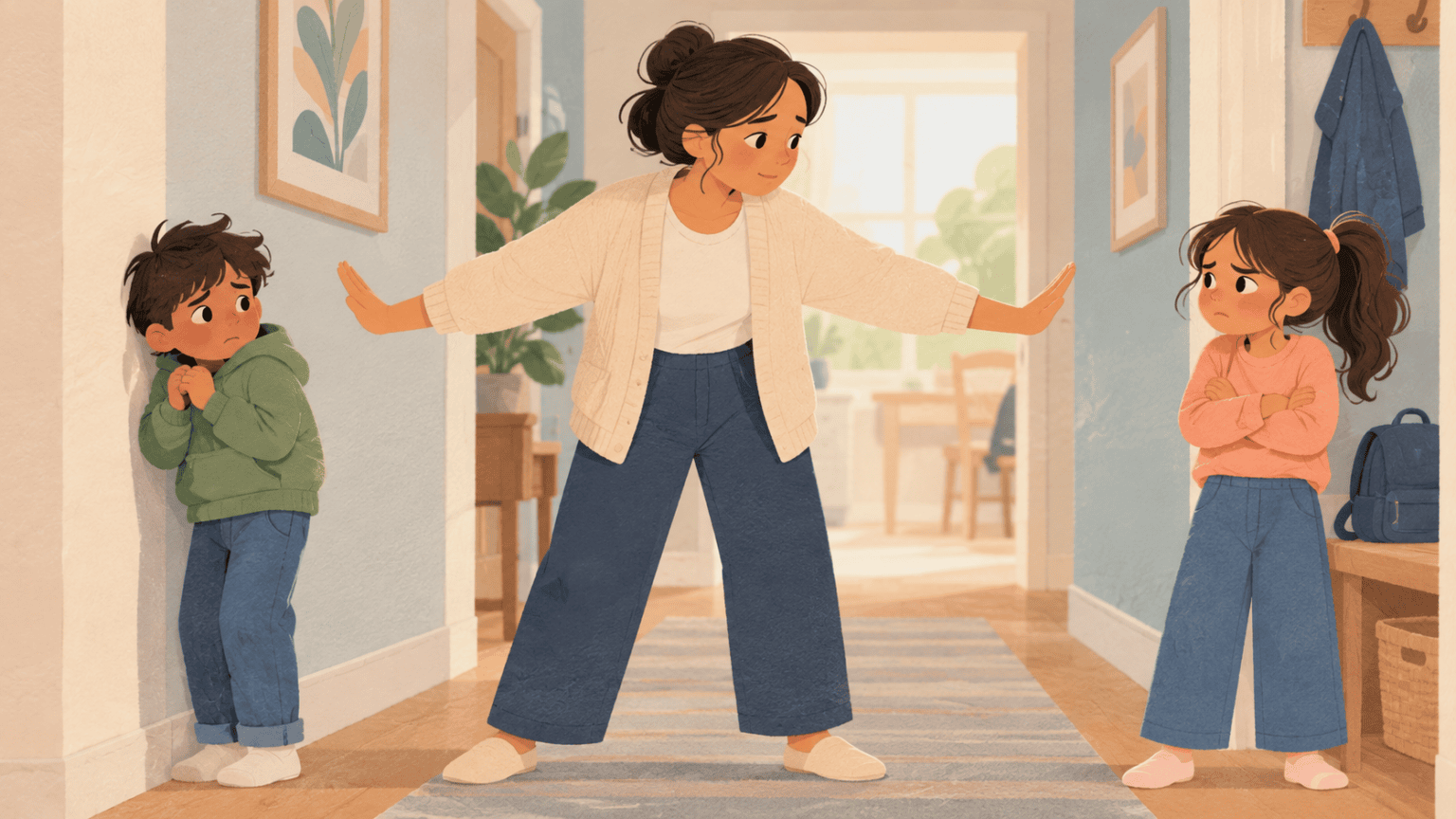
Move children to safe spaces and supervise. Do not insist on an apology, joint discussion or physical affection while anyone is frightened. Say: “I will not let anyone hurt or threaten you. We are separating now, and I will talk with each of you.”
Speak to each child privately. Ask open questions: “What happened before I came in?” “Has this happened before?” “What are you worried will happen next?” Avoid forcing the targeted child to confront the sibling or prove the story in front of them.
Do not minimise harm as rivalry
“They are just siblings” can leave a child without protection. At the same time, avoid permanently defining one child as a monster. Set firm limits, increase supervision and seek to understand what is driving the harmful behaviour without excusing it.
For ordinary, balanced disagreements, children can practise repair and problem-solving; our sibling-conflict guide explains when to coach rather than referee. That approach is not enough when a child is unsafe or intimidated.
Build a concrete safety plan
Identify spaces that require adult presence, separate sleeping arrangements if needed, secure objects that could be used to harm and name adults each child can contact. Tell the targeted child they are not responsible for managing the other child. Tell all children that getting help is allowed.
Contact a paediatrician, child mental-health professional or family service with experience in aggression and safeguarding. Schools may help if the behaviour extends there. If there is sexual behaviour involving force, a large developmental gap, secrecy under threat or contact that a child cannot freely stop, seek prompt specialist safeguarding advice.
If anyone is in immediate danger, has a serious injury, faces a weapon or credible threat, use local emergency services and keep the children apart.
Follow through after the crisis
Repair means more than “say sorry.” It includes stopping access to harm, making rules observable, supporting both children and checking privately that safety has improved. Reassess rather than assuming one calm week has solved the pattern.
You can continue to meet children’s different needs without excusing harm; fairness is not the same as identical treatment. A safe home is one where conflict can happen but fear is never treated as the price of being siblings.