
By EdCaptain editorial desk · Published
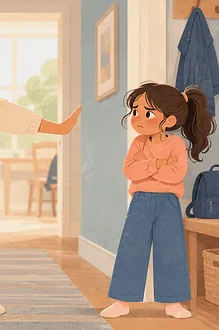
You have just opened the next chapter when a sibling announces who solves the mystery. The listener protests, the other child says it was only a joke, and reading time turns into an argument about whether anyone is allowed to be upset.
For families with children aged 6–12, a small agreement can make the expectation clearer: ask before revealing something the other person has not reached. Children can enjoy the same story at different speeds. The practical challenge is giving the person who knows the ending somewhere to talk, while protecting the other child’s chance to discover it.
Say what counts as a spoiler in your home
“Don’t spoil it” can mean different things. One child thinks it means not naming the ending; another does not want hints, dramatic facial expressions or “Just wait until you see what happens to her.” Agree on a simple starting point before the next session:
- Ask which chapter or episode the other person has finished.
- Talk only about events up to that point unless they ask for more.
- Check before giving a hint, showing a later illustration or playing a clip.
- Accept “I want to find out myself” without arguing.
Ask both children what would help them remember. This applies Raising Children Network’s advice to involve children in clear family rules to a familiar reading or viewing problem. The spoiler agreement itself is a practical suggestion, not a method tested in that guidance.
Keep the reading pace out of the dispute
It is tempting to solve the problem by telling the faster reader to wait. That can turn a sibling’s enjoyment into a restriction on their own reading. Equally, “Then hurry up and finish” puts unfair pressure on the child who needs more time.
Try: “You can read ahead. We’ll keep later events for a conversation with someone who has finished.” If the family wants a shared read-aloud, agree that anyone reading independently can still join without giving clues. Our guide to choosing a read-aloud for mixed ages can help with the separate question of finding a book everyone can access.
A child listening to an audiobook or reading with support gets the same consideration. Speed is not a measure of whose interest matters more. Do not display a progress chart that ranks siblings.
Give the excited child an available audience
Sometimes a child blurts out a twist because they have been waiting to discuss it. Offer a realistic alternative rather than promising unlimited adult attention. “I haven’t finished either. You can tell me about chapter three now, or we can talk about the whole book after dinner tomorrow.” Only promise a time you can keep.
Other options include talking privately with an adult who has finished, drawing a reaction on a page kept in their own folder, or saving a question for a willing friend who knows the story. Do not require a child to write a review to earn permission to talk.
For shared screens, avoid launching a trailer or recap in the room without checking. Keep the arrangement modest: nobody can guarantee that every cover, conversation or advertisement will be spoiler-free.
When an ending slips out
Interrupt gently before more details follow: “Pause there. Maya hasn’t reached that part.” Do not repeat the revelation while explaining why it was a problem. If you genuinely do not know whether it was accidental, you do not need an immediate verdict on intent.
Tell the disappointed child, “You wanted to discover that yourself. I understand why you’re annoyed.” Avoid insisting that the story is still just as good. Offer a choice: continue, take a break or read something else today. A book does not have to be abandoned, but finishing it should not become a test of being a good sport.
Later, help the child who spoke make a specific repair: “I told you something you didn’t want to know. I’ll check your chapter next time.” Parenting SA recommends allowing time to settle before helping children resolve conflict and make amends. A repair cannot restore the surprise; it can change the next interaction.
If revealing the plot becomes deliberate
A repeated announcement after a clear request to stop needs an adult response. Keep it connected to the problem: “We’re ending this story conversation now. You can discuss later chapters with me in the kitchen.” Help the other child continue somewhere comfortable rather than always making them leave.
Do not turn it into a contest over who can reveal the other person’s favourite story first. Nor should one child have to tolerate it because the other is younger. Adjust the amount of adult help to what each child can manage. The American Academy of Pediatrics advises listening calmly and stepping in when siblings cannot resolve a disagreement themselves.
If spoilers are part of a wider pattern of humiliation, intimidation or following a child to prevent them enjoying anything, address that pattern. Stop the behaviour and seek qualified support if it continues. Our guide to when sibling teasing stops being playful explains the distinction in more detail.
Make the agreement easy to use
Ages 6–9: Practise with a made-up three-part story rather than a real ending. Say, “I’ve heard the first part. Ask me before telling the last bit.” Model the question and an accepting response. A bookmark can help a child show where they are without needing to remember a chapter number.
Ages 10–12: Let children decide whether predictions, character names and trailer discussion are welcome. Encourage a quick opening question: “Are you caught up, or should we talk about something else?” Review an arrangement if it is becoming difficult to remember or enforce.
Children can indicate “tell me”, “not yet” or “stop” by speech, gesture, signing or their usual communication aid. Adults should notice and support that response. A child may also ask to know an ending because uncertainty is uncomfortable. Respect that preference and discuss it privately; wanting information does not give permission to reveal it to someone else.
Notice the small success when someone checks first: “You waited to find out what she wanted to hear.” That is the habit the agreement is there to practise.