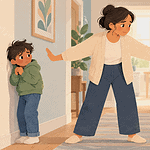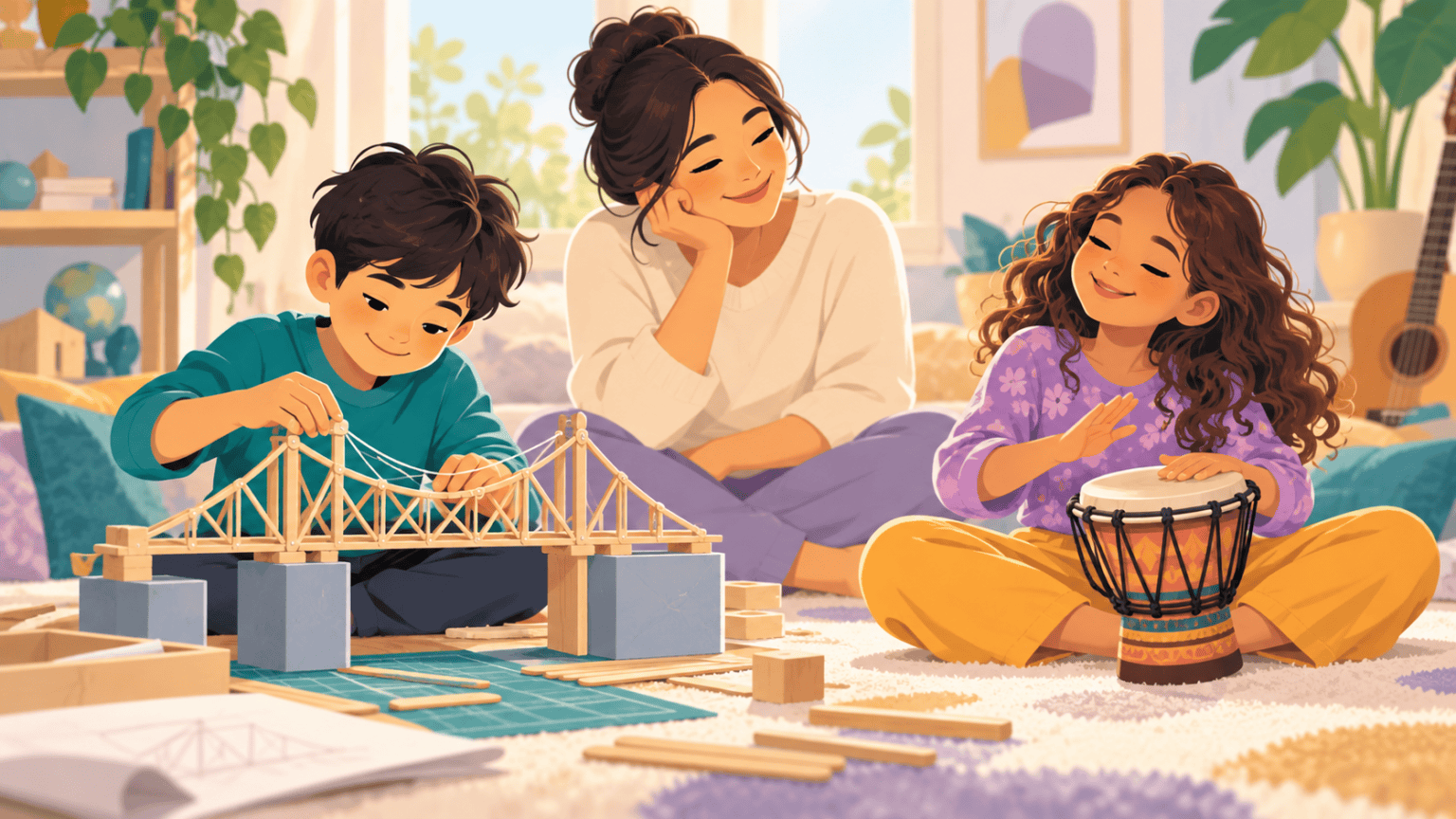
“Why can’t you be organised like your sister?” may sound like a shortcut to motivation. Usually it gives both children an unwanted role: one becomes the responsible child and the other becomes the problem. Even positive labels such as “the clever one” or “the sporty one” can become a cage.
Describe the moment, not the family ranking
Say what you see and what is needed now. Replace “Your brother always finishes homework” with “You have two questions left. Would a five-minute break or sitting beside me help?” Replace “She is the shy one” with “She is taking time to watch before joining.” Specific language leaves room for change.
When praise is deserved, keep it grounded: “You stayed with that bridge after it fell twice.” You do not need to add, “Unlike your sister.” A child’s achievement remains meaningful without a sibling losing.
Interrupt comparisons from other adults
Relatives, teachers and friends may compare without intending harm. Respond briefly and warmly: “They are different people, and we try not to rank them.” Or, “Arun enjoys reading; Leila is finding her own interests.” Speak privately if the pattern continues.
If a teacher compares siblings, acknowledge that previous experience can shape expectations while asking for a fresh view: “Could we discuss Maya’s work based on her current learning rather than her brother’s record?”
Retire fixed family roles
Notice labels that have become family jokes: the dramatic one, the messy one, the baby, the genius. Ask each child privately how the label feels. Then model a wider story. The “messy one” may carefully organise art materials. The “quiet one” may lead confidently with close friends.
Twins are especially likely to be treated as a matching set or defined as opposites. Separate gifts, individual interests, one-to-one time and personal possessions can help. These ideas also support any siblings close in age.
Make room for different needs
Stopping comparisons does not mean identical rules or resources. One child may need reading support; another may need more movement. Explain the reason without revealing private information: “Everyone gets the help they need to learn.” See our guide to fairness without identical treatment for more examples.
Plan occasional one-to-one time so each child can speak without a sibling becoming the reference point. During family activities, take turns choosing instead of defaulting to the youngest, loudest or most skilled child.
Help siblings answer comparisons themselves
Give them a calm script: “We are good at different things,” “Please ask me about my work,” or “I do not want to be compared.” If one child boasts by putting another down, separate confidence from ranking: “You can be proud of your mark. You may not use it to shame your brother.”
Comparisons also arise in appearance and online life. If body ranking is becoming a theme, our guide to responding to body criticism and online comparison can help you widen the conversation.
Children are unfinished people. The language around them should leave enough space for new interests, mistakes and strengths that have not appeared yet.