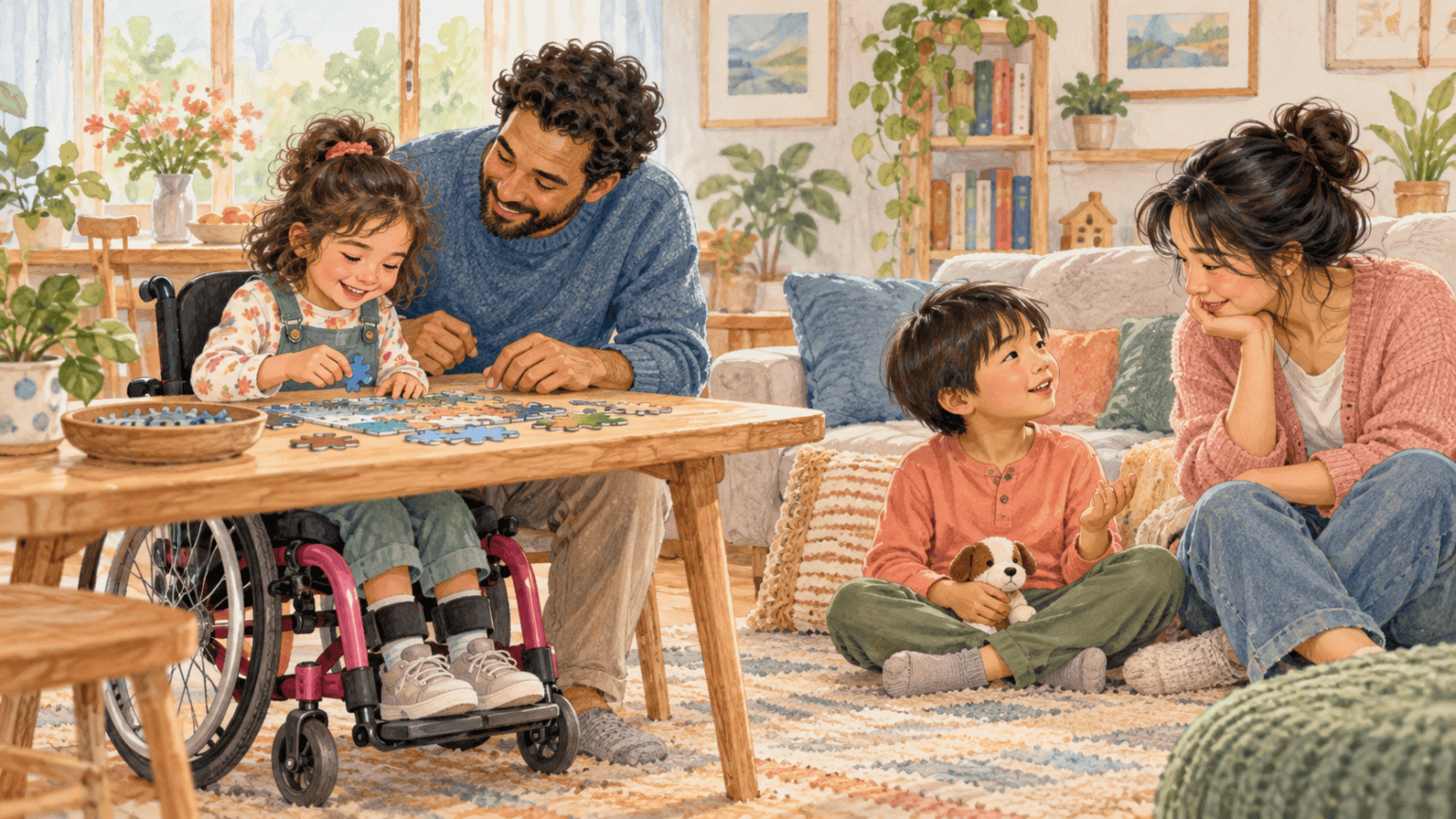
Appointments, treatment, therapy, access needs and unpredictable days can absorb a family’s time. Siblings may be loving and proud while also feeling worried, jealous, angry or overlooked. Those mixed feelings do not make them unkind. They make them part of a family carrying more than usual.
Explain what is happening truthfully
Give information that fits the child’s age and correct misunderstandings. A young child may think an illness is contagious or happened because of an argument. A school-age child may worry that the condition will suddenly worsen. A teen may understand the medical facts but fear future caregiving expectations.
Try: “Your brother’s body needs help moving safely, so therapy takes time. You did not cause it, and you cannot catch it.” Admit what you do not know. Invite questions more than once, because children often need time before they can name what is worrying them.
Protect some dependable attention
Individual time need not be elaborate. Ten uninterrupted minutes at bedtime, a walk to the shop or a regular breakfast can show a sibling that their news matters too. If plans change because of a medical need, name the disappointment and reschedule specifically: “I cannot come today. I have asked Auntie to take you, and you and I will have lunch together on Saturday.”
Avoid praising a child mainly for being “the easy one.” That can teach them to hide needs. The principles in our fairness-between-siblings guide are useful here: fair care responds to different needs while every child remains visible.
Keep responsibilities child-sized
A sibling can choose to fetch an item, join an accessible game or learn how to help in an emergency. They should not become a nurse, interpreter or permanent protector. Ask before assigning help, give a clear end point and make sure adults remain responsible for care.
Also protect ordinary sibling feelings. Children with disabilities or chronic conditions can annoy their siblings and be annoyed by them. Set respectful limits for everyone without treating one child as fragile in every interaction. Adapt activities so participation is possible, but do not demand that all children always choose the same thing.
Notice when a sibling needs more support
The American Academy of Pediatrics suggests paying attention to persistent anxiety, withdrawal, anger, falling school performance, loss of interest, extreme achievement pressure or acting out. One difficult week is not a diagnosis. A pattern that affects daily life deserves a conversation with a paediatrician, school counsellor, family therapist, child-life specialist or sibling support service where available.
Ask directly: “What is hardest about how things are at home right now?” Do not require a grateful answer. If there is immediate risk of harm or a child says they cannot cope, seek urgent local support.
Build connection without making it a duty
Look for shared activities that respect both children’s abilities and interests: music, adapted cooking, a cooperative game, a film choice taken in turns. For everyday disagreements, coach the process rather than making one child give way automatically.
A strong family is not one where nobody resents the extra demands. It is one where difficult feelings can be spoken, adults stay responsible and every child has a place in the story.