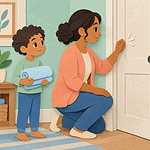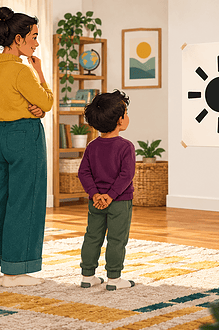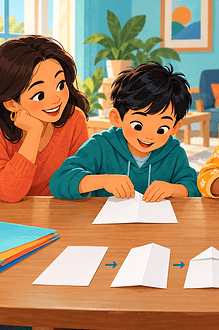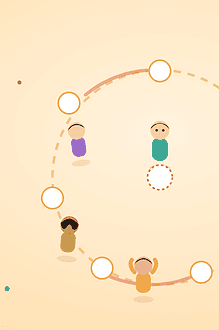
Tickling, pillow fights and wrestling can be joyful. They are also useful places to practise consent because feedback is immediate. The rule is simple: when anyone says “stop,” pulls away, freezes or looks unhappy, the game pauses. Nobody has to prove that their reason is good enough.
Set the rule before play
Say, “We can play while everyone is enjoying it. Stop means hands off straight away.” Include a raised palm, two taps or a red card for a child who communicates differently. Adults must follow the rule too. If a laughing child says stop, release them immediately; laughter can accompany overwhelm.
Practise pause, check and restart
- Pause: bodies separate and hands become still.
- Check: “Are you okay? Finished, or a different game?”
- Restart only with a clear yes: hesitation means choose something else.
A preschooler can practise one word and a gesture. An older child can notice a friend who goes quiet. A tween can discuss why agreeing to one kind of play is not agreement to everything. Take turns calling stop in a calm rehearsal so the movement becomes familiar.
When a child keeps going
Separate the players: “I won’t let the game continue after stop.” Avoid a lecture while bodies are activated. Later rehearse a repair: “I kept going. I’m sorry. Next time I’ll move back.” The other child does not owe a hug or immediate forgiveness. If coercion repeats, supervise closely and choose games with clearer limits.
This lesson never makes children responsible for managing danger alone. Adults remain responsible for protection. Keep building a trusted-adult safety network, reinforce respect for a child who declines a hug, and show that setting a boundary never costs love or belonging.
Adapt the practice
For children who miss facial cues, name observable signals rather than expecting mind-reading: “His body moved away” or “Her hands became still.” For children who use communication devices, programme an easy stop button. Praise immediate stopping, not toughness. Consent becomes a daily skill when adults make it predictable, repeatable and safe to use.