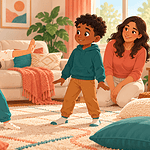
A request to close the bathroom door is often a healthy sign of growing privacy. You can respect it without withdrawing care a child still needs. Privacy is not all-or-nothing; it expands with skills, safety and comfort.
Start with a respectful yes
Try, “Your body is yours. I can give you privacy, and I’m nearby if you need help.” Agree what that means today. A preschooler might pull the shower curtain while an adult remains in the room. A school-age child who washes safely may close the door, with an adult within hearing distance. A teen generally needs more privacy unless there is a specific safety or care need.
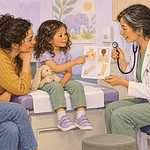
For a child who needs physical assistance, ask before each step and offer choices about who helps when possible. Describe what you will do before touching. A picture sequence can reduce surprises for a child who communicates without speech or finds transitions difficult.
Privacy is not unsafe secrecy
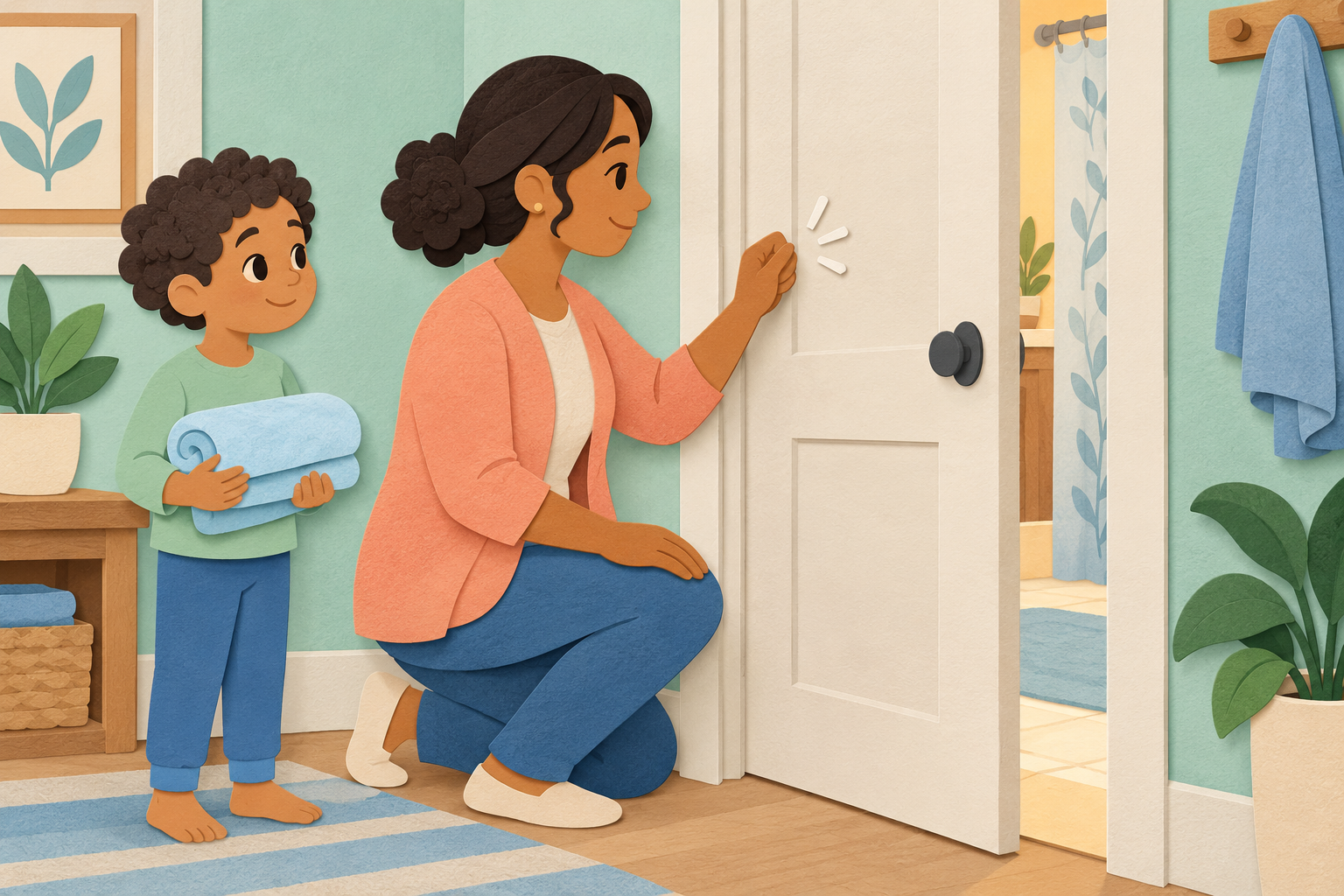
Private means space to dress, wash or use the toilet. It never means hiding frightening touch, pictures or requests. Use plain body-part words and say, “You can always tell me or another trusted adult, and you will not be in trouble.” Adults should knock and wait when it is safe, and children should learn to knock too.
Keep the safety reason clear
Young children need water supervision; locked doors may be unsafe; some disability-related or medical care requires help. Explain without shame: “The bath can be slippery, so I’ll stay where I can help. You may close the curtain.” Review the arrangement as skills change rather than using one rule forever.
If privacy behaviour changes suddenly, the child becomes fearful of a person, or reports uncomfortable touch, listen without interrogation and use our first-response guide. Make sure the child knows who else can help.
A family privacy agreement
Agree that people dress in private, nobody takes bathroom or changing photos, and personal care is explained before it happens. State exceptions for urgent safety. This creates respect without treating bodies as shameful and gives the child language they can use outside home.