By EdCaptain editorial desk · Published
General educational guidance. No qualified clinical review is recorded for this article. Health and safety information.
Your child comes home from training and says, “I hate it when the coach moves my arms.” They may love the sport, like the coach and still dislike being touched. You do not need to persuade them to tolerate it, or decide immediately what the coach intended. Start by listening and arranging a safer way to learn.
This guide is for caregivers of children and teenagers aged 6–18. It concerns hands-on coaching corrections, rather than the agreed player-to-player contact that some sports involve. Neither joining a team nor a caregiver signing a form removes a child’s right to raise a concern.
Listen before offering an explanation
Try: “Thank you for telling me. Tell me what happened.” Let your child describe the experience without suggesting where they were touched or why. Ask only enough to understand their immediate safety and what help they need. Avoid “The coach was only helping” and “Why didn’t you say something?” A child may go quiet, smile or continue because they feel embarrassed or worry about selection.
Say, “You don’t have to handle this on your own. We can pause while we work out what happens next.” If they describe harm or inappropriate contact, follow the safeguarding steps below rather than treating it as a teaching preference.
Separate useful instruction from permission to touch
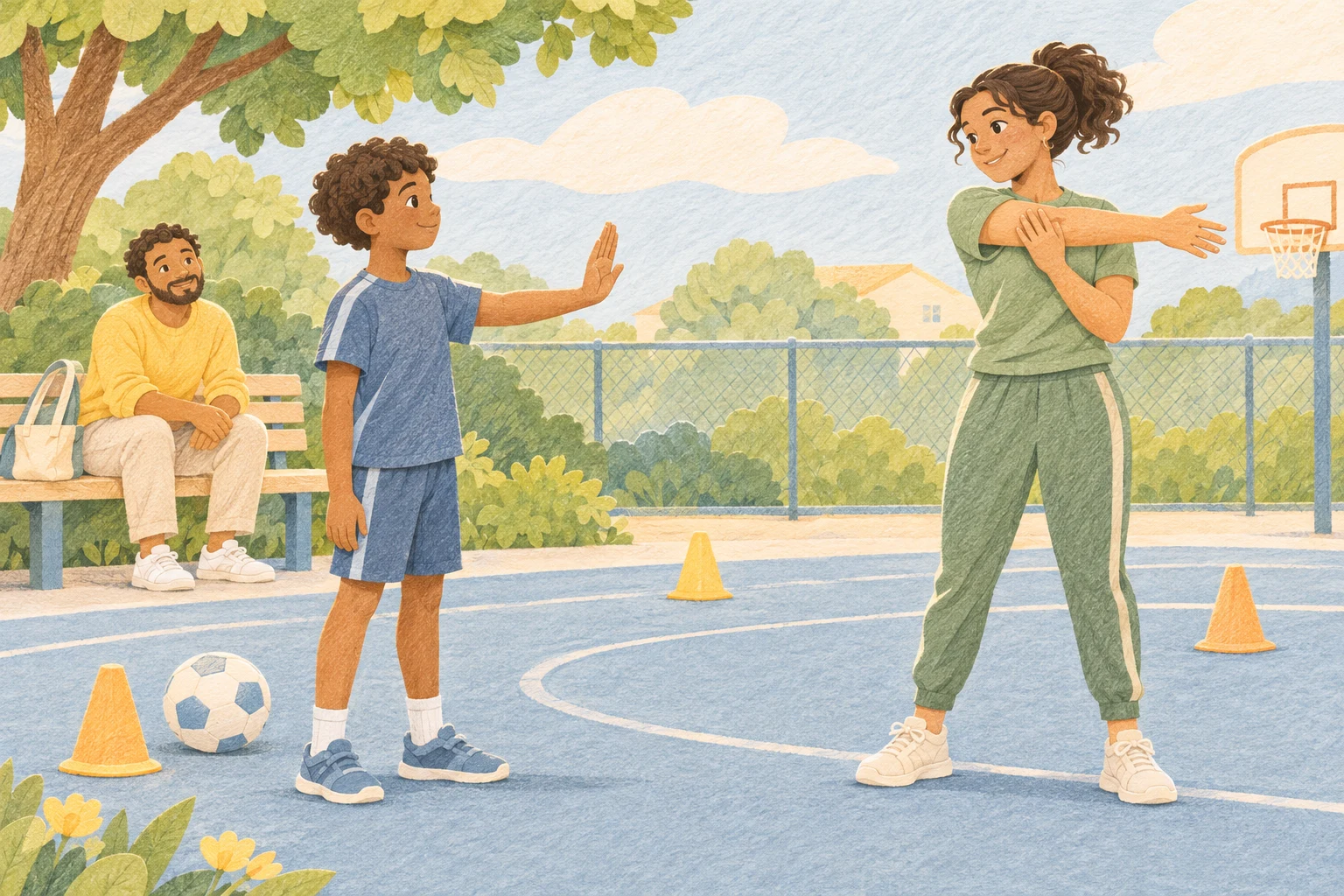
Sport Integrity Australia’s physical-contact guidance recommends verbal instruction as an alternative and requires adults to notice discomfort. For an ordinary technique correction, ask whether the coach could demonstrate on their own body, describe one movement or let the child copy from a suitable position.
Some activities need trained physical support to prevent injury. That calls for a plan before attempting the skill. A child who declines essential support should pause that exercise while the coach finds a safe alternative; they should not be sent to attempt it unsupported. This article is not an instruction manual for spotting, transfers or injury treatment.
NSPCC Sport’s guidance distinguishes necessary sporting contact from unnecessary touching. Outside emergencies, the adult should explain the purpose and ask first. A child’s agreement does not make an inappropriate action acceptable.
Ask for a specific coaching adjustment
Where there is no allegation of abuse or immediate safety concern, speak away from the group so your child does not have to negotiate publicly. For example: “They want to keep learning, but don’t want their arms repositioned. Could you demonstrate first and use verbal cues? If a skill needs physical support, please explain it before they begin and offer an alternative if they decline.”
Ask the club to clarify:
- Which skills genuinely require hands-on support, and why?
- How does the coach ask the individual child and recognise a refusal?
- Where can the child pause safely, and which adult helps?
- Who is the safeguarding contact if a concern involves the coach?
The New Zealand Sport Integrity Commission advises explaining contact, offering choices and keeping it visible to other adults. Ask for the club’s sport-specific policy rather than relying on a coach’s personal reassurance.
Give your child a small, usable plan
Choose a phrase such as “Please show me without touching” or “I want to pause.” Agree on a visible signal if speaking is difficult. Check that the coach understands it and knows how to stop safely, including when a child is already being supported on equipment. Rehearse the words in an ordinary conversation; do not stage a frightening surprise test.
Identify an accessible waiting place and a named adult who can contact you. Your child should not have to leave the venue alone or find an unlocked phone to get help. Our trusted-adult safety network guide can help make that route practical.
- Ages 6–9: Keep the plan to one phrase and one adult. Arrange the adjustment yourself and check that it actually happens.
- Ages 10–12: Invite your child to choose their words and whether they want you present for a conversation. Practise what to do if the first adult is unavailable.
- Ages 13–18: Agree together how you will raise the concern and protect their privacy. Explain that a team place or scholarship does not require accepting unwanted contact. Tell them when safeguarding action needs to involve others.
For a child using signs or a communication device, make the pause signal immediately available during training. Discuss sensory preferences and disability-related assistance with the child. Necessary assistance needs trained adults and an individual plan; a diagnosis is not blanket permission to move someone’s body.
When to use safeguarding routes instead
Unexplained intimate touching, secrecy, retaliation, painful handling or repeated disregard of a child’s refusal require prompt safeguarding action. Do not send the child back to test whether it happens again. If there is immediate danger, contact local emergency services; seek urgent medical care for injuries when needed.
Listen without repeatedly questioning, record the child’s words and relevant dates securely, and contact the appropriate local child-protection service, police or governing body’s safeguarding team. Do not confront the person named or conduct your own investigation. Use our guide to a child’s disclosure for the first response. Reporting duties and routes vary by country.
For ordinary policy concerns, England’s guidance for families choosing clubs recommends checking complaints and child-protection procedures. Elsewhere, identify the equivalent local route. A club complaint process should never delay urgent protection.
Check what changed, not just what was promised
After a safely arranged session, ask “Did the new plan work?” rather than demanding a full report. Notice whether your child can learn without being singled out or punished for the adjustment. If the agreement is ignored, pause attendance and escalate appropriately. Keeping a child in the sport can remain a goal, but adults must provide the conditions that make participation safe.
Sources and further reading
- Sport Integrity Australia: physical contact dos and don’ts
- NSPCC Sport: appropriate contact and specific assistance
- Sport Integrity Commission: safe coaching practices
- Department for Education, England: clubs, tutors and coaches
- NSPCC Learning: recognising and responding to abuse
Report an error or suggest an improvement
Was this useful?