A sensory-friendly plan does not try to “fix” a child’s response. It changes the environment so participation is more predictable and genuinely optional. One child may seek movement; another may avoid sticky textures or sudden sound; the same child may need different things on different days. Observe, ask when possible, and treat refusal as information rather than misbehaviour.
- Use the same four-part shape each day
- A flexible five-day plan
- Monday: Heavy-work helper
- Tuesday: Dry texture tray
- Wednesday: Sound you control
- Thursday: Slow movement path
- Friday: Favourite plus one small variation
- Write a plan that includes “no”
- Protect recovery time
- Review without scoring the child
- Sources and further reading
Use the same four-part shape each day
- Preview: show the materials and say how long the invitation will last.
- Choose: offer the main activity, a quieter version or watching.
- Signal the ending: give a neutral warning, such as “two more turns.”
- Recover: leave unhurried time before the next demand.
A visual or object cue can help, but it should communicate—not bargain. The now-and-next guide explains how to keep a simple board from becoming “do this to earn that.”
A flexible five-day plan
Monday: Heavy-work helper
Invite safe pushing, pulling or carrying: move a basket of soft laundry, push hands against a wall, or carry books one at a time. Check that loads are light, the path is clear and the child can stop. A seated version might be pressing palms together or pulling a towel with an adult gently. Never use restraint or force a movement.
Tuesday: Dry texture tray
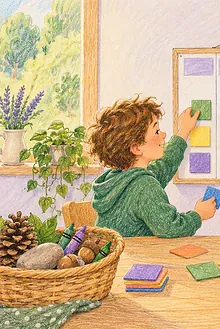
Offer large fabric pieces, smooth stones too large to swallow, wooden blocks or paper strips. Keep materials dry and separate. The child can touch with a tool, wear gloves, sort by looking or skip. Avoid rice, beads and other small loose items when choking or mouthing is a concern.
Wednesday: Sound you control
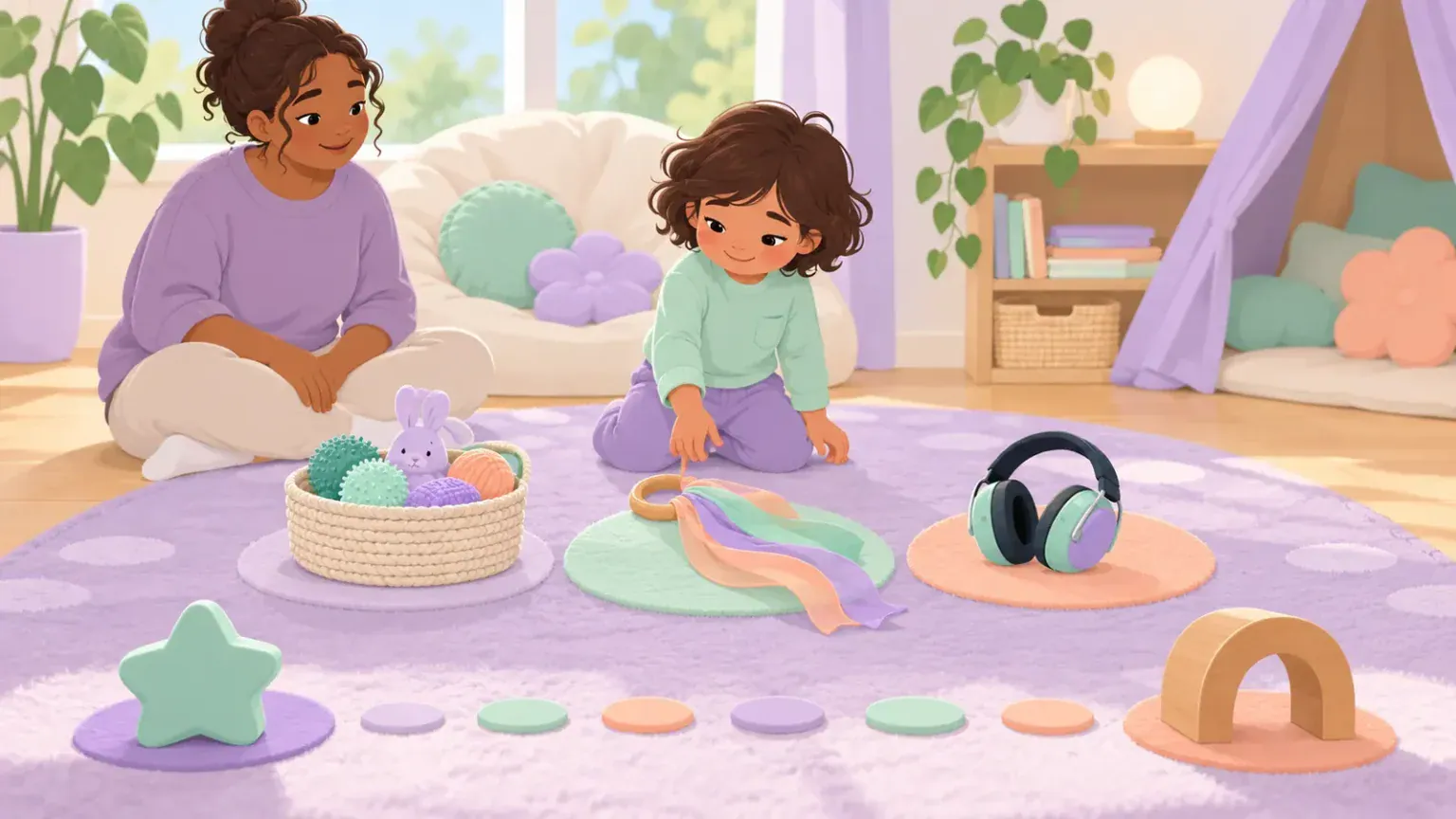
Use one instrument, a humming voice or a phone timer at a comfortable volume. The child chooses start, stop and loudness. Provide headphones if they already use them safely, or move the activity farther away. A no-sound option might be tapping a visual rhythm with fingers.
Thursday: Slow movement path
Mark three floor spots with paper or cushions: stretch, step and rest. Children can travel in any order, direct another person or move only their hands. Keep the floor dry and the route away from furniture edges and stairs.
Friday: Favourite plus one small variation
Repeat the most comfortable activity from the week, changing only one element if the child agrees: a new colour, location or role. Familiarity is not a failure of imagination. Repetition can make participation easier and helps caregivers learn what works.
Write a plan that includes “no”
Next to each activity, record three options: join, adapt, pause. Useful language includes: “You can watch from the doorway.” “Would you like the cloth or the tongs?” “The sound is finished.” “We can stop now.” Avoid promising that exposure will make a child tolerate a sensation. If sensory responses interfere with eating, sleep, school, safety or daily life, seek individual guidance from a qualified health or education professional.
Protect recovery time
Recovery may look like quiet, movement, darkness, familiar music, water or being alone nearby. Ask before touching or hugging. Do not immediately follow the activity with tidying instructions if the child is overwhelmed; secure hazards first, then return to cleanup later.
For a gentler week, combine this framework with the low-energy activity plan. The balanced play plan can supply ideas once you know which sensory features need adapting.
Review without scoring the child
Note what the environment did: “The blender next door made Tuesday hard,” or “A clear ending helped.” Avoid labels such as good, difficult or overreacting. Ask older children and teens what they want adults to remember. A sensory-friendly plan succeeds when the child has more control, clearer information and a safe way to pause.