A wet week can make home feel smaller by the hour. The answer is not a packed timetable. It is a dependable rhythm: one short active invitation, one quieter option, and a clear ending. Children can repeat favourites, play independently or decline. The goal is to make the day easier to navigate, not to recreate school or camp in the living room.
Prepare three zones, not five elaborate activities
Choose a movement space, a making surface and a reset corner. Clear breakables from the movement area. Put a washable cloth under art materials. Add books, cushions or headphones to the reset corner. The zones can be tiny and temporary; a strip of floor, half a table and one chair are enough.
Use a simple phrase each day: “First we’ll try today’s idea, then the materials stay out for anyone who wants more.” If transitions are difficult, show the activity and what comes next with two objects or pictures. The now-and-next approach can help without turning participation into a bargain.
The five-day rainy plan
Day 1: Tape-path challenge
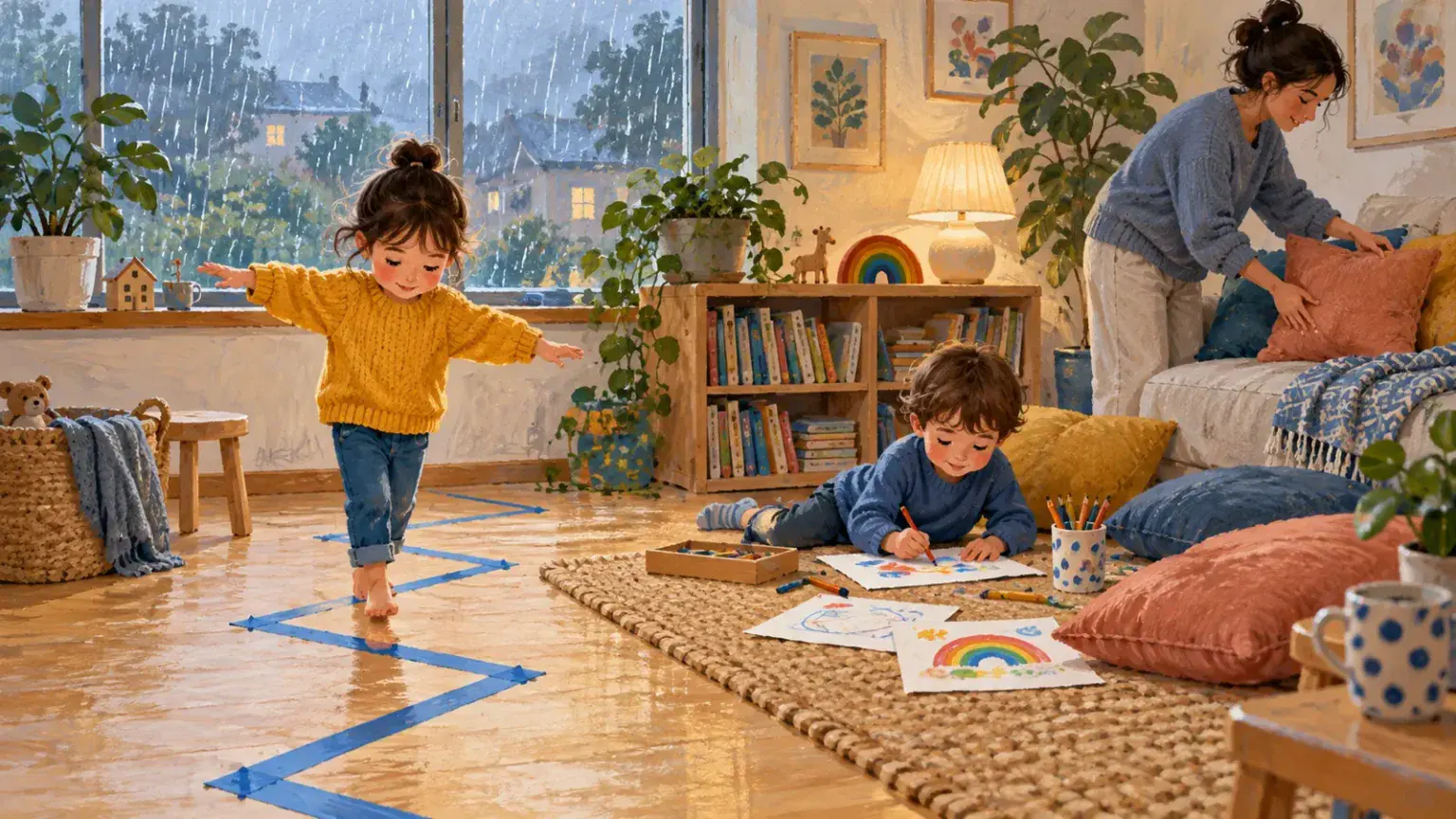
Place masking tape in a straight line, a curve and two wide stepping boxes. Walk heel-to-toe, move sideways, carry a soft toy or invent a slow animal walk. Keep the route on one level and away from doors, stairs and furniture edges. A child who does not want to balance can drive a toy along the route or call out the next movement.
Day 2: Cardboard studio
Offer one box, paper scraps and crayons. Make a tiny home, vehicle, puppet stage or sorting tray. Adults handle difficult cutting. Resist improving the design. Ask, “What would make it useful for your game?” rather than suggesting a finished product.
Day 3: Cushion story trail
Place three cushions on the floor. At each one, add a story prompt: a sound, a character and a problem. Children can hop to a cushion, sit and tell, draw the next scene or act it with toys. For low energy, keep everything seated and move the toy instead of the child.
Day 4: Sink-or-float prediction
Fill a shallow bowl and gather three water-safe objects. Ask children to predict, test and describe what happened. Supervise water continuously, empty it when finished and keep small objects away from children who mouth items. A dry alternative is rolling objects down a cardboard ramp.
Day 5: Indoor picnic and review
Spread a towel and serve the usual snack in a different place. Invite each person to name one activity they would repeat. No special food is required, and children should remain seated safely while eating. If the novelty creates more work than pleasure, skip the picnic and choose a favourite game.
Put recovery inside the plan
After movement, offer five quiet minutes: water, a book, looking out the window or lying under a light blanket if the child likes that sensation. Lower stimulation before asking for tidying. A calm ending might be: “Two more turns, then the tape comes up. Would you like to pull the straight piece or the curved piece?”
When adult energy is low, use just one idea for ten minutes. The low-energy weekly plan offers more short options. If you want variety without buying new materials, borrow from the balanced play plan.
Adjust by age and access needs
Preschoolers may repeat one action and need close supervision. Children aged 6–9 can design routes, write prompts or time themselves without competing. A child with limited mobility can direct the route, roll a ball between targets, tell the story or choose sounds. Offer quieter tools, gloves, larger handles or extra space when useful. Participation does not have to look the same.
At week’s end, keep only what genuinely helped. A rainy plan earns its place when it reduces decision-making and leaves some room for ordinary boredom, rest and self-directed play.