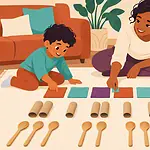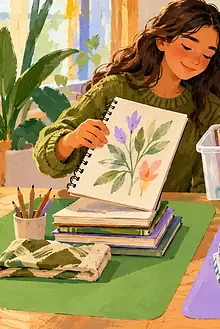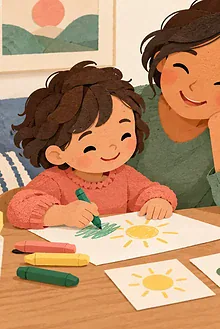
Making art away from home can feel risky when the table belongs to someone else, the room is rented, or there is no easy place to wash paint. A low-mess art pack solves the practical problem without telling children that creativity must stay tiny and tidy. The key is a clear work surface, a few dependable materials and an agreed reset.
Define the space before opening the pack
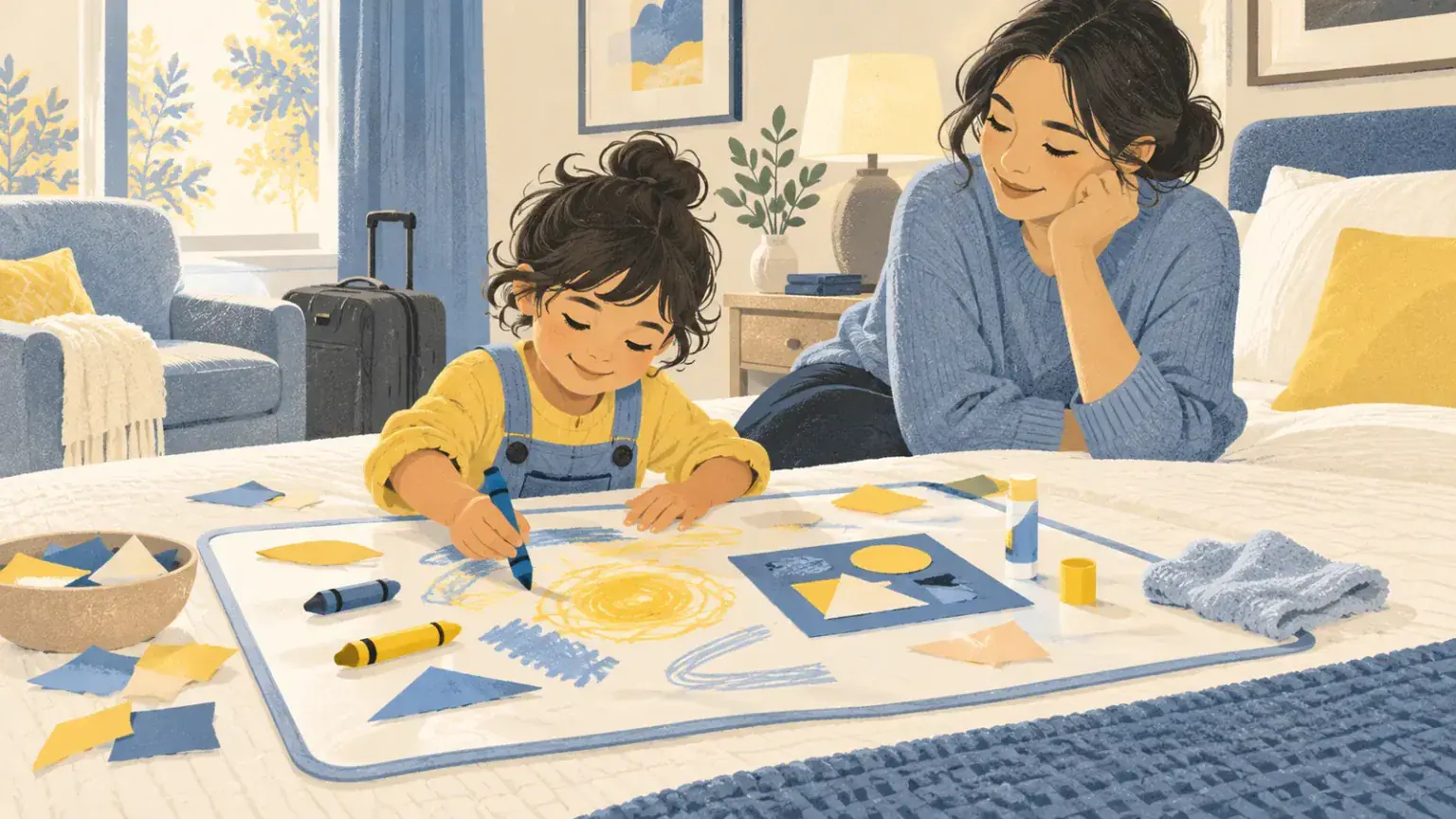
Ask the host or check venue rules. Choose a washable table or place a reusable mat on the floor. Keep food and art materials separate. If the only safe option is a clipboard on a chair, use dry materials and one sheet at a time.
Say what is available: “Art stays on this mat. You may make something, experiment, watch or stop.” That boundary is clearer than repeated warnings after the activity starts.
The compact kit
- A wipe-clean mat or old tray with no sharp edges
- Thick washable pencils or crayons in a closing pouch
- Six sheets of paper plus two pieces of recycled card
- Low-tack paper tape, tested on the surface first
- A glue stick for children old enough to use it safely
- Large pre-cut paper shapes
- A damp cloth and a dry cloth in separate bags
- A folder for work that is still wanted
Keep scissors with the adult and use them only when the setting allows. Do not pack permanent markers, loose glitter, solvent-based products or materials with strong fragrances. Check labels, age guidance and allergy or sensory needs.
Offer an invitation, not a model
Try: “How many kinds of line can this pencil make?” “Can these shapes become a place?” or “Make two colours meet without filling the page.” Avoid producing a perfect example children feel obliged to copy.
The American Academy of Pediatrics notes that simple materials can support creativity and caregiver attention matters more than elaborate gadgets. Art play may offer planning, choice and conversation; it should not be presented as therapy or a guaranteed developmental boost.
Use a contained sequence
- Put down the mat and choose two materials.
- Make for ten to twenty minutes, depending on the child and setting.
- Give a two-minute closing cue.
- Choose: keep, photograph with permission, recycle, or continue later.
- Wipe tools, count them into the pouch and check the floor.
The count-back is for care of the shared space, not for judging the artwork.
Adapt the tools
Wrap a pencil with foam for a wider grip, tape paper to the tray, or use large shapes easier to pick up. A child can direct an adult’s hand, choose colours by eye gaze, make marks with a stamp, or create digitally if that is their accessible medium and the setting permits it. For a child who dislikes sticky hands, keep glue optional.
Older children may prefer a discreet sketchbook, pattern challenge or postcard collage. Teens should not be handed materials that feel babyish; invite them to choose the palette and format. A younger child may need one material at a time and closer supervision.
Plan for predictable mishaps
Pack one spare sheet under the active page and know where water is available. If a mark lands outside the mat, stay calm: stop, clean according to the surface instructions, and change the setup. Do not make the child carry adult panic about property.
Respect ownership and privacy
Ask before displaying, photographing or giving away a child’s work. Do not insist on a finished product for the host. A page of experiments can be complete. If the child stops, close the pack without guilt.
See repeating-pattern play and the low-energy ten-minute activity plan.
Reset the pack after the visit
At home, remove scraps, sharpen or replace tools safely, wash the mat and let damp cloths dry before storage. Note what was genuinely used. A pack that always returns untouched may be too large or too adult-designed. Keep the two most useful materials and change only one thing next time; simplicity makes setup, participation and respectful cleanup easier.