- Check the limits before filling the box
- Prepare a small, dry pack
- 1. Direct an imaginary map
- 2. Give a drawing partner precise instructions
- 3. Solve a picture mystery together
- 4. Become the storyteller while someone else handles the cards
- Keep comfort ahead of completing anything
- Sources and further reading
By EdCaptain editorial desk · Published
The drawing paper slides away. The card box needs two hands to open. An activity described as “easy” can become frustrating when the hand that usually steadies everything is in a cast.
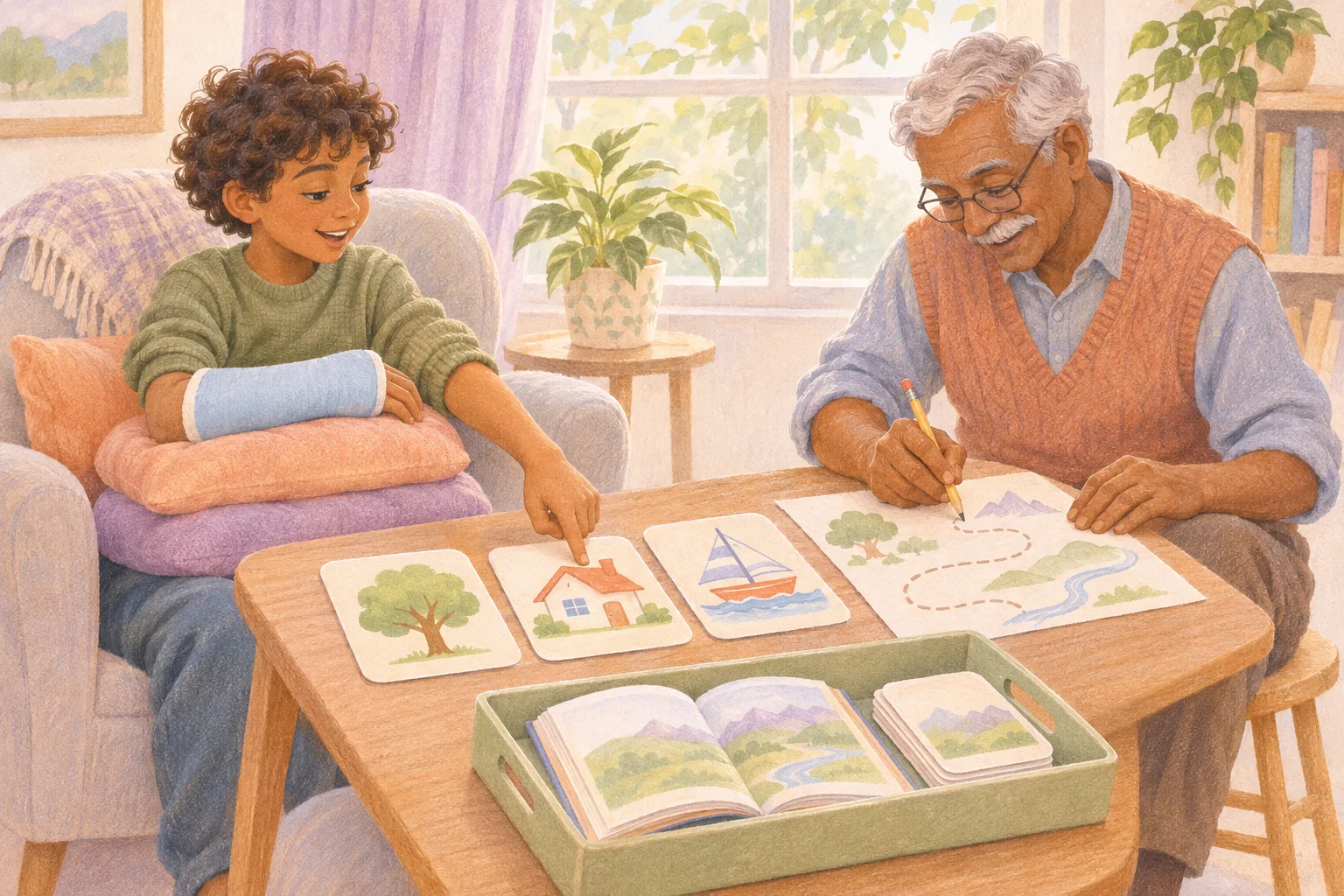
This quiet play pack is for children aged 6–12 who already have an arm cast. An adult prepares the materials; the child can use their uninjured hand, give directions or simply listen. Choose only options that fit the treating team’s instructions. These are play suggestions, not exercises or a way to speed healing.
Check the limits before filling the box
Ask the care team which seated activities are suitable and how the arm should be supported. Keep the prescribed support in place; never remove or reposition it to make a game work. Nationwide Children’s Hospital advises families to check safe activities with their clinician and avoid active games until cleared.
Use a stable table beside a comfortable seat. Arrange everything within easy reach of the uninjured hand, away from the supported arm. If that position cannot be maintained comfortably, switch to spoken play or rest. No activity is worth stretching, leaning on the cast or using the injured hand as a paperweight.
For washing, school arrangements and other daily tasks, see our separate arm-cast care guide.
Prepare a small, dry pack
Use an open shallow box that an adult carries and places on the table. You do not need a special product. Gather:
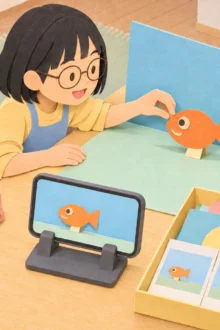
- Six large cards, each bearing one simple adult-drawn picture: a house, tree, bridge, boat, dog and moon.
- Two sheets of paper, with corners secured to the table using removable tape if the surface permits.
- One familiar picture book and a pencil for the adult.
- A non-slip mat if available, plus the arm support specified by the care team.
An adult does any cutting and taping beforehand. Leave out water, paint, glitter, sand, dough, tiny counters and tools requiring two-handed force. Materials stay outside the cast and away from its opening. Younger siblings need their own suitable materials and supervision.
Offer two options at a time: “Would you like to direct a map, or hear a picture mystery?” The child can choose neither. Start with a few minutes and check comfort rather than setting a target to finish.
1. Direct an imaginary map
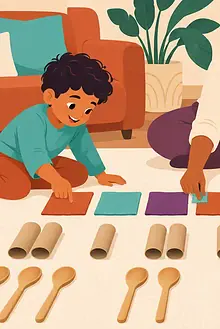
- Lay out the six picture cards face up on the non-slip mat or paper.
- Invite the child to choose three places or characters. They can point, name them, use their communication system or ask you to describe the choices.
- The child directs where each goes: “The bridge is above the house.” An adult moves the cards if needed.
- Draw a route between two places under the child’s direction. Ask what a traveller might notice along it.
- Change one detail for another journey, or leave the map exactly as it is.
The cards need not stay in place without help; holding or moving them is the adult’s job. At ages 6–9, start with two places and a short journey. At ages 10–12, offer an optional constraint: a traveller needs a route that avoids the dog’s garden. There is no correct map to copy.
2. Give a drawing partner precise instructions
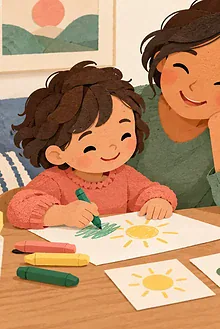
- The adult takes the pencil. The child invents a creature, vehicle or building.
- Ask for one instruction at a time: “Draw a wide body. Add two tiny windows.”
- Follow the instruction without improving the design. Ask a neutral question when needed: “Above or beside the circle?”
- Let the child name the result, suggest one change or stop.
For ages 6–9, offer choices such as round or square rather than expecting a long description. Ages 10–12 may enjoy describing an invention and what its unusual parts do. A child who wants to make marks can try secured paper with the uninjured hand if comfortable and permitted; neatness is irrelevant. They never have to demonstrate that they can manage alone.
3. Solve a picture mystery together
- Open the familiar book to a busy picture. The adult supports the book and turns pages.
- Choose something visible and give one clue: “I’m looking at something with wheels.”
- The child guesses or asks a question. Add another clue if wanted.
- Swap who chooses the mystery, or find one funny detail together.
For ages 6–9, name a small search area. For ages 10–12, try two clues that must both fit, such as “It is above the window and touches something green.” With limited vision, describe three objects aloud and play from those descriptions. Avoid making speed or tiny visual detail the measure of success.
4. Become the storyteller while someone else handles the cards
- The adult places two picture cards where the child can see them.
- Invite an opening: “The boat arrived at the house because…” A word, gesture or selection is enough.
- The adult contributes the next event. Add a third card only if the child wants one.
- End whenever either player wants; the adult can write down a favourite line with permission.
Younger players may prefer choosing between two possible endings. Older players might tell the same event from the dog’s viewpoint. Use home languages freely. If speech is tiring, the adult can tell the story and pause for optional choices.
Keep comfort ahead of completing anything
Do not distract a child through new pain or distress. The Royal Children’s Hospital advises keeping casts clean, dry and protected from knocks, with nothing inserted underneath. Stop and seek emergency assessment for pale or blue fingers, numbness, inability to move them, or concerning temperature changes. Severe pain, a damaged or slipping cast, or skin problems also need prompt medical assessment. Follow the discharge instructions and use local emergency care when needed.
After play, ask, “Was anything awkward to reach?” rather than praising endurance. The adult packs away. Keep the favourite option and replace whatever required too much handling. If the child wants company more than a game, sitting together is enough. Our health-appointment question cards can also help them raise a practical difficulty with their care team.
Sources and further reading
- Royal Children’s Hospital Melbourne: plaster cast care and warning signs.
- Nationwide Children’s Hospital: collar-and-cuff support and activity restrictions — sling instructions are specific to that prescribed support.
Read our editorial policy.