By EdCaptain editorial desk · Published
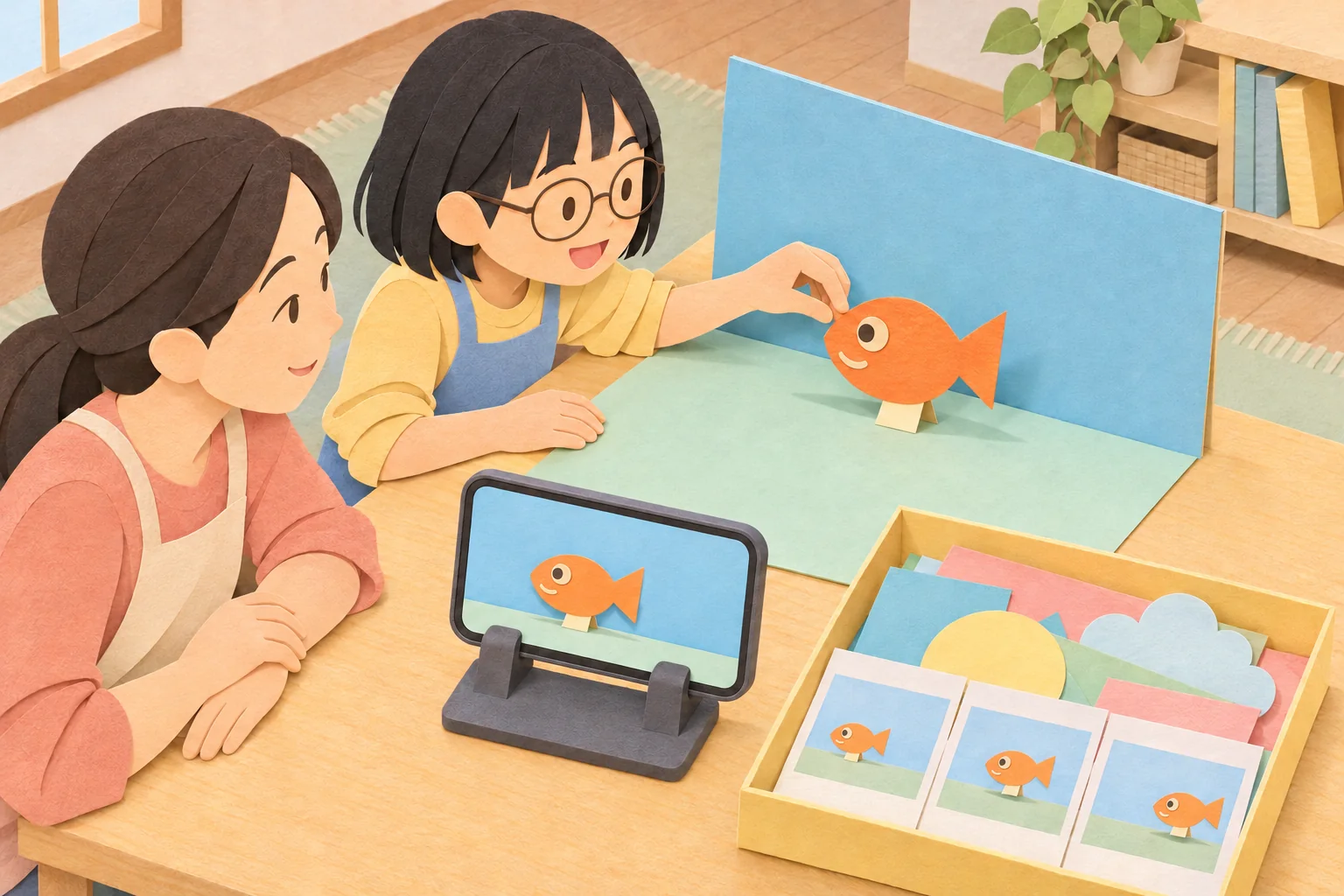
A paper fish crosses a tiny blue stage. Nobody sees the hand moving it, yet the fish seems to travel on its own. That small surprise is enough for a first animation; you do not need a whole cast, a soundtrack or a finished adventure.
This reusable stop-motion animation pack is for ages 8–12, with an adult handling device permissions and a safe camera setup. It combines a few physical materials with a camera activity. Plan for a short experiment and leave the longer film for another day.
Give the pack one manageable job
Stop motion makes apparent movement from separate photographs of small changes. ACMI’s animation guide explains the technique and the importance of a steady camera. Our first challenge is narrower: make one paper character move across a tabletop stage, then decide what to change.
Use a shallow box or document wallet for the physical materials. Store the phone or tablet separately in its normal safe place. A pack that fits on one shelf is easier to return to than a set covering the family table for days.
Gather these materials
- Two sheets of plain card: one for a backdrop and one for a character.
- Scrap paper, a pencil and colouring materials.
- Three small planning cards, made from scrap paper.
- Removable tape, suitable scissors and adult help matched to the child’s skills.
- A camera device and a secure, compatible tabletop stand already available to your family.
An adult checks any reused card for staples and sharp edges. Cut a large, simple fish shape, or let the child choose a different original shape. A folded card foot taped behind it can hold it upright. Avoid tiny eyes, buttons, magnets and loose decorations; a drawn face is enough.
Use a blank sheet or plain card as the backdrop. Stand it securely behind the character, keeping the whole arrangement well back from the table edge. Do not balance a device on a stack of books, suspend it overhead or ask a child to hold it still for every shot. Without a stable stand, make the planning cards today and borrow suitable support before filming.
Set up the device together
An adult chooses a suitable camera or stop-motion tool and checks its current privacy settings, permissions, age terms and saving options. Prefer a local project that does not require the child to create an account or upload images. This guide does not depend on a named app; confirm that the chosen tool can collect still frames and play them in order.
Check the actual camera view. Keep faces, school details, mail, family photographs and reflections out of the frame. Turn off the camera flash. Use steady ordinary room light, with no extra hot lamps or trailing charging leads around the play space. A charged device can keep the table simpler.
Take one test image. Make sure the entire fish and its intended path fit in the picture. Let the child inspect it before committing to a sequence.
Make a three-card plan
Draw a beginning, a change and an ending. For example: fish beside a paper rock; fish travelling around it; fish reaching an open space. These are reminders, not polished illustrations. Ask, “What is the one thing we want the audience to notice?”
For a first trial, set the extra rock aside and simply move the fish across the stage. Keep the three-card story in the pack for later. Trying the movement first can reveal whether the character stands up and the setup is comfortable.
Capture a tiny first sequence
- Choose roles. One person moves the character and another captures images. Agree who says “ready”. A solo child can do both actions in turn while an adult stays available.
- Take the first photo. Put the fish at its starting place and move hands fully out of view.
- Make one small move. Slide the fish a little along its path without touching the camera or backdrop.
- Pause, then photograph. Check that hands are clear before capturing the next frame.
- Repeat until you have twelve images. This is a practice sequence, not twelve seconds of film.
- Play it back once. If the tool allows it, try eight frames per second: twelve images will last about one and a half seconds. Slow the playback if that is easier to inspect.
ACMI suggests starting around eight to twelve frames per second. Keep that setting separate from how quickly you work: you can take as long as needed between photographs. Stop for breaks without treating the pause as a mistake.
Change one thing after watching
If the fish seems to jump, try smaller movements in a new trial. If a hand appears, check the image list and remove or retake that frame if the tool permits. If the whole background shifts, the camera or stage probably moved; start a fresh short shot instead of spending the session chasing a perfect match.
A flicker may come from changing light or shadows. Keep people from crossing the light while a photograph is taken. Do not add deliberate flashing effects. Anyone uncomfortable with moving images can view separate stills or direct the physical scene instead; stop playback when requested.
Share the work in ways that fit
Ages 8–9: keep one character and let the adult handle capture while the child chooses each move. Ages 10–12: invite the child to lead the plan, compare two movement sizes or add a brief still pause before the fish moves again.
Te Papa’s teaching resource separates camera, mover and director roles. Use that flexibility: a child can direct through speech, pointing, signing or AAC while a partner handles fiddly movements. Keep controls and materials within comfortable reach. Describe the positions aloud when that helps; nobody needs to perform every job to be a filmmaker.
Save a small success and reset
Watch together on the device before considering sharing. Keep the first version silent; if you later want a soundtrack, our music-permission guide explains what to check. Review the exported file for private details and obtain agreement from anyone included before sending it anywhere.
Ask, “Which change would you try next time?” Put the character, backdrop and planning cards back in the wallet. Note where the adult saved the project, then return the device to its normal place. For broader choices about replenishing materials, see our child-maintained refillable pack. The animation can remain a tiny experiment rather than becoming another unfinished obligation.
Sources and further reading
- ACMI: making a stop-motion animation — technique and filming guidance.
- Museum of New Zealand Te Papa Tongarewa: stop-motion techniques — shared production roles.
Read our editorial policy.