Food labels can support practical decisions, but a label-reading activity can easily become a lecture about “good” and “bad” foods. A more useful approach is to compare two familiar packages for a specific purpose: Which snack has more fibre? Are the serving sizes the same? Does one option contain more sodium? The answer depends on context, taste, allergies, cost and what else is being eaten.
Set up a neutral comparison
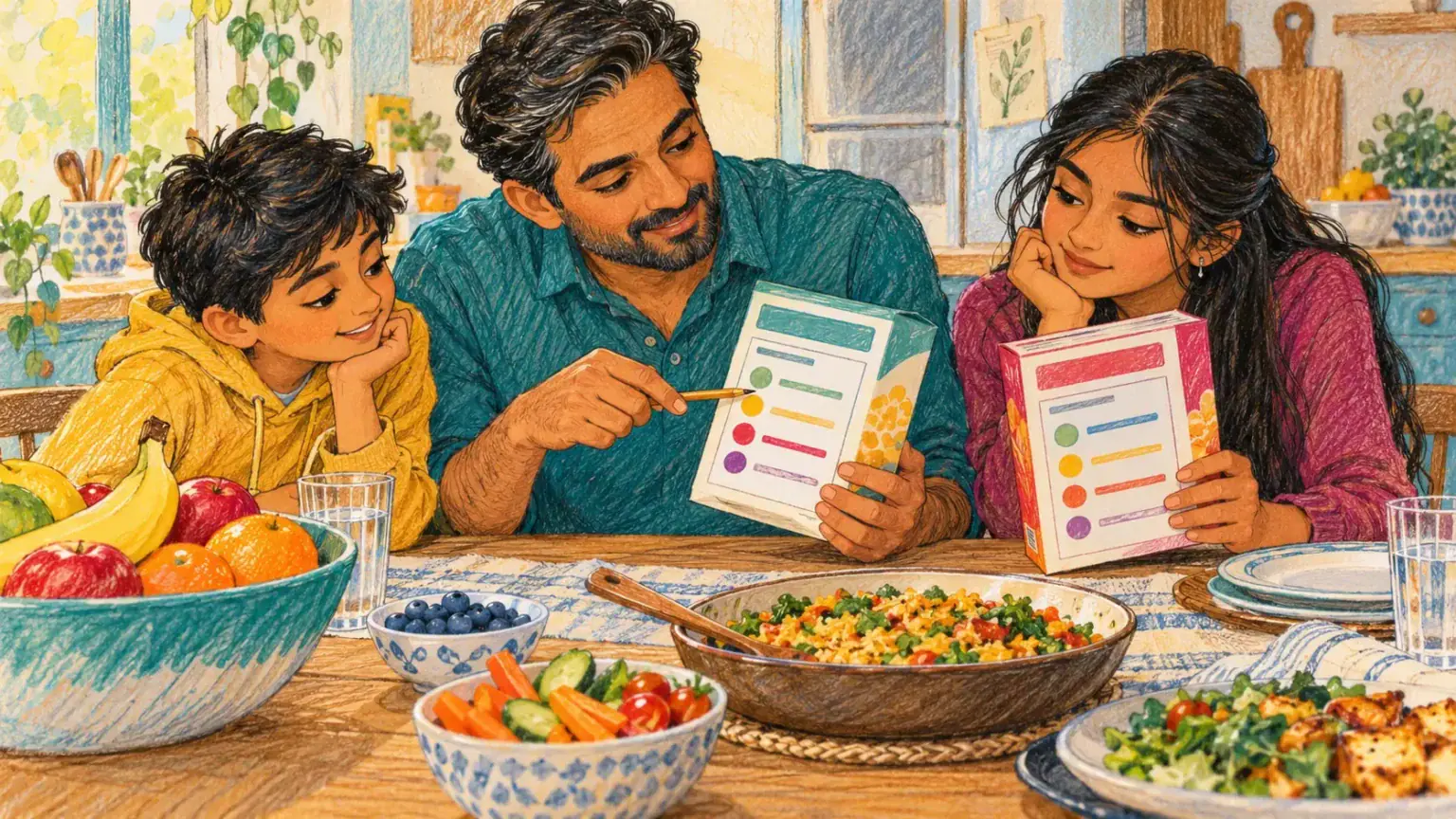
Choose two packages from the same broad type of food—for example, two breakfast cereals, two breads or two soups. Avoid presenting one as the “healthy winner.” Place the unopened packages side by side with the Nutrition Facts panels visible. For children who find numbers difficult, an adult can read aloud while the child points to matching rows.
The US Food and Drug Administration explains that serving information appears at the top of the Nutrition Facts label and that the listed nutrient amounts apply to that serving. It also notes that packages may contain more than one serving. This makes serving size the first comparison, not an afterthought.
Compare in five steps
- Name the purpose. Say, “We are practising how labels organise information,” or choose one household question such as comparing fibre in two breads.
- Find servings per container and serving size. Are the amounts being compared equal? If not, do not treat the numbers as a direct like-for-like contest.
- Choose only two or three rows. Depending on the food, look at fibre, protein, sodium, added sugars or another nutrient relevant to the family. Children do not need to analyse every number.
- Check the ingredient list for practical needs. Families managing allergies or intolerances should follow the package allergen statement and their clinician’s guidance. Do not rely on a classroom-style comparison to decide whether a food is medically safe.
- Add the information labels cannot provide. Which option fits the meal? Which is affordable, available and acceptable to the child? Will it be combined with fruit, vegetables, water or another food?
Use language that protects a healthy relationship with food
Describe what the label says rather than what a person “should” eat. Try: “This serving lists more fibre,” “These serving sizes are different,” or “This soup lists more sodium.” Avoid “clean,” “junk,” “guilty,” or comments about weight. Calories are present on the label, but children do not need to count them for this activity.
If a child has a history of restrictive eating, an eating disorder, significant anxiety about food or a prescribed diet, skip the activity unless their qualified care team recommends it. The goal is ordinary consumer literacy, not monitoring a child’s intake.
Make the comparison accessible
Enlarge a photograph of each panel, use a ruler to track one row at a time, or cover unused sections with paper. A child can match icons for “same,” “more” and “less” instead of calculating. Older children can notice that percentage Daily Value is based on general reference amounts and is not a personalised target.
Finish with a real meal question
Ask, “What would make either option work for us today?” A cereal might be paired with milk or yoghurt and fruit; soup might be served with bread and vegetables. This keeps one package from carrying the whole burden of a balanced diet. Continue with ideas for a school lunch a child will actually eat, offering new foods without pressure, or choosing everyday drinks for children.
End by letting the child choose one observation to share. A careful statement such as “These portions are not the same size” shows more understanding than declaring one product universally better.