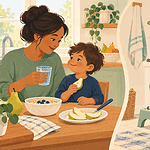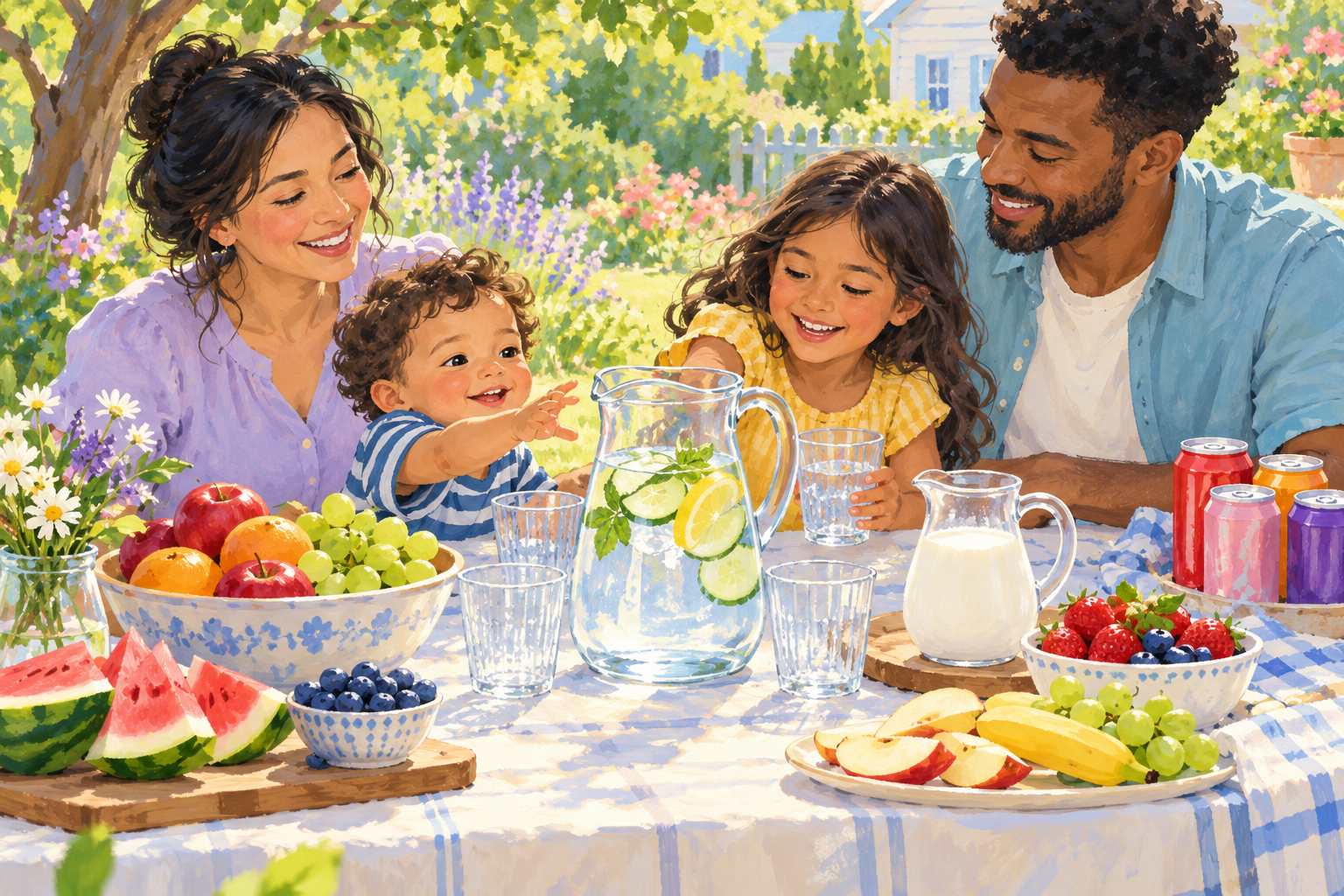
Children do not need a complicated drink menu. For most families, the simplest pattern is water for thirst and plain milk when it fits the child’s age and diet. Juice and sweetened drinks are occasional choices rather than the default.
Age changes the answer
During the first year, breast milk or infant formula is the main drink. Water and other drinks are introduced according to age, feeding stage and local health guidance; juice is not recommended for babies under one. Because infant needs are specific, ask your child’s clinician if you are unsure about water, formula preparation or milk alternatives.
After infancy, plain water can become the everyday thirst drink. Plain milk can contribute protein, calcium and other nutrients, but the suitable type and amount depend on age, growth, the rest of the diet and any allergy or intolerance. Plant-based drinks are not nutritionally interchangeable, so a clinician or dietitian can help if dairy is excluded.
Whole fruit is usually more useful than juice because it includes fibre and is eaten more slowly. Even 100% juice is concentrated and should be limited. Sugary drinks—including fizzy drinks, fruit drinks, sweetened waters and many sports drinks—add sugar without being necessary for routine hydration.
Make water the easy option
- Keep a clean bottle within reach and refill it at predictable points: wake-up, leaving home, after play and with meals.
- Serve water cool or room temperature according to preference. A straw cup or open cup can make a difference for some children.
- Model the habit. Put water on the table for everyone rather than making it the “child drink.”
- For flavour, add slices of cucumber, citrus or crushed berries without adding sugar.
- Send water for ordinary school days and short activities unless a medical or sports professional advises otherwise.
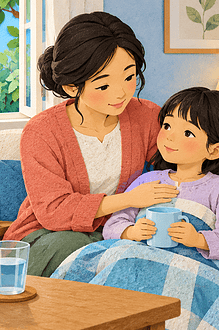
Needs rise with heat, fever and physical activity. Offer regular opportunities to drink; younger children may not reliably notice thirst. Very dark urine, a dry mouth, unusual sleepiness, dizziness or much less urination can signal dehydration and need prompt attention, especially with vomiting or diarrhoea.
Reduce sweet drinks without drama
If sweet drinks are currently frequent, change the environment gradually. Stop buying one type, dilute routines rather than drinks—for example, move juice from every breakfast to selected meals—and keep water visible. Do not describe sweet drinks as “bad” or use them as prizes; scarcity can make them more powerful.
Try neutral language: “Water is the drink for thirst. Juice is something we sometimes have with food.” At parties, your child can enjoy a different drink and return to water later. One occasion does not define the family pattern.
Connect drinks with meals and teeth
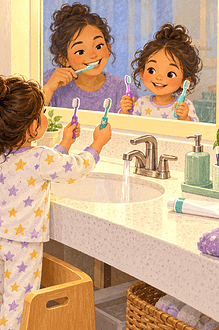
Constant sipping on sweet drinks exposes teeth repeatedly to sugar and can dull appetite for meals. Offer most drinks at clear times, keep water available between them and brush with fluoride toothpaste as locally recommended. Our guide to planned after-school snacks uses the same principle: predictable opportunities rather than continuous grazing.
For children learning to manage their own bottle and kitchen routines, adapt tasks from life skills for kids by age.