By EdCaptain editorial desk · Published
General educational guidance. No qualified clinical review is recorded for this article. Health and safety information.
The new glasses made it home safely. Ten minutes later, they are on the sofa, and your child is insisting they do not need them. Before another reminder, find out what “I don’t like them” means: a sore spot behind an ear, an unfamiliar view, worries about classmates, or simply one more thing to remember.
This guide is for families of children aged 3–12 who have already been prescribed glasses. Keep the eye-care team’s instructions beside the practical ideas below; the aim is to make that individual plan workable.
Start with a comfortable fit
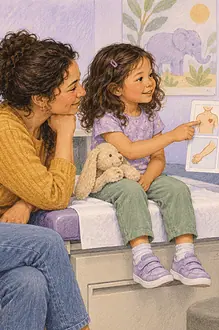
Ask your child to point to anything that pinches, rubs or feels heavy. Look for slipping, a crooked frame or marks on the nose. Notice whether your child is looking through the lenses or peering over them. Kingston and Richmond NHS guidance explains that properly centred, secure frames matter to how prescribed glasses work.
Take your child and the glasses back to the dispensing optician if the fit seems wrong. Do not make “keep them on” the answer to a painful frame. At a fitting, ask the optician to offer suitable options first, then let your child choose among those. A favourite colour can be their decision without making them responsible for judging lens position.
For a child who communicates without speech, offer a body picture, pointing or their usual communication system. Watch when the glasses come off: immediately, during movement, or after a particular activity. Describe the pattern to the optician without assuming its cause.
Make the wearing instructions clear to every adult
Ask, “When exactly should these be worn, and what should we do if they are difficult to tolerate?” Many children are told to wear glasses full time, but follow your child’s own instructions. Alder Hey’s parent leaflet makes that exception explicit. Ask separately about sport, swimming and any activity where protection or removal may be needed.
Keep a short note with:
- The wearing schedule the eye-care team has given.
- Who to contact for fit problems, persistent discomfort or difficulty following the schedule.
- The next review date and any questions to bring.
Share this with school, childcare and other caregivers. If full-time wear is proving impossible, contact the team for an achievable plan rather than deciding on a new part-time schedule yourself.
Choose one easy moment to practise the routine
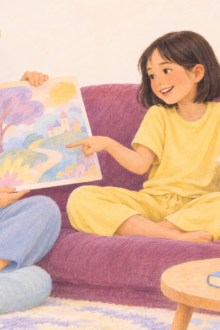
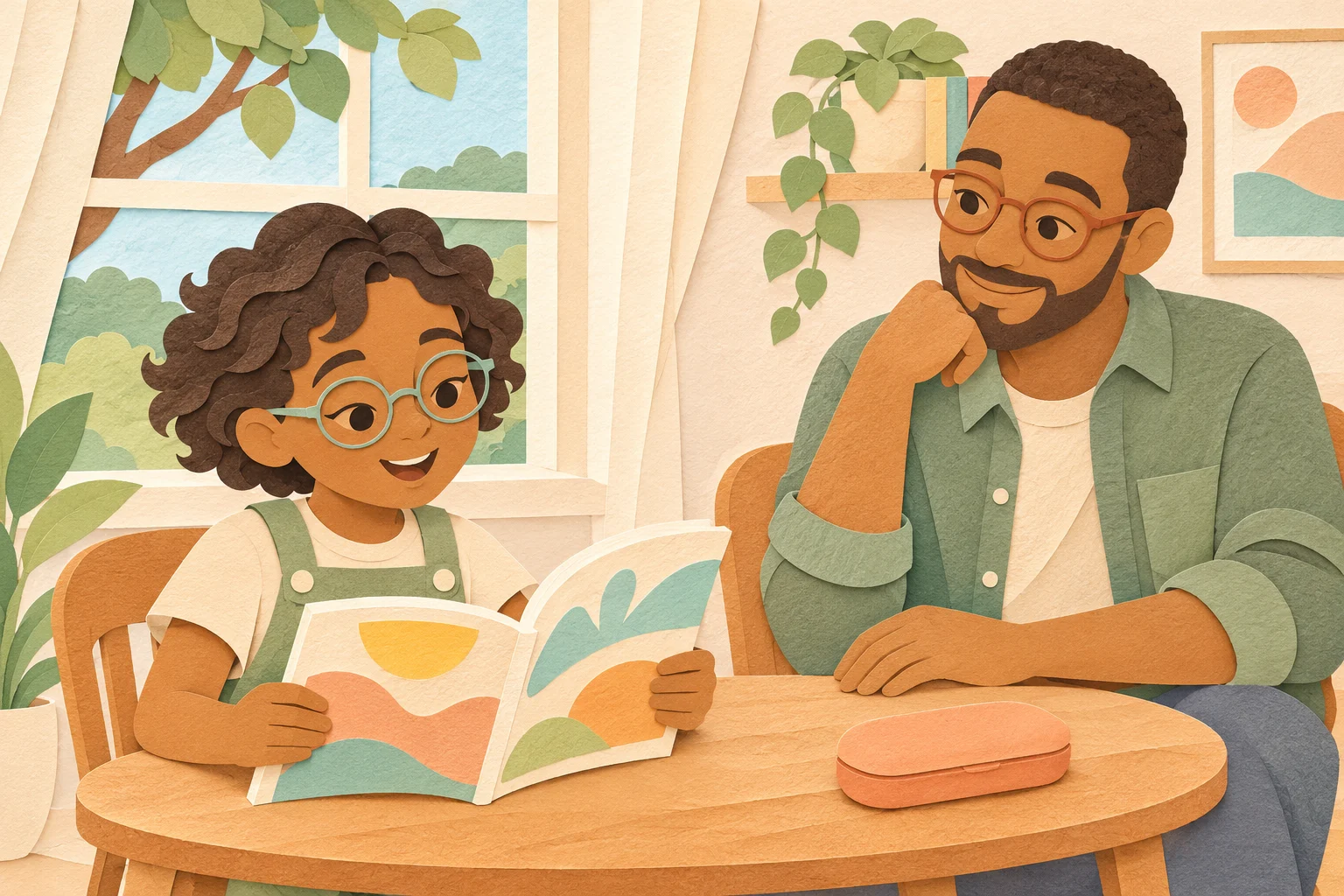
Pair putting on the glasses with something your child already enjoys: looking at a picture book, choosing a drawing idea or telling you about a model they built. This is a friendly starting cue within the prescribed schedule, not a reason to remove glasses after the activity if they should stay on.
Try: “Your glasses are ready. Shall we look at the animal book or your drawing?” Keep the conversation about being together. Repeated requests to prove how much better they can see can turn an ordinary evening into a test.
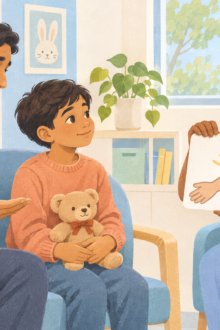
If they take the glasses off, ask briefly what happened. “Did something hurt, did the view feel strange, or did you forget?” Help with the answer you receive. Notice a useful action—“You told me the side was rubbing”—rather than praising a child for enduring discomfort.
Keep mornings simple. Put the case in one agreed place and attach a reminder to an existing step, such as getting dressed. Our guide to helping children stop losing things explains how to build a consistent home-and-check system.
Match the support to your child’s stage
Ages 3–5: use one short instruction and stay nearby while they settle into a familiar activity. Let them choose the book or which caregiver sits beside them. A picture sequence showing “get dressed, glasses, breakfast” may be easier to use than repeated spoken reminders. Adults handle the optician calls and keep track of the case.
Ages 6–9: ask where the routine breaks down. Perhaps glasses are removed for an activity and do not return, or the case is hard to find. Agree on one cue with the teacher and practise a simple request: “My glasses are slipping. Please help me tell my parent.” Avoid public charts that announce wearing difficulties to classmates.
Ages 10–12: talk privately about appearance, friends and independence. Ask, “What would make school easier with these?” Let your child help choose suitable frames and plan where the case lives. They can practise describing a problem to the optician while you remain responsible for arranging care. Do not make health support something they have to earn.
Give school a small, usable handover
A teacher does not need the whole appointment history. Share the wearing instructions, an agreed storage place when removal is advised, and the adult to contact if glasses are uncomfortable or damaged.
Ask staff to use quiet reminders and tell you about patterns. “They come off after PE” is more useful than “They won’t cooperate.” Agree who helps your child return to the routine after activities.
If comments from other children are the difficulty, listen before offering reassurance. Your child might prefer a short reply—“They help me see”—or help from a trusted adult. Repeated teasing needs an adult response; our guide to friendship trouble and bullying can help you decide what to raise with school.
Know when to ask for help
New glasses can initially make the view feel unfamiliar. That does not mean every complaint should be dismissed as adjustment. Leeds Teaching Hospitals advises contacting the orthoptist if a child cannot be persuaded to wear glasses, rather than waiting for a distant review. Contact your own eye-care team if discomfort persists or the prescribed routine is not working. Keep follow-up appointments even if things seem easier.
Sudden eye symptoms, loss of vision or an eye injury need immediate emergency assessment. Eye pain with marked redness, light sensitivity or a change in vision needs urgent medical assessment. Follow local emergency or urgent-care arrangements; do not treat these as an ordinary glasses-adjustment problem. The NHS eye-pain guidance explains these warning signs.
For the next conversation with the optician, bring one clear observation: when the glasses come off, what your child reports and what you have noticed about fit. That gives the professional something specific to work with and gives your child a chance to be heard.
Sources and further reading
- Kingston and Richmond NHS: fitting glasses for children
- Alder Hey Children’s NHS: children’s glasses FAQs
- Leeds Teaching Hospitals NHS: wearing glasses and getting support
- NHS: eye pain and urgent warning signs
Report an error or suggest an improvement
Was this useful?