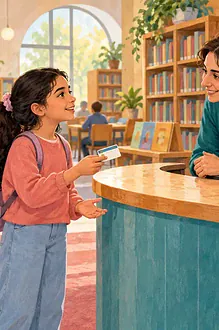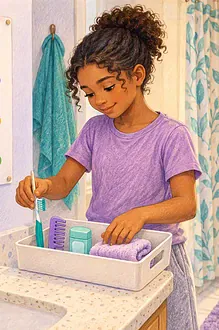
Lost water bottles and missing keys can make a family morning unravel. Repeating “Be more responsible” rarely teaches the missing skill. Children need a physical home for important objects and a short routine for putting them there. Build that system when everyone is calm, then practise it until it becomes easier than dropping things anywhere.
Find the point where items disappear
For three days, notice rather than lecture. Does the school pass vanish when your child changes clothes? Are glasses left where homework happens? Does the sports kit never leave the car? The best storage place is usually near the moment an item enters or leaves the child’s hands.
Ask your child to help choose the solution. A beautiful organizer that they cannot reach or remember will not work. The American Academy of Pediatrics’ guidance on growing responsibility gives a wonderfully concrete example: teach a teen to put keys in one particular spot. Specific systems are more useful than general demands to “get organized.”
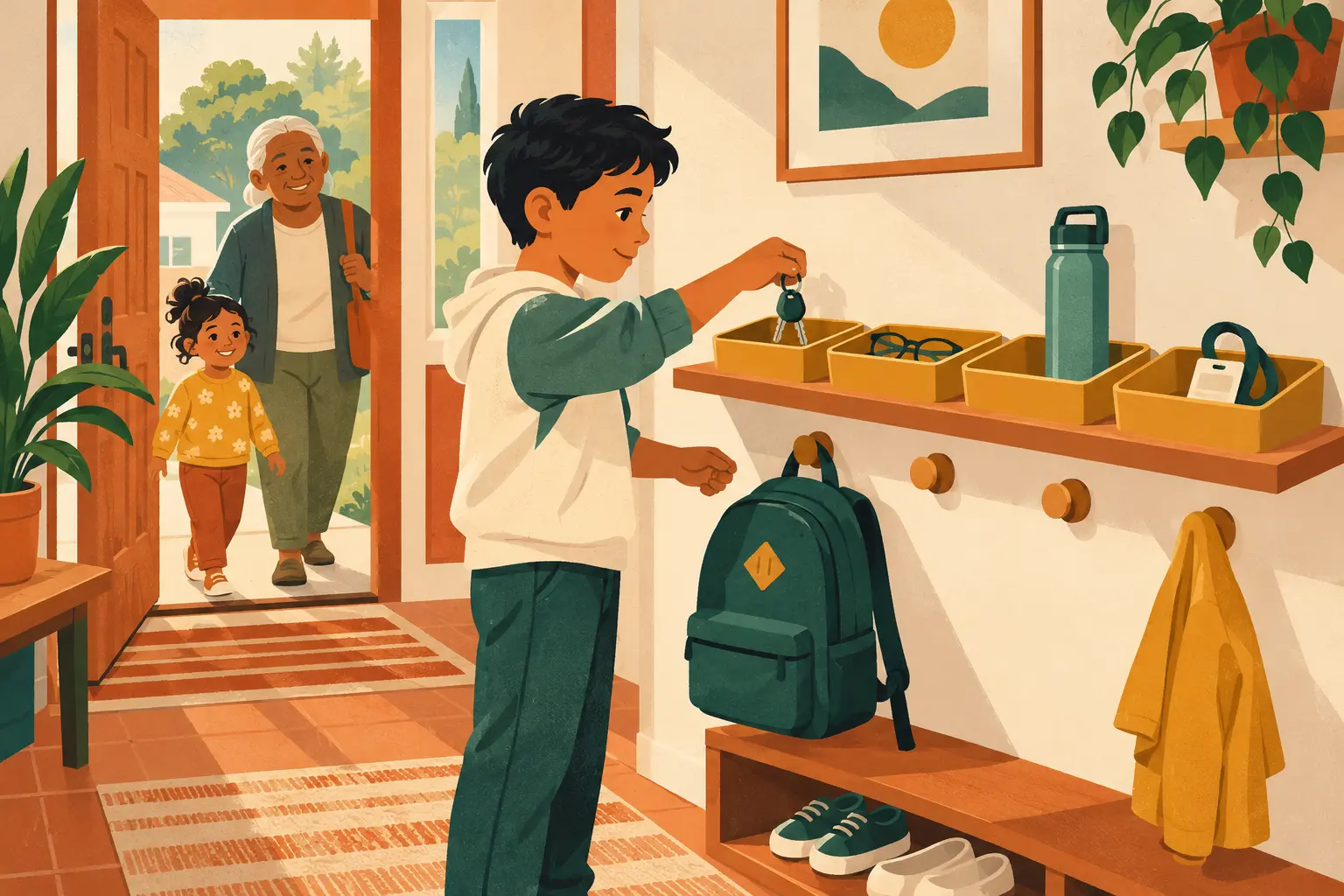
Create one landing zone
Use a low hook for a backpack, a tray for small items, a basket for sports gear and a charging spot for devices if your family uses them. Keep the layout simple and leave room for the object. If the tray is buried under mail, the system will fail.
For a child who moves between homes, create the same categories in both places. If an item must travel, use a bright pouch that clips inside the bag. Expensive trackers can help some families, but first test whether a consistent home solves the problem.
Teach the three-part routine
- Home: When you enter, put each important item in its place before starting another activity.
- Pause: Before leaving a room or venue, stop at the doorway and look back.
- Check: Use a short list tied to the outing: keys, pass, water, bag.
Practise on a low-pressure day. Walk in, place the items, then repeat. Before school, point to the check card rather than naming every object. This is similar to the final check in our guide to packing a school bag independently.
Respond to a missing item without becoming the search team
Stay practical: “Where did you last use it? What are the three most likely places? What will you check first?” Let your child lead the search. If time allows, avoid searching five rooms while they wait. For a genuinely urgent or safety-related object—medicine, identification, house keys—help promptly, then improve the system later.
Use natural, proportionate consequences when safe. A forgotten nonessential item may stay home. Avoid consequences that block education, health or safety. The point is to connect action and outcome, not create humiliation.
Adjust for attention, memory and mobility
Some children need stronger cues. Use a photo of the completed landing zone, a colored tag on the bag, a timer at departure time, or a checklist attached to the door. Reduce the number of loose objects by keeping a pencil case, toiletry pouch or sports bag packed.
If reaching hooks or opening boxes is difficult, change the storage. Open trays, large handles and contrasting colors may help. A child can direct where an item belongs even when they need physical assistance to place it. Independence includes using an effective support.
Build ownership without blame
Say, “The system isn’t catching your glasses yet. What should we change?” rather than “You always lose everything.” Review one week at a time. Praise the action—“You paused and checked the bench”—not a fixed trait.
For older children, add replacement planning: who needs to be told, whether a card must be cancelled, and what the replacement costs. Teens can create a leaving-home note on their phone and gradually remove items as habits become automatic. Our broader guide to everyday life skills can help you choose the next responsibility.
When losing things points to a bigger barrier
Occasional losses are normal. If they are frequent across home and school, cause significant distress, or appear alongside other attention, memory or learning concerns, compare notes with the teacher and speak with a qualified professional if needed. Do not diagnose from one habit. In the meantime, practical supports are useful regardless of the reason.
A successful system is boring: the object has an obvious home, the check takes seconds and adults no longer need a morning speech. Keep refining the environment until the desired action is the easiest action.