By EdCaptain editorial desk · Published
A child has drawn a picture for a cousin and wants to send it. You could address the envelope and drop it off yourself, but the small jobs around that picture make a useful first independence lesson: check where it is going, prepare it clearly, find out what sending it costs and hand it over safely.
For ages 6–12, choose an ordinary paper letter to a person your family knows. Keep a caregiver alongside for the real posting task. The aim is participation in the whole process, with support where needed, rather than perfect handwriting or an unaccompanied trip.
Choose a simple first letter
A drawing with one sentence, a short update or a question is enough. Ask the recipient privately whether they are happy to receive it and confirm their current postal address. Do not use a first attempt for an urgent document, something valuable or a message to an unverified online contact.
If your child wants to write several pages, let them. Just explain that more paper or a different envelope may change the postage. Save little gifts for another task: an adult should check the carrier’s packaging and contents rules before anything other than ordinary paper is included.
You will need paper, a plain envelope, a pen, scrap paper for practice and access to your local postal service’s current instructions or a staffed counter. Buy the right postage after checking the finished item. There is no need for a special stationery kit.
Show the three different jobs on an envelope
On a practice envelope, distinguish the recipient—where the letter should go—from the sender—where undeliverable mail can come back. The postage shows that the appropriate sending service has been paid for.
Look at your carrier’s own example together. The USPS domestic-letter guide, for instance, places the return address at the upper left, delivery address towards the lower centre and postage at the upper right. That is a US example, not a template for every postal system or special address.
Outside the US, use the relevant local guide. An address may use a street, building, post-office box or other delivery details; do not make your child fill an unfamiliar format from memory. For an international letter, check the sending carrier’s international guidance separately. A domestic stamp or address example is not automatically suitable.
Prepare and send it in six manageable steps
- Make the message. Let your child decide what they want to say or draw. They can dictate, type or use another communication method. Do not turn the task into correcting every spelling choice.
- Practise the envelope first. On scrap paper, use fictional details to learn the positions from your carrier’s example. Keep real addresses off any practice sheet that might be displayed or photographed.
- Prepare the real address. Copy or print the verified details clearly. Have your child check the recipient’s name and compare each line with the approved address. An adult checks the complete delivery and return information before posting.
- Put the letter inside and close it securely. Ask, “Is the picture in there?” before sealing. Keep the outside readable. USPS warns that rigid or lumpy items can damage a paper envelope or need a different mailing format, so keep this first task to simple paper.
- Confirm and add postage. Check the complete envelope’s size, weight, destination and chosen service with the local carrier. Let the child ask the question or point to a prepared note. Attach the correct postage as instructed, after the other checks.
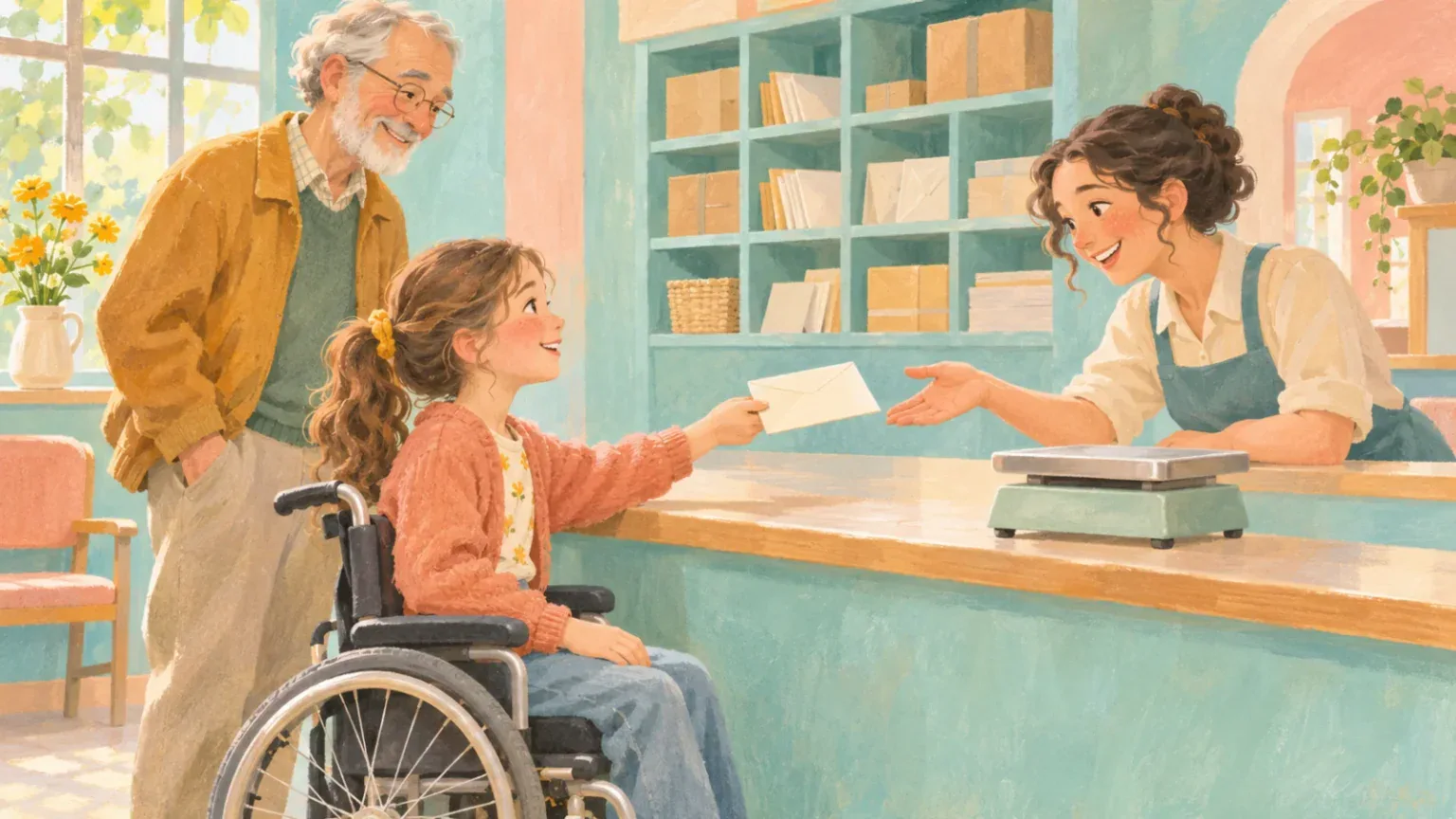
- Use an approved posting point. Go together to a staffed counter or suitable outgoing-mail point. Check that it accepts this item. Stay together and let your child hand over the envelope or ask you to post it if the slot cannot be reached safely.
The UK Post Office’s sending guide explains why size, weight and service affect postage and offers help at a branch. Whichever country you are in, “it looks like one stamp” is not the check. Ask about any uncertainty before the envelope leaves your hands.
Give your child a useful question to ask
Rehearse a short exchange at home: “Hello. I’d like to send this letter to someone in this country. Can you help me check the postage?” A child can show a written request or use a communication device; speaking without help is not a requirement.
Stand where your child knows you are available. Agree a signal for assistance and give them time to respond if the clerk asks a question. Our guide to everyday conversations with staff offers ways to prompt without taking over.
You can handle the money while the child handles the envelope. An older child can compare the available services with you, but an adult should approve the purchase and any optional extra. Do not imply that every letter is tracked or that a receipt guarantees arrival on a particular day.
Match the role to the child
Ages 6–9: Let your child choose the recipient, make the message, identify whose name belongs on the envelope and take part in the final check. You can write or print the address. Ask one question at a time: “Who is getting this?” then “Is the letter inside?”
Ages 10–12: Invite them to prepare the envelope, use the official guide with you and ask about postage. They can write down the posting date and any service information you receive. Keep adult checks on addresses, payment and the route.
If handwriting, vision, reading or hand movements make a step difficult, adapt the job. Enlarge the approved example, read it aloud, use a printed label accepted by the carrier or let the child direct where you place it. Plan an accessible counter or posting point. Do not ask a child to stand unsafely, lean out of a wheelchair or climb to reach a slot.
Keep the addresses private, then review the process
Explain that a postal address has a purpose here: getting this letter to a known recipient. That does not make it something to post in a class chat or on social media. Avoid sharing photographs of the addressed envelope, its barcode or any receipt containing personal details.
After posting, ask, “Which part could you do again, and which part would you want help with?” Notice a concrete action: “You checked the apartment number instead of guessing.” The recipient may let you know when the letter arrives, but do not promise a reply or a delivery date you cannot guarantee.
If your child wants more practice without postage costs, our family post-office game keeps the next round at home. For the real letter, the achievement is the completed chain of small decisions, from choosing the recipient to asking for the right help.
Sources and further reading
- USPS: domestic letters, addressing, postage and mailing options
- UK Post Office: preparing, weighing and posting a letter
Read our editorial policy and review methodology.