When hygiene becomes a daily argument, the problem is often not that a child “doesn’t care.” The routine may contain too many hidden steps, supplies may be hard to reach, or the child may need more privacy, sensory comfort or direct teaching. Turn hygiene from a stream of reminders into a visible system that your child can gradually own.
Define the routine together
Start with what is needed in your household and for your child’s age: for example, brushing teeth, washing face or body, using deodorant when appropriate, combing hair and putting on clean clothes. Medical, dental, skin and hair-care needs differ, so follow advice from your child’s qualified clinician or dentist when it conflicts with a generic routine.
Ask your child what feels difficult. “Is it remembering, getting started, knowing when you’re finished, or how something feels?” A rushed morning may call for moving one task to the evening. Strong smells, water temperature, buzzing toothbrushes or tangled hair can make an ordinary step genuinely uncomfortable.
Build a personal hygiene station
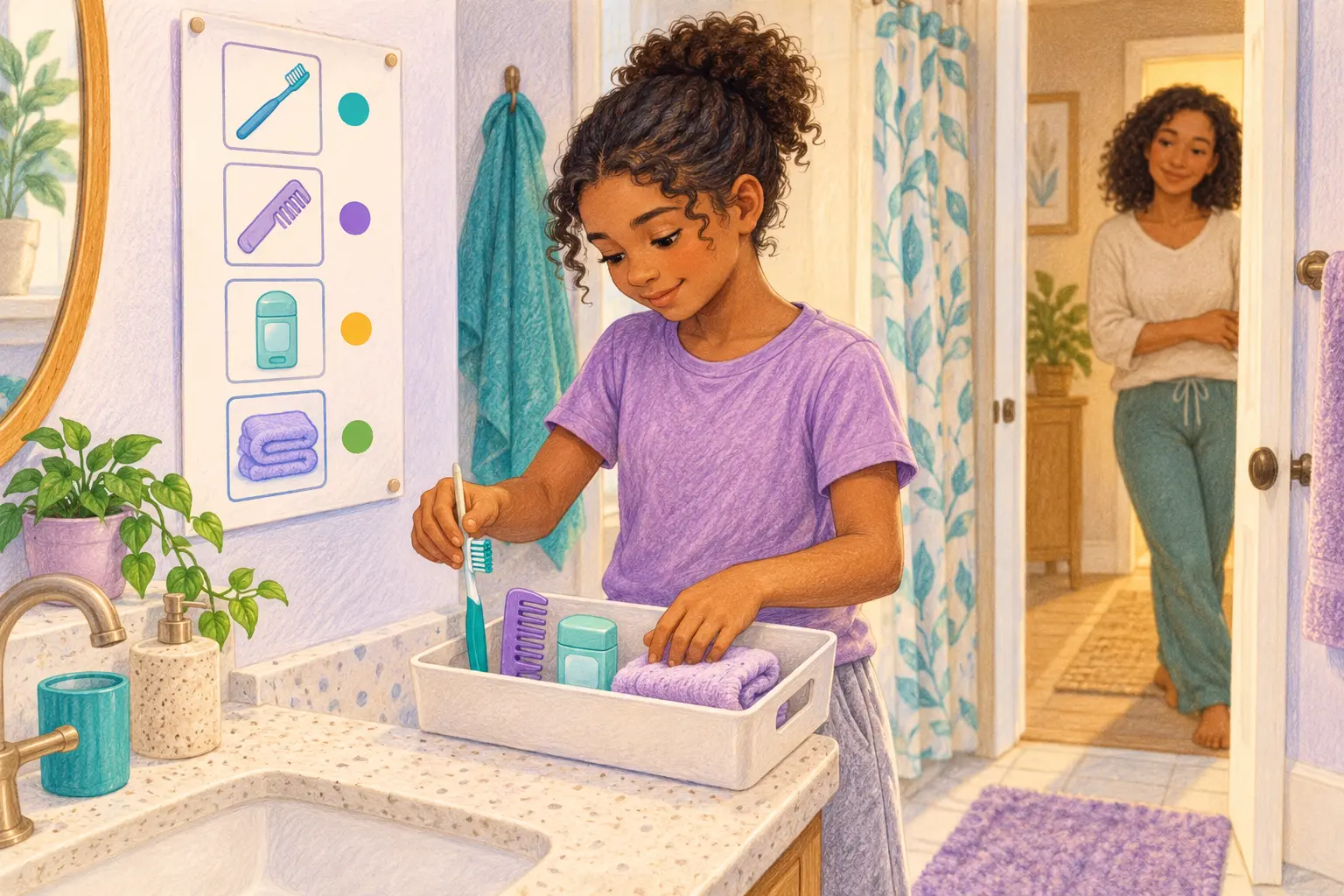
Keep everyday items in one accessible tray or bag. Use separate items for siblings when hygiene requires it, and store medicines, razors and hazardous products securely. A child who travels between homes may benefit from a small kit in each place rather than having to remember every bottle.
Add a short visual sequence using pictures or neutral words your child accepts. Keep it specific: “brush teeth for the agreed time” is clearer than “get ready.” Our guide to an independent morning routine explains how a visible sequence can replace repeated verbal prompts.
Teach the sequence, then fade your help
- Demonstrate respectfully. Explain the steps with a model, picture or your own actions when possible. Protect your child’s body privacy.
- Practise one step. Let your child own a manageable task, such as setting out clean clothes or packing the hygiene tray.
- Use one neutral cue. Try, “Check your routine,” rather than listing every missed step.
- Let the checklist do the reminding. Move farther away while remaining available.
- Review later. Ask what worked at a calm time, not in the middle of a rushed morning.
For toothbrushing, follow the technique and supervision level advised by your dental professional. For skin, hair, menstruation or puberty questions, offer accurate information and private supplies without teasing or shame. If a child needs physical help, explain what you will do and seek their agreement whenever possible.
Use language that protects dignity
Avoid “You smell” or “That’s disgusting.” Try: “Bodies need regular care, and I’ll help you find a routine that works.” If a peer has commented, address the practical issue without treating the child as the problem. Hygiene teaching works better when it is framed as self-care and social information, not a measure of worth.
Offer limited choices: shower before dinner or after; unscented or mild product; hair first or teeth first. Choice gives control while the essential task stays clear. Older children can choose their preferred products within safety and budget limits, track replacements and pack their own kit for trips.
Adapt for ability and sensory needs
Use pump bottles, easy-grip handles, a shower seat or long-handled tools when they improve access. A timer, music track or laminated sequence can support time awareness. Practise hair care when nobody is rushing. For a child who dislikes water on the face, explore a washcloth or different shower pressure while still meeting hygiene needs.
Some children need ongoing assistance, and that is not failure. Independence can mean choosing products, directing a helper, completing part of the routine or asking for support clearly. Our overview of life skills by age and readiness can help you set a realistic next step.
When to seek extra help
Talk with an appropriate health professional if hygiene suddenly changes alongside low mood, pain, fatigue, skin problems, dental pain, intense anxiety or a major change in functioning. Persistent sensory or motor barriers may be worth discussing with your child’s care or school team. The purpose is to understand the barrier, not to punish the symptom.
Review the routine every few months. As your child grows, remove prompts they no longer need and add new skills privately. A good system gives the child more ownership and the parent fewer words to repeat.