Constipation can look like hard or pellet-like stools, painful straining, fewer bowel movements than usual, tummy pain that improves after a bowel movement, or stool marks in underwear. Runny stool can leak around a hard blockage, so soiling does not necessarily mean diarrhoea—and it is not something a child does on purpose.
If you think your child is constipated, seek advice from a qualified health professional early. Childhood constipation can become harder to reverse when stool withholding and pain reinforce each other. Food and routines can support treatment, but they do not replace an assessment or prescribed medicine.
Make changes gently
Suddenly adding large amounts of fibre can cause discomfort, especially if a child is not drinking enough. Cambridge University Hospitals advises increasing fibre and fluid gradually. Try one change every few days and notice what happens.
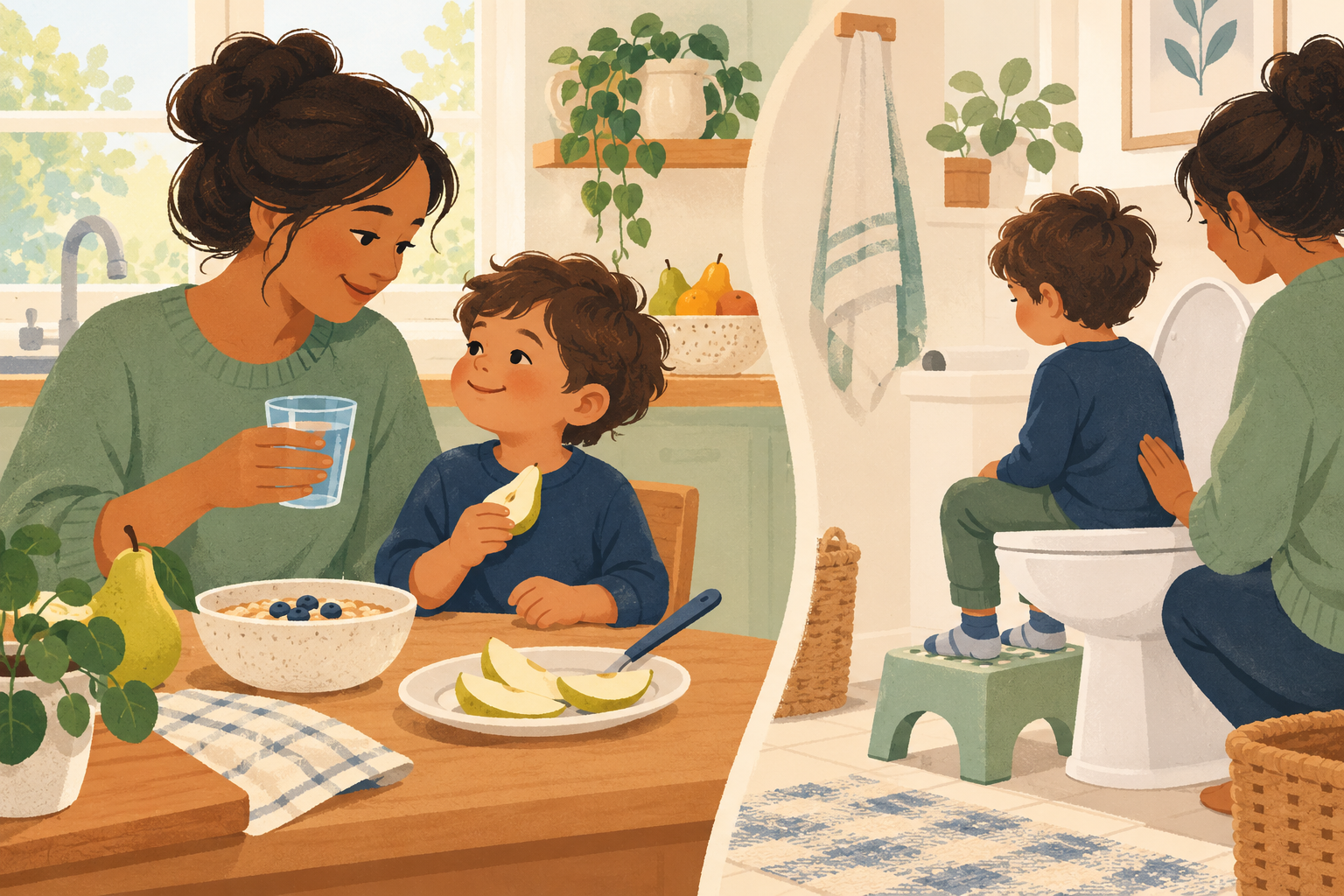
- Offer water regularly and with meals.
- Include fruit and vegetables in familiar forms: pears, berries, oranges, peas or cooked vegetables.
- Choose oats, wholegrain bread, beans or lentils when tolerated.
- Keep meals predictable; do not pressure a child to “eat more fibre.”
- Encourage everyday movement and play.
For babies, fluid and constipation advice depends on age, breast or formula feeding and whether solids have started. Do not dilute formula or give treatments without professional guidance.
Use a calm toilet routine
- Invite your child to sit on the toilet for a few relaxed minutes after a meal, when the bowel naturally becomes active.
- Use a step so both feet are supported and knees can sit a little higher than hips.
- Provide privacy appropriate to age while staying available.
- Praise the routine, not the result: “You listened to your body and sat down.”
- Keep a simple record of bowel movements, pain and soiling to share with the clinician.
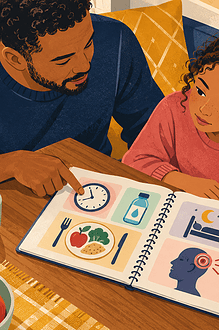
Avoid threats, teasing and visible disgust. If a child fears a school toilet, ask specifically what is difficult—noise, locks, privacy, wiping, permission to leave class or previous pain. A visual sequence may help; ideas from restarting family routines with visual supports can be adapted for the bathroom.
When to get medical help
Contact a clinician promptly if constipation is suspected, especially when it keeps returning or affects eating, sleep or school. Seek urgent medical care for severe or worsening abdominal pain, repeated vomiting, a very swollen or hard abdomen, significant blood, marked weakness, dehydration, fever with a very unwell child, or any symptom that seriously worries you. Babies, children with poor growth and children with complex health conditions need a lower threshold for advice.
Do not start, stop or change a laxative dose based on an article. When a clinician prescribes treatment, it may continue after stools improve to prevent the cycle returning. Follow that plan and ask before making changes.
Keep the child out of the blame
Try: “Your body is having trouble getting the poo out. We’re going to help it feel easier.” For accidents: “Let’s clean up. This is a body problem, not a naughty choice.” Calm repetition protects dignity while treatment does its work.
If mealtimes have also become pressured, the neutral language in helping a picky eater try new foods can reduce conflict.