When a child rejects dinner before it reaches the table, adults often feel responsible for getting one bite in. Pressure can win a bite and lose trust. A more useful goal is familiarity: help your child see, touch, smell and eventually taste new foods while meals remain emotionally safe.
Split the jobs
The caregiver decides what foods are offered, when meals and snacks happen and where the family eats. The child decides whether to eat and how much from what is offered. This does not mean preparing a completely different meal on demand. Include at least one familiar food alongside the family meal so hunger is not used as leverage.
Use a predictable rhythm of meals and snacks with water between. Grazing all afternoon can reduce appetite at dinner, while arriving desperately hungry can make an unfamiliar food feel even harder.
Make the first step tiny
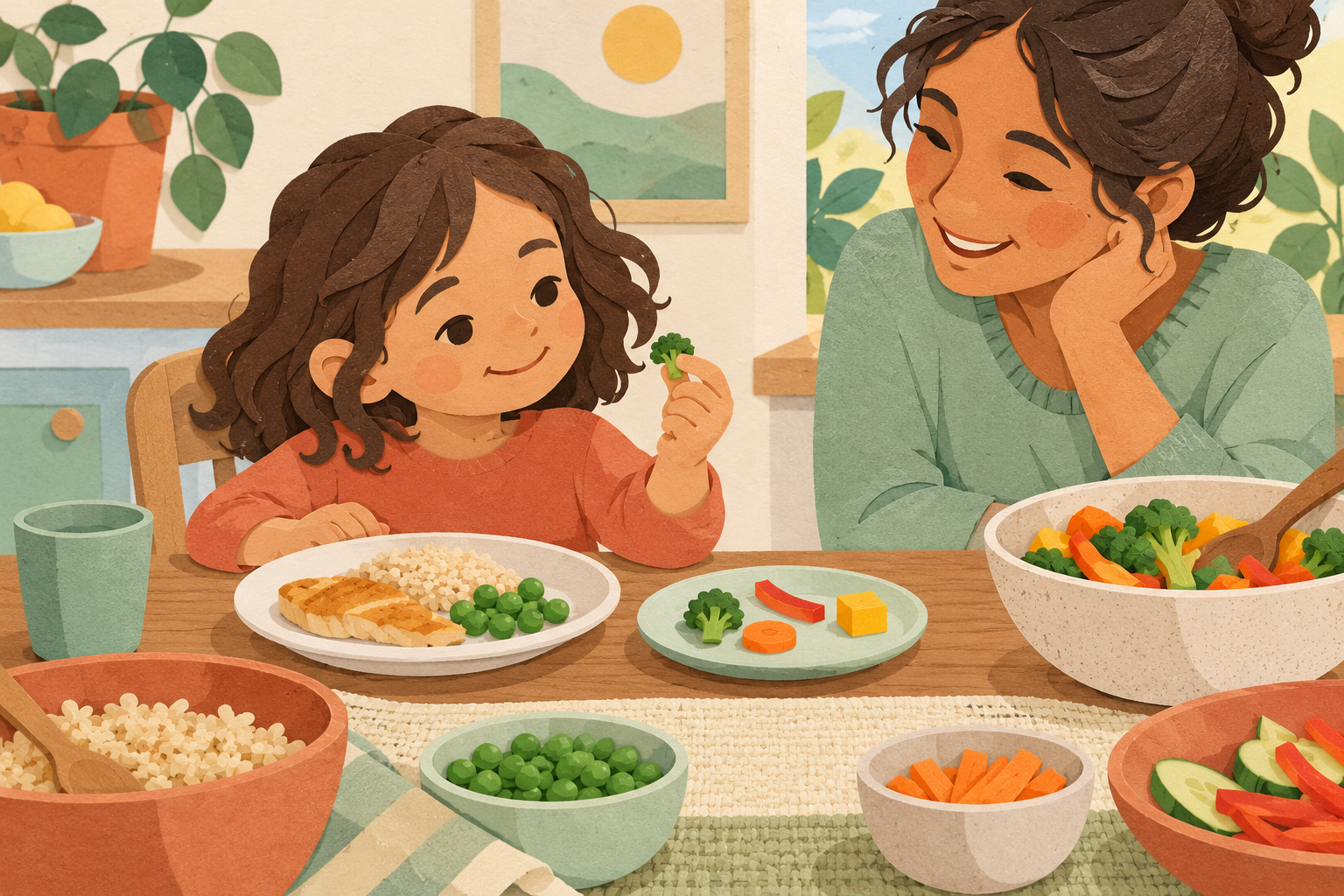
A “learning portion” can be one pea, a sliver of pepper or a teaspoon of lentils on a separate plate. The child does not have to eat it. Progress may look like:
- tolerating the food on the table;
- serving it with a spoon;
- touching or smelling it;
- licking or taking a tiny bite;
- chewing and swallowing when ready.
A child can politely spit an experimental bite into a small bowl or napkin. Knowing there is an exit lowers the stakes. Avoid celebrating so loudly that the next bite becomes a performance.
Use neutral language
Describe facts: “This carrot is crunchy,” “The yogurt is cold,” or “That sauce is a little sour.” Replace “You’ll love it” with “You can explore it if you want.” Avoid calling foods good, bad, clean or junk in ways that attach morality to eating.
Bribes also raise the pressure: “Eat broccoli and you get dessert” tells a child broccoli is the unpleasant price of something better. Offer sweets according to the family’s ordinary plan rather than as payment for bites.
Build bridges from accepted foods
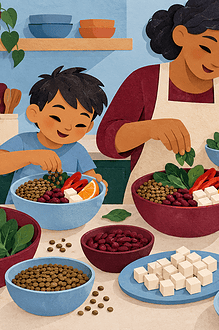
Change one feature at a time. If your child eats plain pasta, try a different shape before adding sauce. If they accept crisp apple, place a thin pear slice beside it. Invite them to rinse vegetables, tear lettuce or choose between two options at the shop. Food play and preparation count as learning even when nothing is swallowed.
Young children can practice pouring, stirring and wiping the table. Our age-by-age life-skills guide has ways to involve children safely. Older children can compare ingredient labels while using the ideas in our food-label and environmental-print activities.
Adapt for sensory and developmental needs
A child who is sensitive to texture or smell may need foods separated, a quieter seat or permission to use utensils instead of hands. Children with motor, swallowing or communication differences may need individualized support. Do not disguise a known allergen or secretly mix a feared food into a safe one; trust and medical safety matter.
When picky eating needs professional support
Talk with a pediatrician, dietitian or feeding specialist if your child is losing weight or not growing as expected, has very few accepted foods that keep shrinking, coughs or chokes while eating, has pain, persistent vomiting, dehydration, extreme distress or cannot participate in everyday meals. Sudden food refusal after illness or a choking event also deserves attention.
Measure progress over months, not one dinner. A calm meal with a familiar food and one low-pressure learning opportunity is useful work—even if the broccoli comes back untouched.