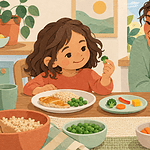
Vegetarian meals can provide iron, but the useful question is not “Which single food is best?” It is “How can I offer an iron source regularly, in a form my child can eat, with foods that help the body use it?” Plant iron is absorbed differently from iron in meat, so simple pairings matter.
Build the plate from two parts
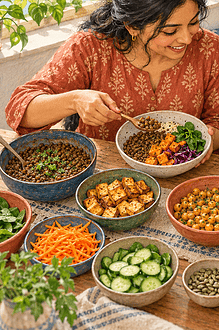
Start with a vegetarian iron source:
- lentils, chickpeas, kidney beans, peas or hummus;
- tofu or tempeh;
- eggs, if your family includes them;
- iron-fortified infant cereal or breakfast cereal;
- nut or seed pastes, served in an age-safe form;
- whole grains and leafy green vegetables as supporting sources.
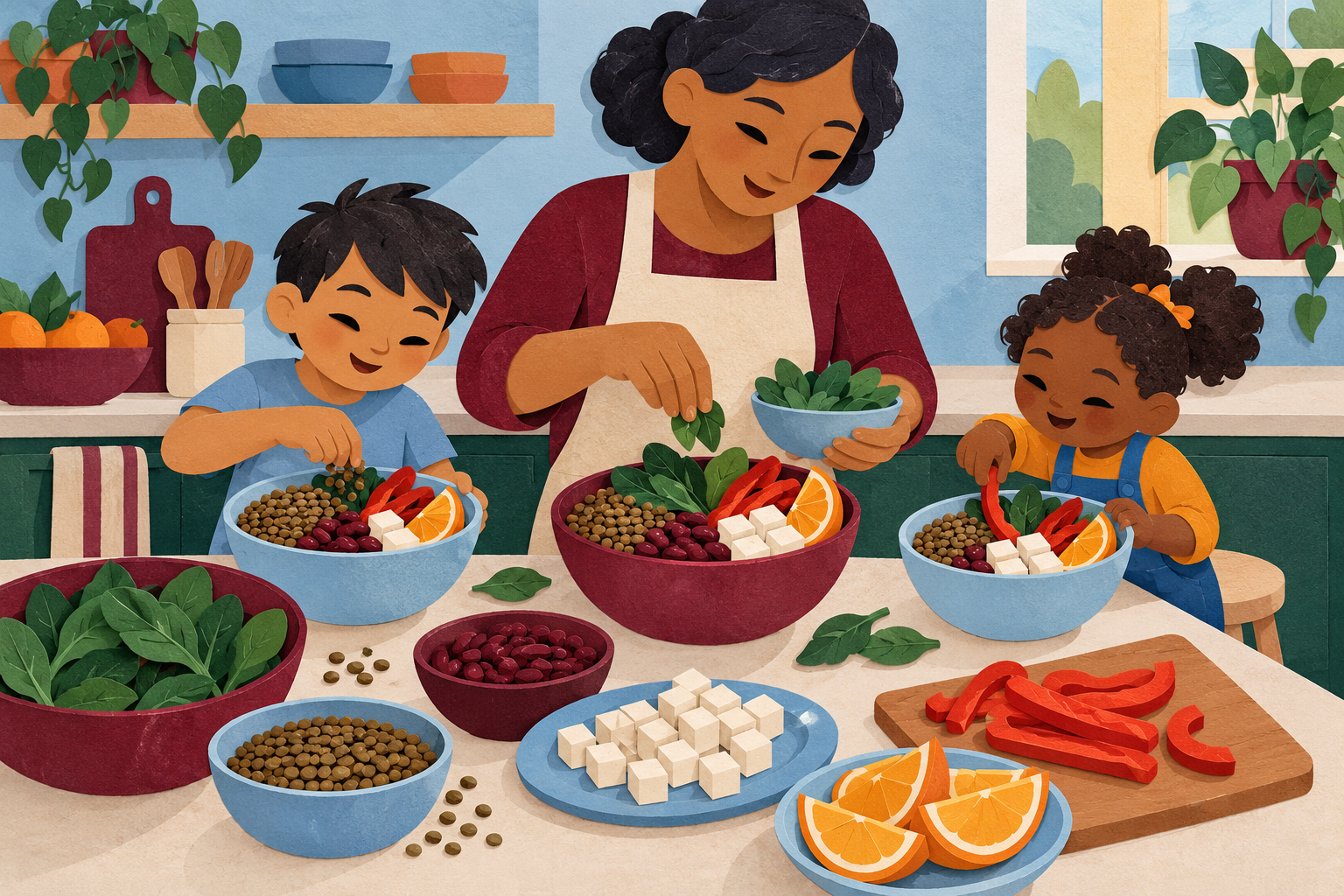
Add a vitamin-C-rich fruit or vegetable at the same meal, such as orange, kiwi, berries, tomato, red pepper or broccoli. Vitamin C helps the body absorb non-haem iron from plant foods. Fortification differs by country and brand, so read the label rather than assuming every cereal or plant milk contains iron.
Five practical pairings
- Lentil tomato sauce over pasta, with soft broccoli on the side.
- Bean and pepper quesadilla with tomato salsa; mash the beans for a younger child.
- Tofu, peas and red pepper with rice; cut tofu into an age-appropriate shape and texture.
- Fortified cereal with berries or kiwi. Check added sugar as well as the iron line on the label.
- Hummus and wholegrain bread with tomato or orange segments, adapted for chewing ability.
For a selective eater, begin with a tiny learning portion beside an accepted food. The low-pressure steps in our guide to trying new foods can protect trust while the menu expands.
Adapt by age and ability
Babies starting solids: continue breast milk or iron-fortified infant formula as advised, and offer smooth or softly mashed iron-rich foods. Cow’s milk should not replace breast milk or formula as a main drink before 12 months. Avoid whole nuts and other choking hazards.
Toddlers and preschoolers: serve soft beans, lentil patties, thinly spread nut or seed butter, or tofu strips in safe sizes. Keep portions small and allow repeats. Always supervise eating.
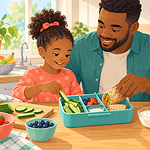
School-age children: invite them to assemble a bowl or wrap from two or three components. The independence ideas in our life-skills guide can make meal preparation manageable.
Teens: plan around appetite, sport and menstruation. A portable option might be fortified cereal and fruit, hummus with peppers, or a bean wrap. Tea and coffee with meals can reduce iron absorption, so have them between meals rather than with the main iron-rich plate.
Food first does not mean guesswork
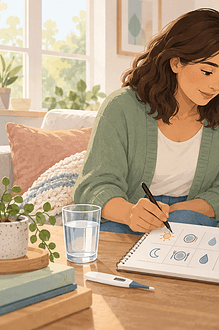
Do not start an iron supplement because a child looks tired or eats little meat. Too much iron can be harmful, and fatigue has many causes. A clinician can assess risk and order appropriate tests. Mention a vegetarian or vegan diet during routine health visits so advice can reflect your child’s age, growth and local food supply.
Signs to discuss with a clinician
Seek advice for unusual tiredness, pale skin, weakness, frequent headaches, shortness of breath, dizziness, pica (craving non-food items), poor growth or a very restricted diet. Urgent breathing difficulty, fainting or a child who appears seriously unwell needs prompt medical help.
A useful vegetarian meal does not need to be elaborate: one reliable iron source, one bright vitamin-C partner and a texture your child can manage is a strong start.