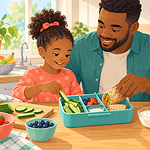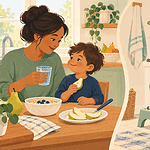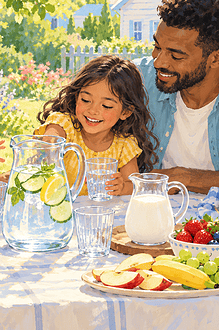
Many children arrive home hungry, tired and ready to eat whatever is fastest. If food stays available continuously, however, they may nibble through the afternoon and reach dinner with little appetite. The answer is not to ignore hunger. It is to make the snack a clear, satisfying event instead of a background activity.
Start with the gap before dinner
If dinner is more than two hours away, offer a substantial snack. If dinner is soon, a smaller bridge—fruit and water, for example—may be enough. A child heading to sport may need more than a child settling in for homework. Appetite also changes with growth, sleep and what was eaten at school.
A useful snack often pairs two kinds of food:
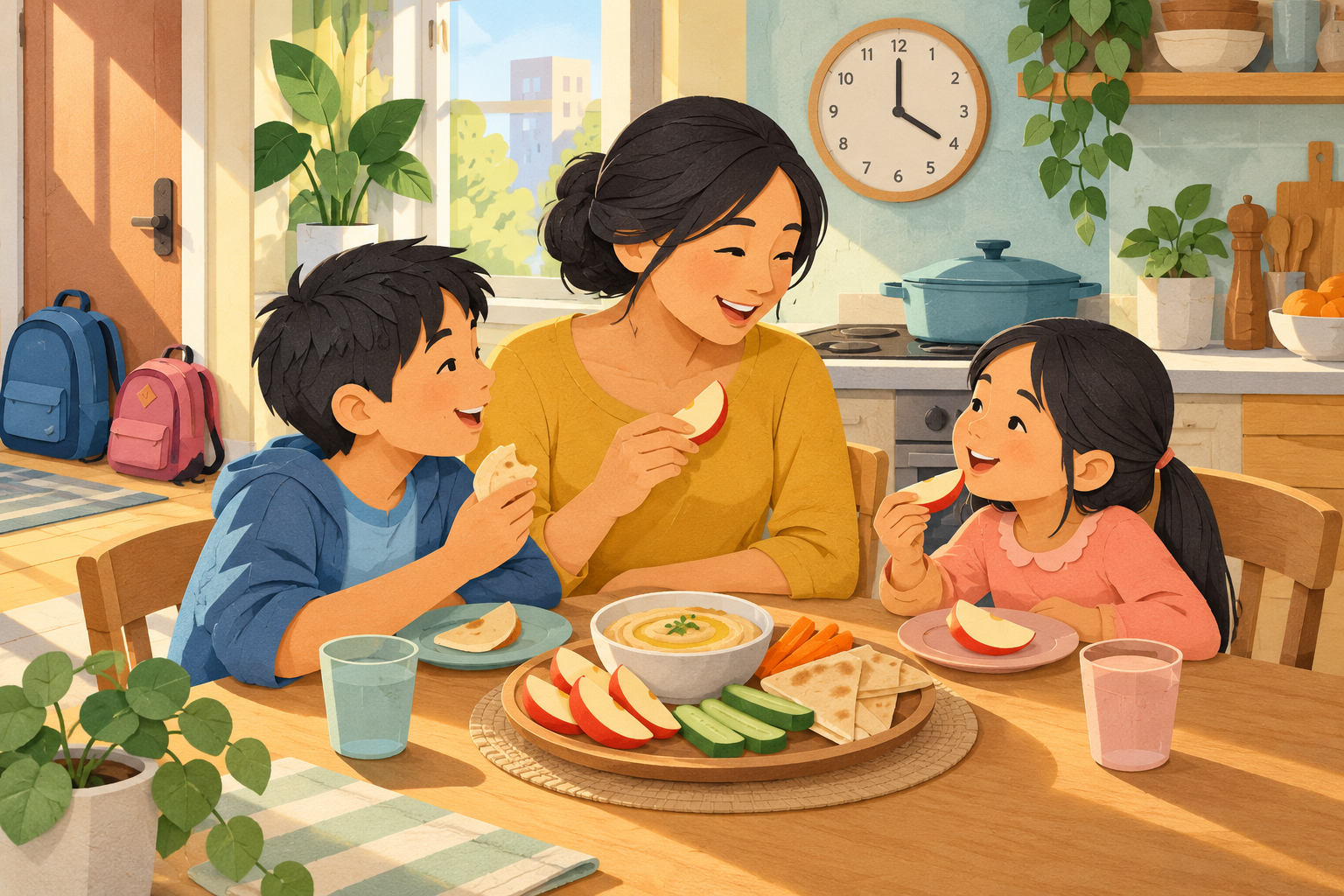
- fruit or vegetables with yogurt, cheese, hummus or seed butter;
- toast or crackers with egg, beans or avocado;
- plain yogurt with fruit and oats;
- a small portion of leftovers, such as rice and lentils.
You do not need special “snack foods.” Ordinary foods in a smaller serving work well.
Create a visible beginning and end
- Land first. Put bags away, wash hands and offer water.
- Serve the snack. Sit at a table or another consistent eating place rather than carrying food from room to room.
- Let appetite lead. The adult decides what and when to offer; the child decides whether and how much to eat. If they finish and remain hungry, more can be available.
- Close the snack. Clear the dishes and say when the next meal is: “Snack is finished. Dinner is after homework. Water is here if you’re thirsty.”
This boundary is information, not punishment. If your child regularly remains very hungry, increase the snack or revisit lunch—not the firmness of your voice.
Make the routine easier on hard days
Keep two or three options at child height and ready to combine. Wash fruit, portion hummus or cook eggs before the busiest part of the week. The American Academy of Pediatrics suggests keeping foods such as fruit, vegetables, yogurt, hummus and cheese available so a nutritious choice is easy.
Offer limited choices: “Would you like banana with yogurt or toast with egg?” For a younger child, show the options. A school-age child can assemble a snack from a picture list. A teenager can plan and restock a few reliable choices. The goal is growing independence, not turning snack into a negotiation.
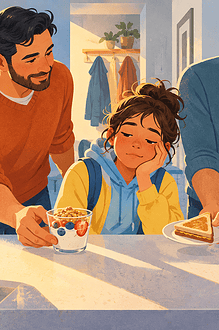
If the transition from school is emotionally difficult, food may not be the only need. Ten minutes of connection, quiet or movement can come before or alongside the snack. The ideas in this after-school upset routine can help when your child holds it together all day and unravels at home.
When the pattern needs a closer look
Avoid labelling a child “greedy” or using food as a reward for finishing homework. Persistent extreme hunger, thirst, fatigue, weight change, pain, vomiting or eating that feels out of control deserves a conversation with a qualified health professional. Food insecurity can also make children anxious about when food will next be available; predictable access and non-judgmental support matter.
For selective eaters, combine the snack structure with the low-pressure approach in helping a picky eater try new foods.