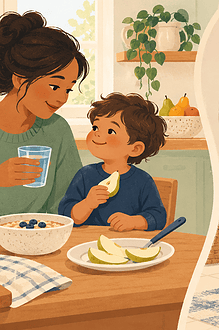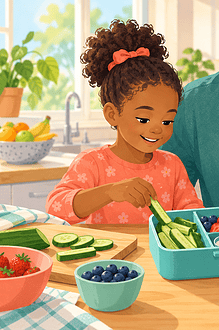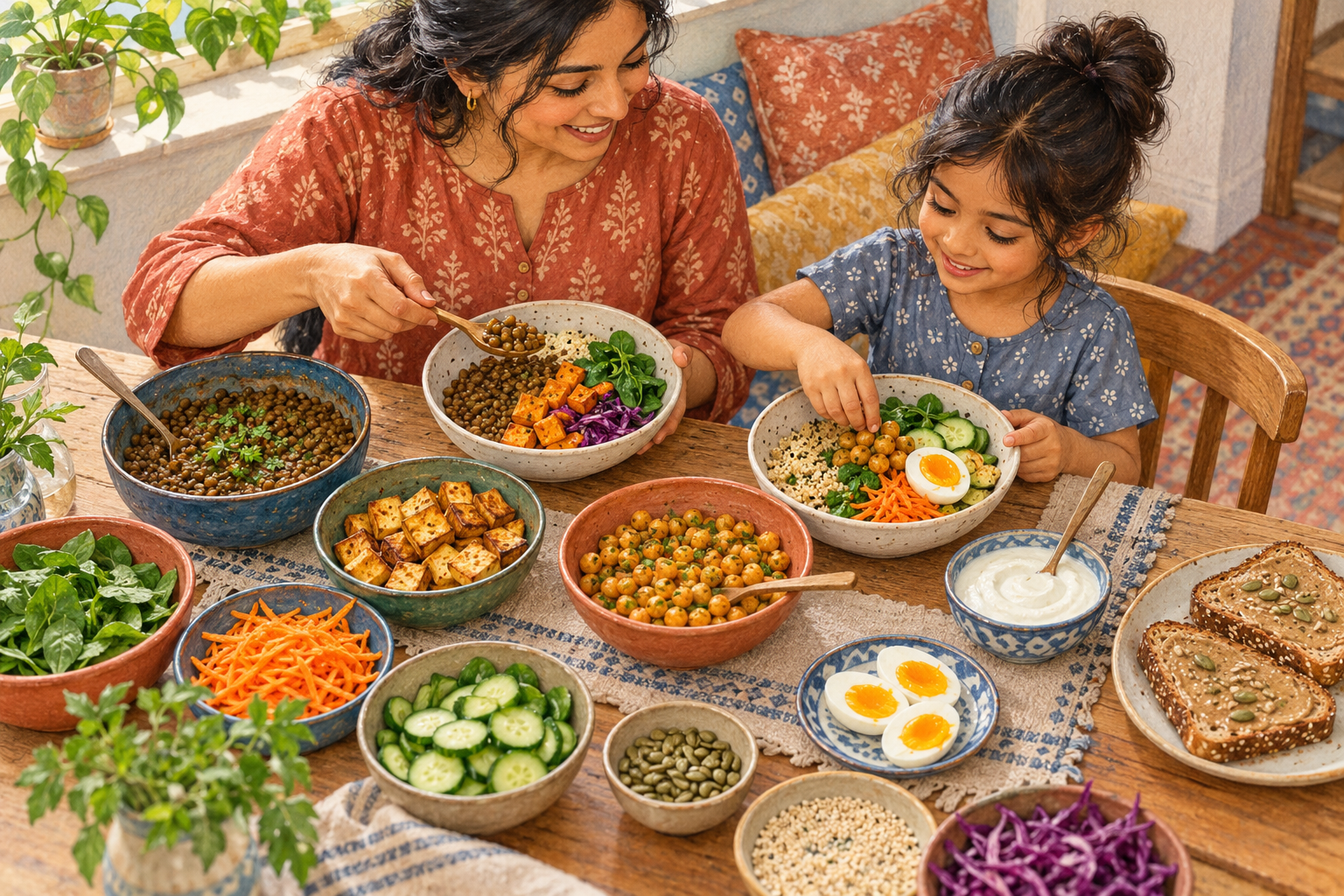
A vegetarian child can get protein from ordinary family foods. The practical challenge is less about finding one “perfect” ingredient and more about offering a protein food regularly, in a texture and portion the child can manage.
Build a dependable protein shelf
Useful choices include beans, lentils, peas, chickpeas, tofu, tempeh, soy foods, eggs, yogurt, cheese, nut or seed butters and ground seeds. Families who include dairy and eggs have additional options; vegan families can still meet needs, but must plan several nutrients carefully.
Try choosing one protein food for each meal and one for some snacks:
- oats cooked with milk or fortified soy drink, with seed butter stirred in;
- lentil soup with bread and fruit;
- tofu strips with rice and soft vegetables;
- bean quesadilla with avocado;
- yogurt with fruit, or hummus with pitta;
- mashed chickpeas on toast.
Children do not need to eat every source every day. Variety across the week is a more realistic goal.
Adapt texture by age and ability
For babies eating solids, beans and lentils can be mashed or offered in soft, graspable forms. Tofu is naturally soft. For toddlers, spread nut or seed butter thinly rather than offering a spoonful. Whole nuts are a choking hazard for young children; use smooth butter or finely ground nuts when allergy guidance allows. Always match shape and texture to chewing ability and supervise eating.
School-age children can add chickpeas to a bowl or choose a filling. Teenagers can learn two fast meals, such as egg on toast and bean tacos. If a child has sensory sensitivities, keep components separate and allow repeated exposure without pressure. The strategies in helping a picky eater try new foods work with vegetarian foods too.
Protein is only part of the plan
A varied vegetarian pattern also needs enough energy and attention to iron, vitamin B12, calcium, vitamin D, zinc and iodine. Vegan diets require a reliable source of vitamin B12; food alone may not provide it unless fortified products are used, and supplement decisions should be made with a qualified clinician or dietitian. Fortified products vary, so read labels rather than assuming every plant drink or cereal is equivalent.
Pair iron-rich plant foods with vitamin-C foods—lentils with tomato, beans with peppers or fortified cereal with berries—to support iron absorption. For more detail, see iron-rich vegetarian meals for children.
A simple three-day rotation
- Bean day: hummus at snack, black beans at dinner.
- Lentil or tofu day: lentil soup at lunch, tofu stir-fry at dinner.
- Egg or dairy day, if included: yogurt at breakfast, egg and vegetable rice later.
This is an idea generator, not a prescription. Appetite and portion size change with age and growth. Children with restricted diets, poor growth, persistent tiredness, digestive symptoms or several food allergies need individualized advice. Protein powders and sports supplements are rarely the first answer for a healthy child and can displace normal foods.