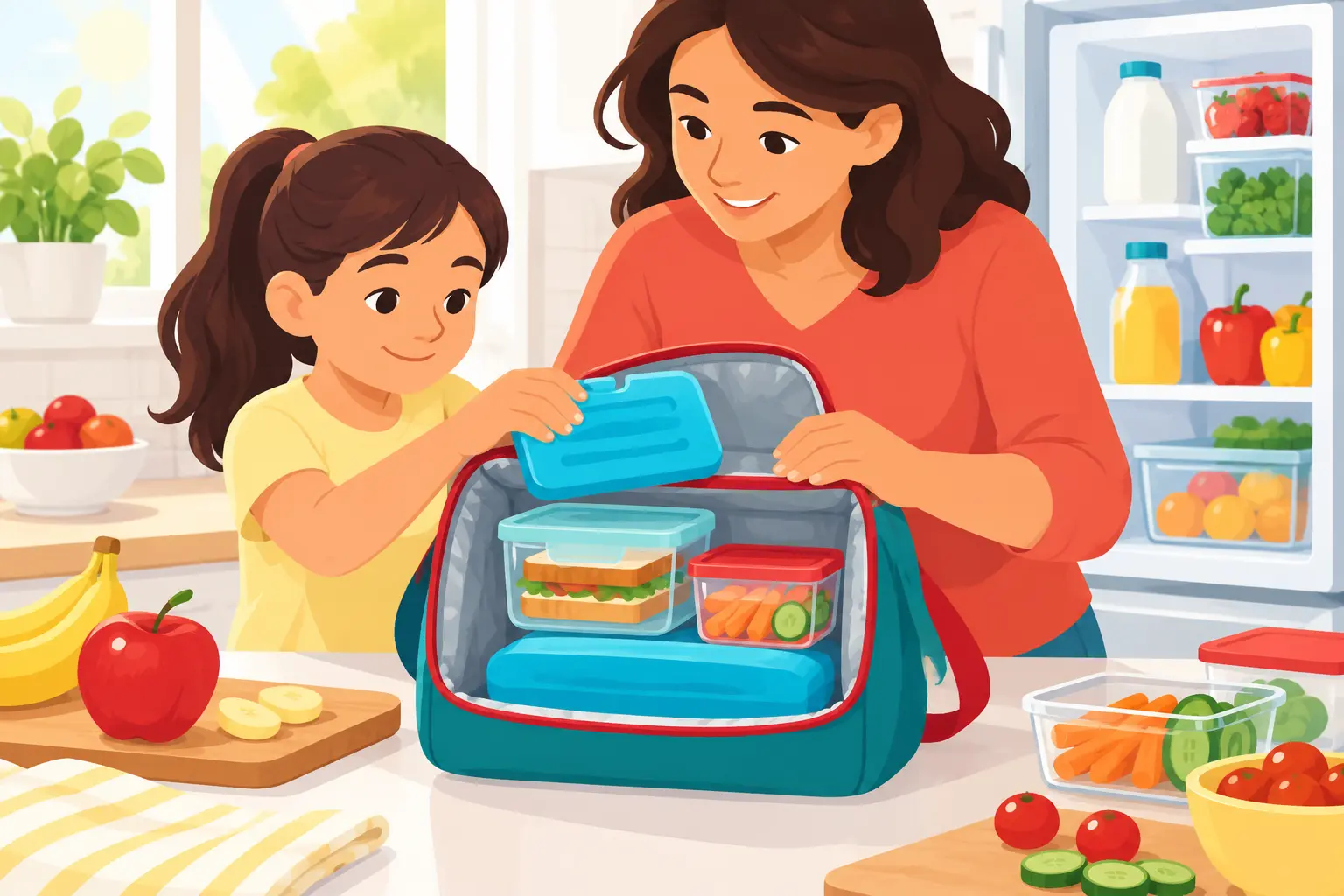
A packed lunch may spend hours travelling, waiting in a classroom or sitting near a warm window. Children can help plan that journey without being asked to judge safety by smell or taste. The central question is simple: which foods need to stay cold, and how will they remain cold until lunchtime?
Start with the route, not the menu
Draw four stops: home refrigerator, journey, school storage and lunch table. Ask what happens at each stop. Is there a refrigerator at school? How long is the commute? Does the lunch bag sit in direct sun? The answers determine the packing plan.
USDA food-safety guidance recommends an insulated lunch bag and at least two cold sources around perishable food when refrigeration is not available. School rules and facilities vary, so confirm what the school allows.
Sort foods by storage need
Use unopened examples or written cards. Make two columns: “needs reliable cold storage” and “usually shelf-stable until lunch.” Foods such as yoghurt, many cheeses, cooked leftovers, cut fruit and other refrigerated items generally belong in the cold column. Whole fruit, bread and some unopened shelf-stable products may not need an ice source. When unsure, check the package and ask an adult.
Pack the cold route
- Chill first. Refrigerate perishable components overnight. An ice pack does not quickly make warm food safe.
- Use a clean insulated bag. Wash hands and use clean containers and surfaces.
- Add two cold sources. Place one above and one below or beside the perishable foods.
- Close promptly. Keep the bag shut until food is stored or eaten.
- Use school refrigeration if available. Follow the school’s instructions; an open insulated bag inside the refrigerator may allow cold air to circulate.
What children should not do
Do not ask a child to taste food to decide whether it is safe. Harmful bacteria may not change smell, appearance or flavour. Children should not handle boiling water to preheat an insulated container, improvise with leaking ice, or bring a food that conflicts with school allergy rules. An adult should decide what to discard after a refrigeration failure.
Run a dry rehearsal
The evening before school, let the child arrange empty containers and frozen packs in the bag. Can everything close? Is the bag too heavy? Can they open the containers independently? Add a napkin and reusable cutlery where they will be easy to find. The rehearsal teaches sequence without risking food.
Make the lunch workable
Food safety and acceptance both matter. Pack portions the child can open and eat in the available time. For menu ideas, see a balanced lunchbox a child will eat, building a simple snack pair, and comparing package labels without moralising food.
A simple pack-and-return routine
In the morning, an adult can handle cooked or chilled foods while the child checks three visible items: the insulated bag, the closed food container and two frozen cold sources placed around perishable food. Add a napkin or utensil if needed, close the bag promptly and keep it away from heaters or direct sun. Do not ask children to decide safety by smelling or tasting food; harmful bacteria may not change smell or appearance.
After school, unpack the bag together. Discard perishable leftovers that were not kept safely cold according to your local food-safety guidance, wash reusable containers and return cold packs to the freezer. A picture checklist by the door can help a younger child participate without memorising every step. Older children can take more responsibility for the checklist while an adult still manages cooking temperatures, allergy precautions and final food-safety decisions. If the school offers refrigeration, follow its instructions; if it does not, use the insulated-bag method recommended by your food-safety authority.