
By EdCaptain editorial desk · Published
General educational guidance. No qualified clinical review is recorded for this article. Health and safety information.
“Is my belly button a hole?” A child may imagine a tiny tunnel, an unfastened button or a place where food once went in. Before giving a long explanation, find out which picture they have in mind: “What do you think it connects to?”
The short answer is that a belly button, also called a navel, is the scar where the umbilical cord used to attach. The cord had an important job before birth. An ordinarily healed belly button is not an open feeding hole.
This explanation and paper activity are for children aged 6–12. They do not require anyone to lift clothing, touch a belly button or examine a baby.
The job belonged to the cord
While a baby develops in the uterus, or womb, the umbilical cord connects the baby to the placenta. The placenta is an organ attached to the wall of the uterus. Blood vessels in the cord carry oxygen and nutrients towards the baby and carry waste products back towards the placenta.
Cleveland Clinic’s cord explanation describes that connection. The NHS description of the developing placenta also explains its supply and waste-removal roles.
Try: “Before you were born, you had a cord attached here. It connected you to the placenta inside the womb. That connection brought the oxygen and nutrients you needed.” The uterus is not the stomach, and the cord was not a pipe carrying bites of someone’s dinner into the baby.
Use “the person who carried you” if that fits your family better than “Mum”. You can explain the biology accurately without pretending to know every detail of a child’s pregnancy or birth history.
What remains after birth
After birth, the cord is clamped and cut, leaving a short stump. Over time, the stump dries and comes away as the area heals. The remaining scar is the belly button. There is no need to give a school-age child a deadline for when a newborn’s stump should fall off; care questions belong with the baby’s healthcare team.
Cleveland Clinic’s navel guide describes the healed attachment site and its varied appearance. The outside indentation can look like an opening, but a healed navel is not a passage for food, air or water to travel through.
If the word “scar” sounds frightening, explain: “A scar is a mark left after tissue heals. This mark tells us where the cord was attached.” Do not promise that all scars look or feel the same, or use this explanation to dismiss pain or a new change.
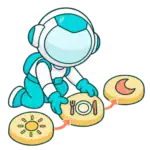
Make a before-and-after story on paper
You need: three sheets of scrap paper and a pencil or marker. Work at a comfortable table or on a firm drawing surface. Keep all marks on paper; do not tie anything to a child, press on their abdomen or demonstrate cutting a cord.
- Make the first page “before birth”. Draw a simple baby shape, a separate shape for the placenta and a line joining the baby’s belly area to it. Label the line “umbilical cord”. This is a simplified relationship drawing, not a medical diagram or a picture of a particular pregnancy.
- Make the second page “after birth, while healing”. Draw the baby outside the womb with a small mark for the remaining stump. An adult can add the words “stump dries and comes away”. Do not use a real baby or a photograph of someone’s private care as the example.
- Make the third page “healed”. Draw a person with a small mark for the navel and no cord. Write “scar where the cord attached”. Ask what has changed across the pages and which structure is no longer there.
- Retell, then check. Mix up the pages and put them back in order. Invite the child to explain the difference between the earlier connection and the mark that remains. If they say food still enters through the navel, return to the first page rather than treating it as a failed quiz.
For ages 6–9, the two phrases “cord before birth” and “healed mark afterwards” may be enough. You can draw and write while the child chooses the order or dictates a sentence.
For ages 10–12, add two arrows beside the cord on the first page: oxygen and nutrients towards the baby; waste products back towards the placenta. Explain that the line represents a cord containing blood vessels, not a single hollow drinking straw.
Use large, high-contrast shapes, spoken descriptions or a partner who draws under the child’s direction. As a variation, put only the first and last pages side by side and ask the child to supply the missing middle step. The goal is a useful explanation, not realistic artwork.
Leave other people’s bodies out of the comparison
“Innie” and “outie” are everyday descriptions, not grades of a good or bad body. Navels vary in shape. Surgery and other individual circumstances can also change how this area looks. A drawing does not need to match the child or anyone they know.
Say, “We can learn how bodies work without asking people to show us.” Do not invite siblings to compare belly buttons, photograph the child’s abdomen for a project or ask classmates about their medical history. Our guide to privacy during changing and bathing offers language for keeping curiosity respectful.
If the question becomes “Whose womb was I in?”, separate what you know from what you do not know. Share truthful, age-appropriate family information privately. “I don’t have all those details, but we can talk about what you want to know” is better than filling a gap with an invented story.
When curiosity is actually a health question
Ask whether the child is wondering generally or has noticed discomfort. Pain, bleeding, oozing or a new change deserves advice from their healthcare professional, rather than a lesson about ordinary scars. Do not diagnose a protruding belly button from its appearance or try to push, tape or bind it into a different shape.
The American Academy of Pediatrics’ hernia guidance warns that severe pain or a red, very tender belly-button bulge, especially with vomiting, fever or refusal to eat, needs immediate medical assessment. Call the child’s doctor urgently or go to an emergency department. The same guidance cautions that binders can harm and do not repair a hernia.
For an ordinary question, finish by inviting one more: “Does that answer what you meant, or were you wondering about something else?” Our guide to answering questions about bodies can help you keep later conversations brief, accurate and open.
Sources and further reading
- Cleveland Clinic: the umbilical cord and its blood vessels.
- Cleveland Clinic: the navel as a healed attachment site.
- NHS: the developing placenta’s role.
- American Academy of Pediatrics: umbilical hernias and warning signs.
Read our editorial policy and review methodology.