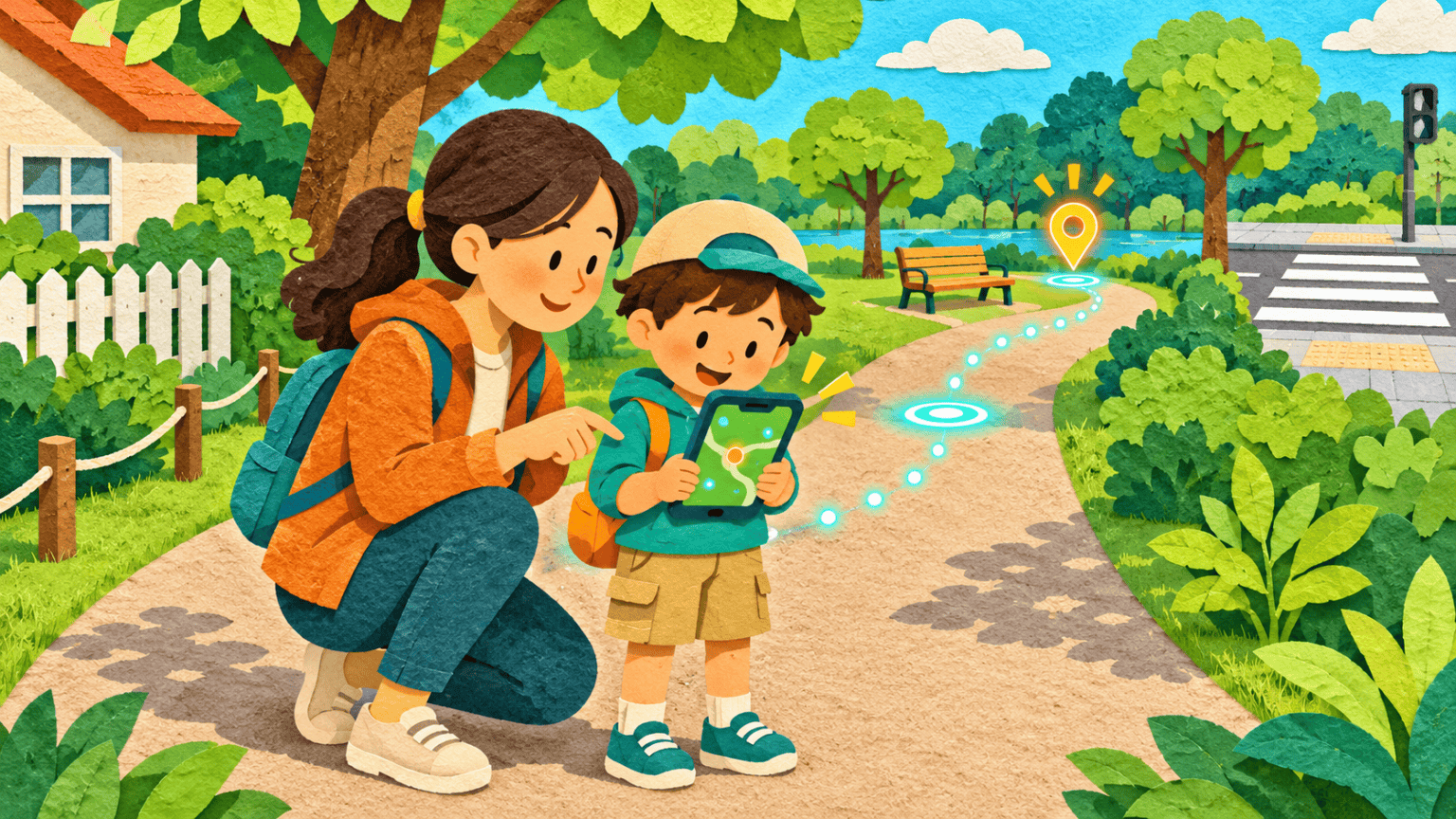
A location-based game can turn an ordinary walk into a search, collection or team adventure. It can also pull attention toward a screen while the player is crossing roads, entering unfamiliar spaces or revealing a repeated route. The safest setup joins digital privacy with ordinary outdoor supervision.
Preview the real route first
Open the game with a caregiver and inspect where it encourages players to go. Look for busy roads, isolated paths, water, construction, steep ground, restricted property and places where stopping with a phone would be unsafe. Choose a daytime route with known exits, toilets, transport and a meeting point.
Do not treat a game marker as permission to enter private property, a school, a workplace or a closed area. The real-world sign and local rule always outrank the virtual objective.
Check location at three layers
- Device: Decide whether the game needs precise location and whether access can be limited to while the app is in use.
- Game: Review nearby-player, team, route history and public-map settings.
- Content: Avoid usernames, photos or posts that reveal school, home, uniforms, landmarks or a repeated schedule.
ESRB’s Shares Location interactive element signals that a product may share a user’s location with other users. It does not explain every use. Google Play’s Families policy requires child-directed augmented-reality experiences to warn about supervision and physical hazards, but a warning cannot inspect the path in front of your child.
Set a heads-up walking rule
Stop in a safe place before looking closely at the screen. One person navigates and another watches traffic when a caregiver and child play together. No collecting, photographing or battling while crossing a road, cycling, driving or using stairs. Headphones should not block traffic, voices or alarms.
A simple phrase helps: “Feet stop, then screen up.” Practise it at the beginning while the stakes are low.
Protect the child’s routine
Avoid starting every session at the front door or posting a map immediately after the walk. Do not publish a live location, team name tied to a school or a predictable weekly route. If the game creates postcards or screenshots, check for map labels, house numbers, faces and photo metadata before sharing.
EdCaptain’s chat, location and stranger-contact checklist covers in-app visibility. The first-phone readiness plan can help families decide whether a child can follow real-world boundaries while carrying a connected device.
Match independence to the child
Younger school-age children should play alongside a caregiver in a familiar area. Children aged ten to twelve may lead navigation while an adult remains responsible for traffic and location decisions. Teenagers can have more independence when the family agrees on area, return time, battery level, check-in and what to do if the game leads somewhere uncomfortable.
Location sharing with a caregiver is not a substitute for a route plan, and it may not update reliably when signal or battery is poor. Carry an ordinary contact method and enough battery to get home.
Plan for strangers and groups
Public game events can bring unfamiliar adults and children to the same place. A child should not leave the agreed route, enter a vehicle, trade account access or move to private messaging to complete an objective. Establish where to stand, whom to tell and how to leave if another player becomes pushy.
End the session safely
Choose a clear finishing point and check that the child has logged out or closed any public session. Review location history and remove unnecessary photos. If the phone is lost, use the device’s official lock or recovery service rather than asking strangers in game chat to find it.
The game can add imagination to an outdoor walk. It should never replace attention to traffic, boundaries, weather, people and the child’s own feeling that a place is not right.