A child notices litter near the playground, a lonely new pupil or books nobody can find. Then the idea explodes: clean the whole neighbourhood, organise a school-wide club, rebuild the library. Initiative is valuable, but an oversized first plan can end in adult takeover or disappointment.
Help the child shrink the work without shrinking the caring behind it. A completed small project teaches more about planning, collaboration and follow-through than an exciting plan that never becomes action.
Begin with a problem you can see
Ask the child to describe one specific situation: who is affected, where it happens and what they have observed. Separate evidence from assumptions. “There are wrappers beside the bench after lunch” is easier to act on than “Nobody cares about the environment.”
Then ask whether the people affected have been consulted. Helping without listening can create work that nobody wants. A child who wants to welcome new classmates might first ask a teacher or a new student what would actually help.
Choose one finish line
Turn the broad hope into an outcome that can be completed soon:
- Collect litter in one agreed area for twenty minutes with adult supervision.
- Create a labelled shelf for one class’s shared books.
- Prepare three welcome cards in languages used by the group.
- Run one toy-repair afternoon rather than starting a permanent service.
A useful test is: Can we explain what “done” means in one sentence? If not, make it smaller.
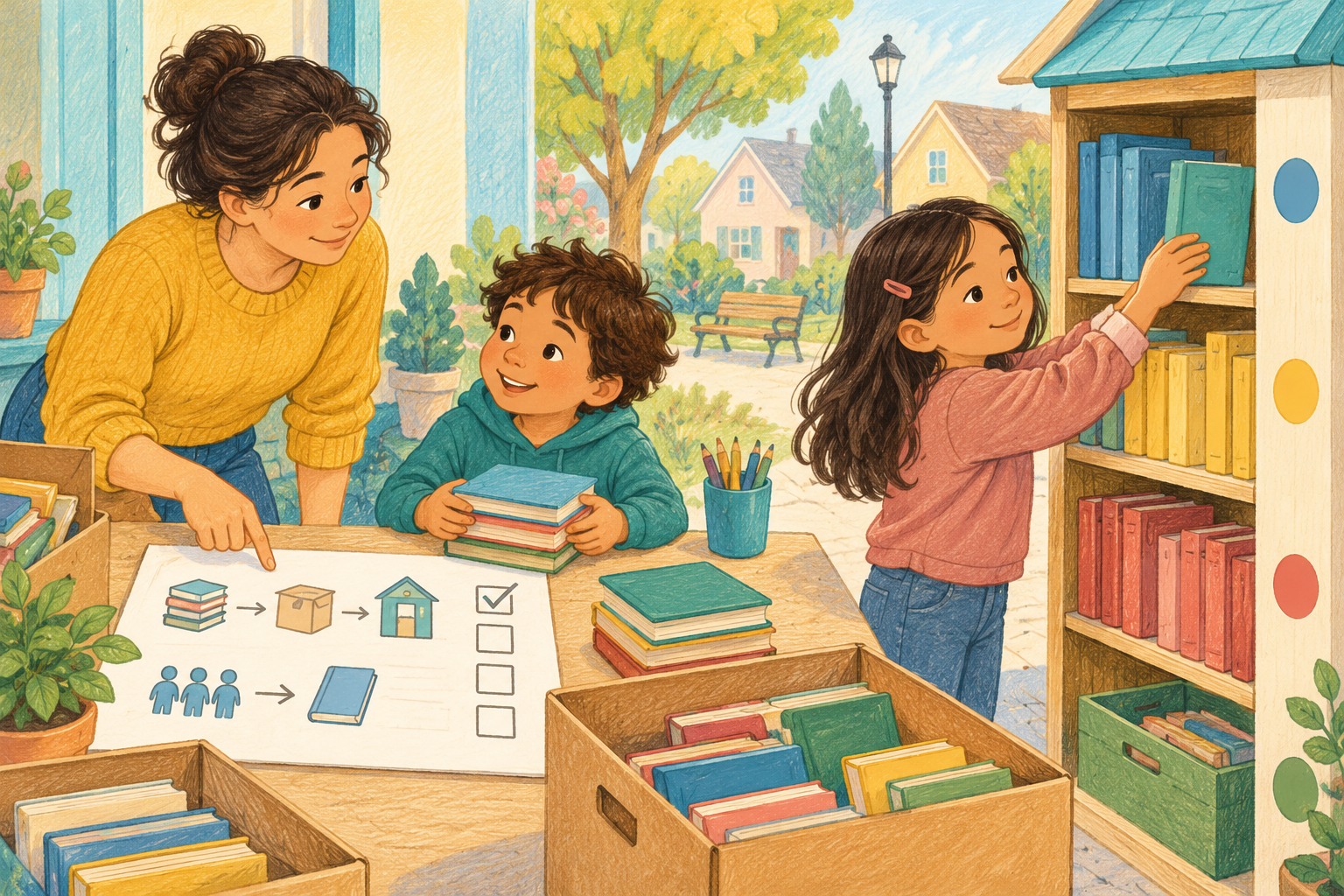
Make a one-page project map
Divide a page into six boxes:
- Goal: What will be different?
- People: Who needs permission, who helps and who benefits?
- Steps: What are the next three actions?
- Materials: What can be borrowed, reused or safely obtained?
- Time: When do we start, pause and finish?
- Safety: What requires adult supervision or specialist help?
Preschoolers can draw the boxes with an adult. School-age children can own one or two steps. Teens can draft the plan, contact suitable adults and track costs, while caregivers retain responsibility for safety, transport, permissions and financial boundaries.
Keep the child’s job real
Adults often move faster and gradually take over. Decide in advance which decisions belong to the child and which belong to adults. A caregiver might approve contact with an organisation, while the child chooses the card design and writes the message.
Offer scaffolding rather than substitution: a sample email instead of sending it yourself, a budget limit instead of choosing every item, or two safe options instead of an open-ended rescue.
Build a short work rhythm
Use fifteen- or twenty-minute sessions with one visible next action. End by recording where to restart. This supports planning and focus better than waiting for a large free afternoon.
A simple board can show “next,” “doing” and “done.” Limit “doing” to one task. When enthusiasm creates ten new ideas, park them on a later list rather than changing the current finish line.
Plan for other people
Initiative becomes leadership when the child makes room for contributions. Ask: Who has not been heard? Are roles voluntary? Can someone participate differently? What happens if a helper changes their mind?
Practise a clear invitation: “We are sorting one shelf on Saturday from ten to eleven. Would you like to label, arrange or photograph the final result?” Specific requests are easier to accept or decline.
Finish, thank and review
Completion includes cleanup, returning borrowed items, thanking helpers and telling relevant people what happened. Review with three questions: What changed? What was harder than expected? What would we repeat or alter?
Do not measure the child’s worth by impact or publicity. A project can be worthwhile even if only a few people notice. Avoid posting children’s names, faces or locations without appropriate permission.
Know when an idea needs more adult control
Projects involving roads, water, fire, food distribution, money collection, animals, vulnerable people, strangers, political campaigning or online data require careful adult oversight and may need formal permission. Children should not enter unsafe places, handle hazardous waste or contact unknown adults alone.
For related ideas, see goal-setting for teens, community kindness activities, and family teamwork games.