“Everyone’s doing it” is one of the oldest lines in the book, and it works precisely because fitting in matters enormously to most young people. Spotting and Resisting Peer Pressure gives a child the actual tools to recognise the pressure for what it is, and to handle it with real confidence.
Why this matters
Peer pressure doesn’t always look like an obvious, dramatic moment, it’s often quiet, gradual, and wrapped in the genuine fear of being left out or judged. A child who’s never specifically practised recognising and responding to pressure is far more likely to simply go along with it in the moment, not because they’ve genuinely changed their mind, but because they haven’t rehearsed any other response.
Learning to spot it
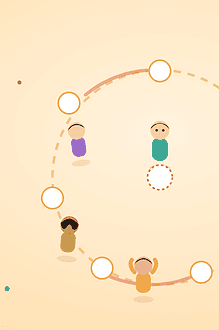
Peer pressure can be direct, “come on, everyone’s doing it, don’t be boring,” or far more subtle, a group simply assuming something without ever actually asking, leaving a child feeling like objecting would be awkward or strange. Both forms are worth naming explicitly, since the subtle kind is often harder to recognise in the moment than an obvious, direct push.
Ready responses worth practising in advance
A simple, calm “no thanks,” with no lengthy explanation required. A full justification often isn’t necessary, and can even invite more pushback.
Changing the subject. Sometimes the easiest way through is simply steering the conversation somewhere else entirely.
Suggesting an alternative. “Let’s do this instead” keeps a child engaged with the group while sidestepping the specific pressure.
Using a friend as backup. Agreeing in advance with a trusted friend that you’ll support each other if either one wants to say no to something makes an individual “no” considerably easier to actually say.
Simply walking away. When a situation feels genuinely wrong, leaving is always a reasonable, valid option.
How to build this at home
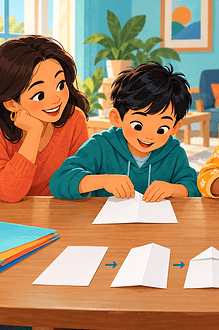
Practise these responses through simple role play, taking turns being the person applying pressure and the person responding, so the words feel familiar and rehearsed rather than something your child has to invent on the spot under real pressure. Talk through real situations, from school, from friendships, from media, and ask how your child might respond using one of these tools.
Why rehearsing matters more than simply explaining the concept
A child who understands peer pressure in the abstract, but has never actually practised a response out loud, often still freezes or goes along with it in a real moment, simply because they haven’t rehearsed anything else to say. Role-playing the actual words, until they feel natural rather than awkward, is what makes the difference between understanding a concept and actually being able to use it.
A handful of practised, ready responses, and the confidence that comes from having genuinely rehearsed them, gives a child a real, usable way to handle pressure when it actually shows up, rather than leaving them to improvise something in the moment it matters most.