Age guide: 4 to 10 years. Most games work with three or more people; a few work with two.
Some problems only get solved when everyone helps. These six challenges give your family something to plan, test and laugh about together. They suit rainy afternoons, grandparent visits and the long gap before dinner.
1. Turn the blanket without waking the toys
Time: 10 minutes. You need: a towel or small blanket and six to ten soft toys.
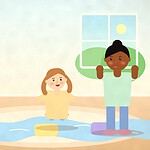
Spread the towel on the floor and lay the toys on it. Tell everyone the toys are asleep and nobody must wake them. The team has to turn the towel over so the toys end up lying on the other side. Rule: toys can only be lifted one at a time and none may touch the floor.
Ask for a plan before anyone moves. Which toy goes first? Where can it wait safely? After it works, ask what they would change next time. If the group is stuck, offer one hint, such as “Is there a table nearby?”
2. Be a machine
Time: 10 to 15 minutes. You need: groups of two or three.
Whisper a machine to each group: a washing machine, a bus, a lift, a blender. Everyone plays a different part, with sound effects allowed. The other players guess what it is. Start with children acting alone if teamwork is tricky, or let them act out animals or jobs instead. Ask afterwards how they decided who played each part.
3. Pass the tower
Time: 10 minutes. You need: six or more blocks or clean dry sponges, and a bucket.
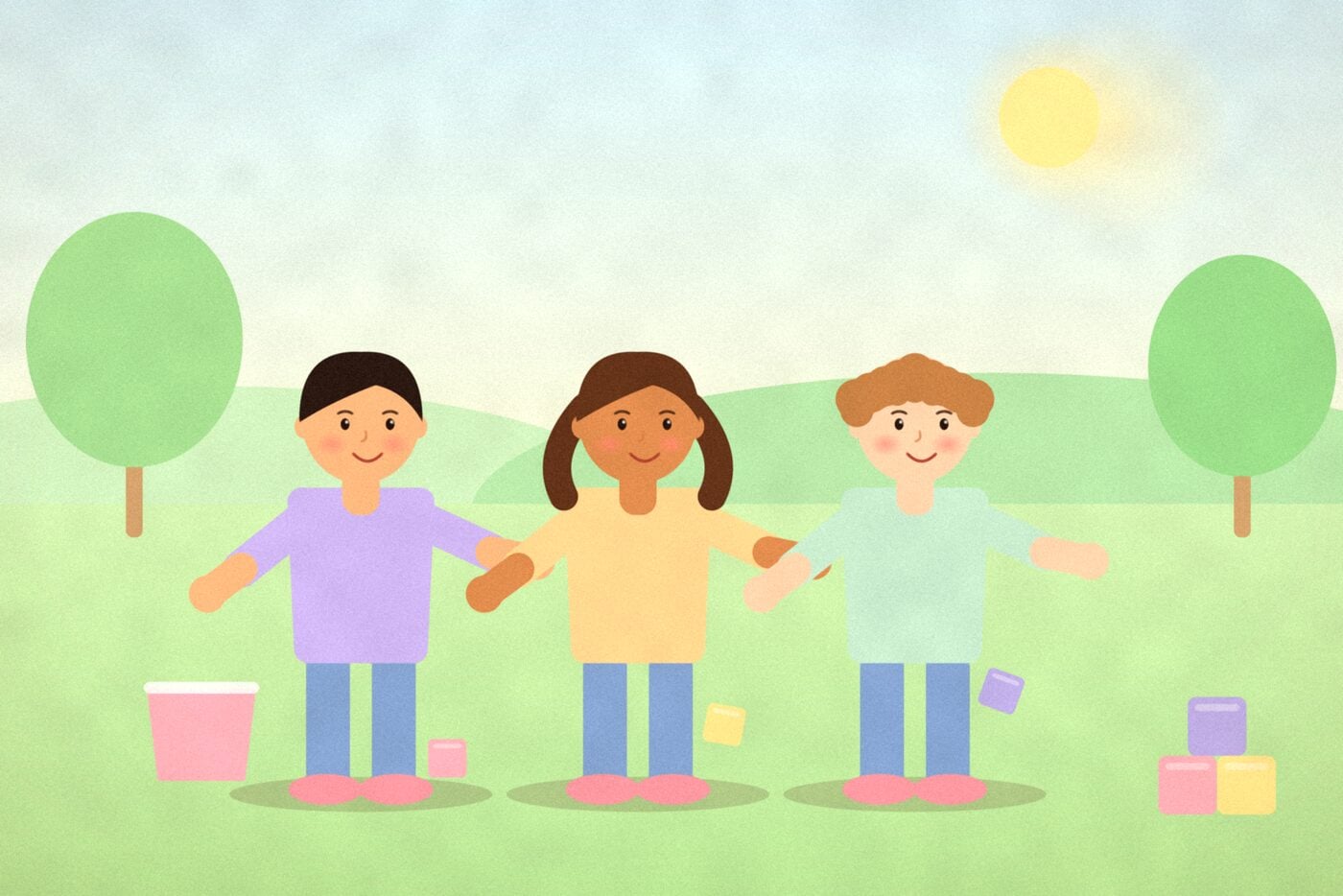
Line up with arms stretched out. The person at the back takes an item from the bucket and passes it forward, hand to hand. The person at the front builds a pyramid or tower with whatever arrives. Once everyone has the hang of it, make it a relay: after passing an item, you run to the back of the line. Rotate who builds.
4. Order the line
Time: 5 to 10 minutes. You need: people.
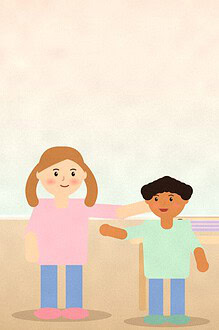
Ask the group to line up by height, by birthday month, by number of pets or by shoe size. They have to work out how without your help. Choose features everybody is comfortable talking about. Avoid weight, and think before using hair or other features some children are sensitive about. For ideas about measuring with your hands and feet, see starting measuring with what you have.
5. Find your herd
Time: 10 minutes. You need: four or more people.
Whisper an animal in each ear: cow or duck, frog or dog, cat or bat. Players move around making only that animal’s sound until they find everyone who sounds like them. Words are not allowed. If the group is large, add more animal pairs. It is a noisy game that works well for birthday parties.
6. The guided search
Time: 10 minutes. You need: a small circle of at least four, soft ground and an adult nearby.
One player keeps their eyes closed (no blindfold needed) and tries to find a second player, who walks slowly around inside the circle. Everyone in the circle holds their hands up like a gentle wall and calls out clues: “left,” “closer,” “stop.” If the seeker drifts towards the edge, hands guide them back. Keep the circle small and skip the game for children who find having their eyes closed uncomfortable. Anyone can open their eyes at any time.
Talk after the game
Ask what part of the plan worked, and who had the best idea. Praise that notices effort goes a long way here.