Age guide: 3 to 9 years. Keep the barriers low and the space clear.
A bedroom floor can become a river, a forest or a mountain pass in about a minute. These games turn problem-solving into something your child can walk, jump and talk through. They suit one child or a whole group, and none of them is a race.
Set up safely
Clear the space of sharp furniture corners. Play on a rug or carpet, or outside on grass or dry paving. Smooth floors and bare feet are a slipping risk with paper “stepping stones”, so use shoes with grip or skip that game on slippery floors.
1. What is the problem?
Time: 10 minutes. You need: cushions, a rolled towel, a length of string, a cardboard box.
Lay a few barriers between point A and point B: a “puddle” of string, a “log” of rolled towel, a “boulder” of cushions. Ask your child to stand at A and tell you what the problem is, before anyone tries to solve it. “I can’t get to the other side because there is a river in the way.”
Naming the problem is the whole game. If they leap straight to a solution, that is fine. Just ask afterwards, “What was in the way?” Later you can talk about clues that a problem is on its way, like a noise or a closed door.
2. Plan your route, then go
Time: 10 to 15 minutes. You need: skipping ropes, hoops, sticks or cushions to scatter as puddles and rivers.
Tell your child it is a forest and the objects on the floor are water. The aim is to cross without stepping in. Add a twist: “This time, jump over exactly two of them.” Ask them to plan the route in their head before they move, and see whether they count correctly as they go.
Change the instructions each time: go over three, go round the long way, go under the string, keep near the wall. Each time, ask what they decided and why. It is not a race, so no one has to hurry.
3. Paper stepping stones
Time: 10 to 15 minutes. You need: five or six sheets of paper per team, tape to mark the banks.
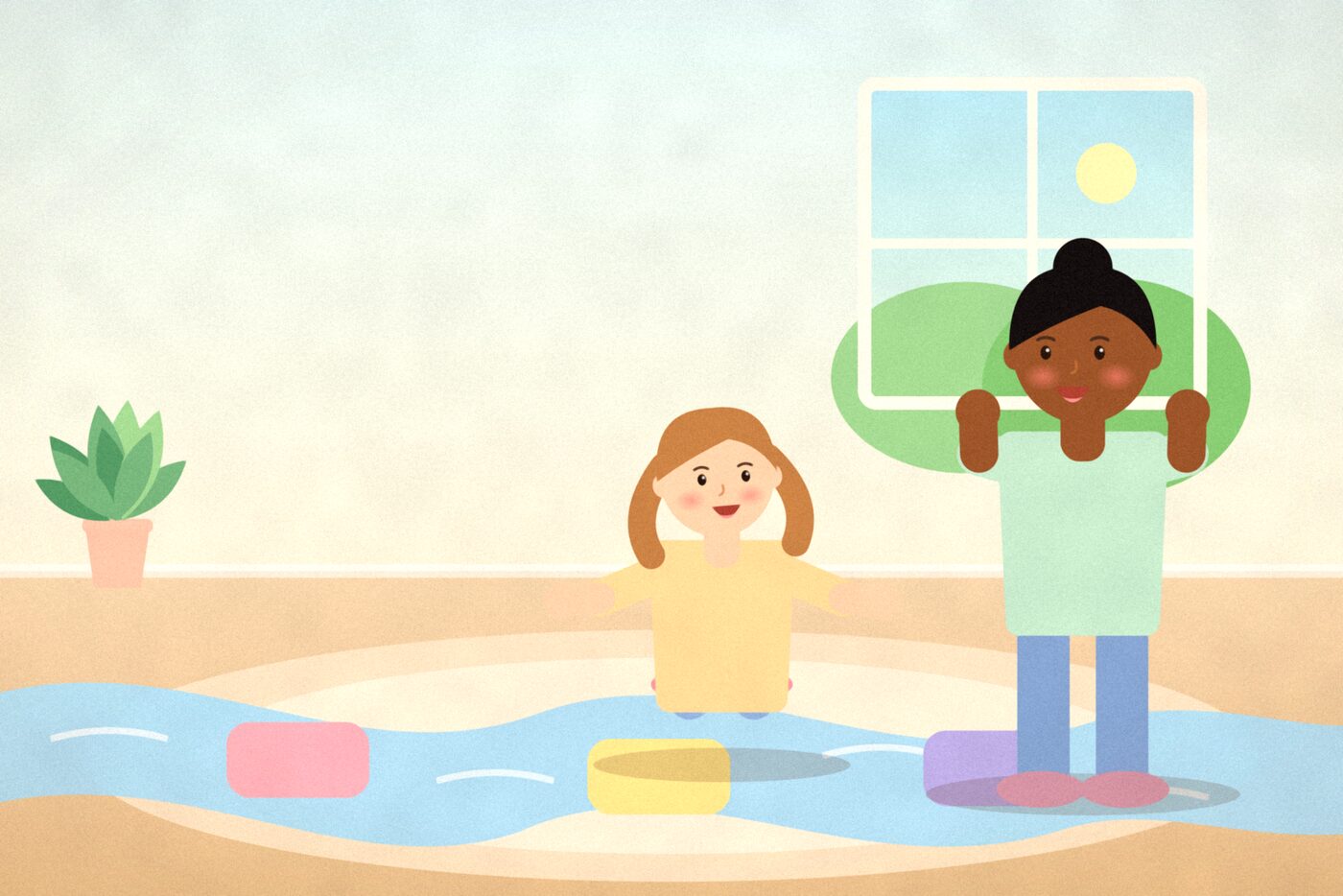
Mark two lines about three metres apart. Each team of three or four gets a stack of paper stepping stones and must get everyone across the “river” without touching the floor. Let the team make a plan first, then carry it out.
To make it harder, give a team one fewer sheet than people, or say that a sheet left alone for ten seconds floats away. Paper slides easily, so this works best on carpet or outdoors, and each child should hold a hand if they feel wobbly.
4. Talk about the plan
When the game is done, ask: “Did your plan work?” and “What would you change?” Some children enjoy drawing the route afterwards. If a plan fell apart, say so lightly: “That was a good try. What would you try next?” Our guide to what to do when the bridge falls has more ideas.