“Put those there, then do the other bit like we said.” The speaker may see the whole plan; everybody else sees fragments. Giving directions is a demanding leadership skill because it requires a child to organise their own thinking, predict what someone else knows and notice whether the message worked.
Begin with the destination
Before listing steps, your child can say what the group is making or changing: “We are setting up three game stations so each has a sign, the materials and space to move.” A clear goal helps teammates make sensible choices if they forget one detail.
Use the CLEAR pattern
- Context: What are we doing and why?
- Limit: What rule, deadline or safety boundary matters?
- Example: Show one finished part or demonstrate the first step.
- Action: Give one to three steps in order.
- Review: Ask what the person will do first and invite questions.
A child might say, “We’re making name cards before guests arrive. Keep drinks away from the markers. Here is one completed card. Fold the paper, write the name in large letters, then place it by the plate. What will you start with?”
“Tell me what I said” can sound like a test. “I want to check that I explained it clearly—what are you going to do first?” puts responsibility back on the speaker.
Match the message to the listener
A younger child may need one step, a gesture and a visible example. An older child may prefer a short written checklist rather than repeated reminders. Someone who processes language slowly needs a pause. A bilingual child may understand the task better through demonstration or a familiar language. Clear communication is not making everybody use the same channel.
Cut words before adding volume
When directions fail, children often say the same sentence louder. Coach them to stop, shorten and show. Remove commentary such as “You never listen” or “It’s obvious.” Identify the exact missing information: which box, how many, by when, or who is responsible.
If several people have separate jobs, use names only to clarify ownership, not to command: “Ari is checking pieces; Mo is setting the timer.” Ask each person to confirm or correct the assignment.
Leave room for intelligent questions
Teach the leader to welcome “Why?”, “Can you show me?” and “What if…?” A question may reveal a flaw in the plan. Your child can answer, “Good catch—I didn’t explain where finished cards go.” If the leader does not know, “Let’s check” is more trustworthy than inventing an answer.
Try a no-blame practice game
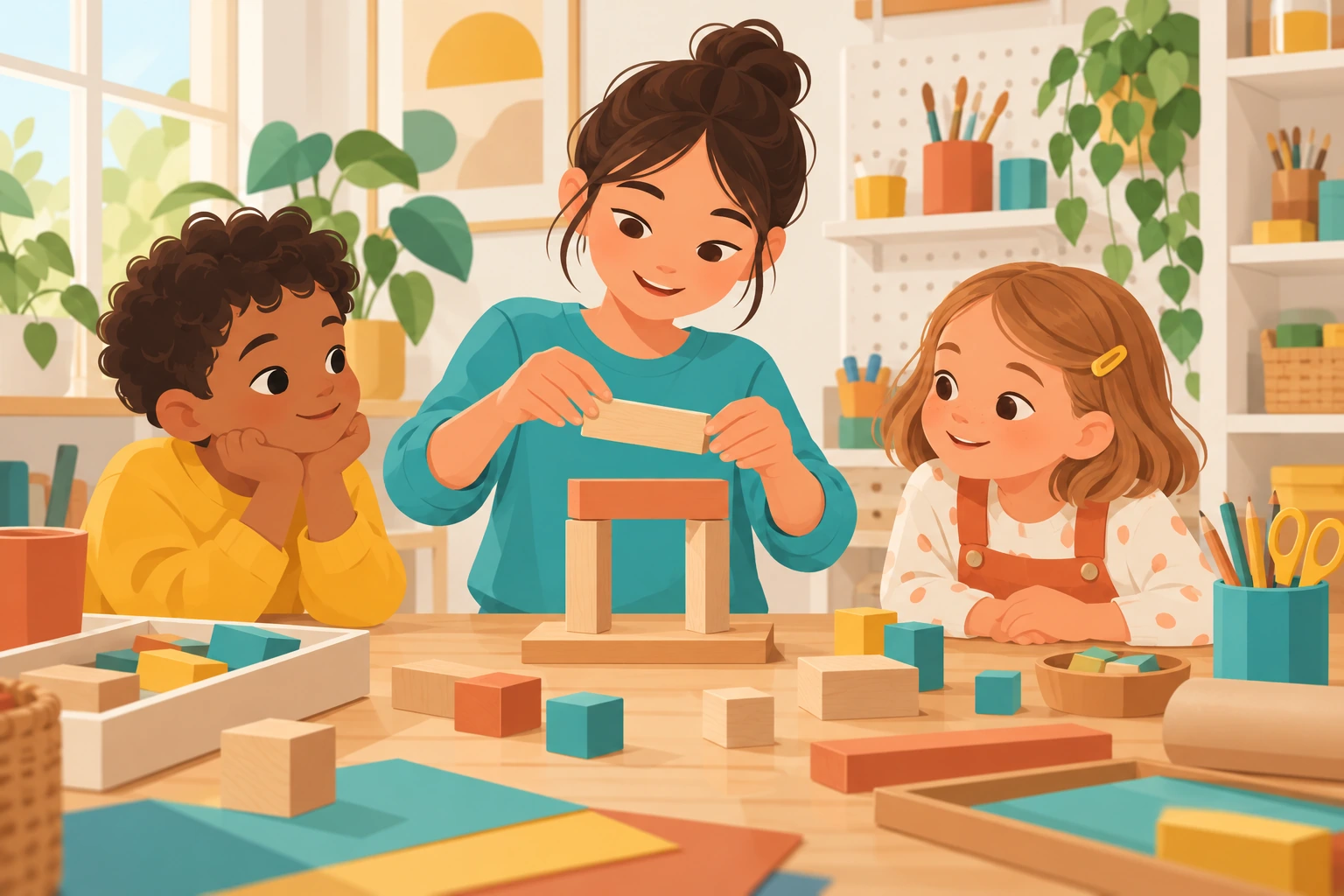
Place a simple model made from blocks behind a screen. One child describes how to recreate it without touching the builder’s pieces. The listener may ask questions. Compare the models, then discuss which words, sequence or demonstration would have helped. Swap roles. The mismatch is information about the directions, not evidence that someone failed.
For ages 6–9, keep directions to one or two visible actions. Ages 10–12 can plan a sequence and identify a safety boundary. Teens can brief a team, confirm roles and update instructions when conditions change. Children with motor, hearing, vision or communication differences should help decide what format is accessible.
Know when an adult must lead
Children can direct play, simple projects and familiar routines. Adults remain responsible for medical instructions, road and water safety, tools, food allergies, money and supervision. Do not ask a child leader to enforce a rule adults should hold.
Extend the practice with asking for clarification, leading without bossing and giving useful feedback.