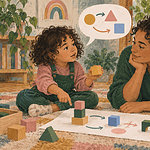
Many everyday mistakes happen before the thinking begins. A child sees “Tickets from $10” and assumes every ticket costs $10. They hear that a classmate missed school and invent a reason. They start a word problem without noticing that a needed quantity is absent. The useful habit is not “always find the answer.” It is recognizing when the available information cannot support one yet.
Problem-solving guidance from the US Institute of Education Sciences encourages learners to identify what information is given, what the problem asks and which information is relevant. Media-literacy guidance similarly treats critical engagement with information as a combination of skills and judgment. A simple home routine can bring those ideas into ordinary decisions.
Draw three boxes: known, assumed, needed
Take a small question and sort statements into:
- Known: information directly observed or stated by a reliable source in this situation.
- Assumed: an idea we are treating as true without enough evidence yet.
- Needed: information that would materially help answer the question or make the decision.
Example: “Can we go to the pool tomorrow?” Known: the pool usually opens on Thursdays. Assumed: tomorrow’s hours are unchanged and there is transport. Needed: current opening hours, weather if it is outdoors, cost and whether an adult is available.
The goal is not to fill the “needed” box with every imaginable detail. Ask which missing fact could actually change the decision.
Practise with deliberately incomplete examples
Offer a playful prompt: “A bag costs less than the other bag. Which should we buy?” A child may say the cheaper one. Ask, “What do we still need to know?” Size, durability, purpose and the actual prices may matter.
Try a story: “Mina did not reply to a message. Why?” Generate several possible explanations—busy, device off, upset, did not see it—then label all as possibilities, not facts. Ask what respectful action works without knowing the reason, such as waiting or sending one clear follow-up.
For younger children, use mystery pictures with part covered. For older children, examine a headline, product offer, graph or social post and ask what context is missing.
Listen for clue words
Words such as “from,” “up to,” “may,” “some,” “average,” “people say” and “experts” can signal a question. “Up to 50% off” does not say most items have that discount. “Experts recommend” does not identify the experts, evidence or recommendation. A cropped graph may omit the scale or time period.
Do not teach clue words as proof of deception. They are prompts to slow down and ask for context.
Distinguish missing from irrelevant
Children can also become stuck by collecting too much information. Return to the goal: “What are we trying to decide?” If choosing whether a book suits a ten-year-old, reading level and themes may matter; the colour of the author’s website probably does not.
A quick test is: “If this fact changed, could our answer change?” If not, it may be interesting but not necessary. Some problems include extra details on purpose, so learners need to identify both missing and irrelevant information.
Choose the next action
Once a needed fact is named, decide how to find it: reread instructions, check the original source, ask a precise question, measure, compare another source or run a small test. If the information cannot be found, state the uncertainty: “With what we know, A seems more likely, but we cannot be certain.”
That sentence is not weakness. It matches the conclusion to the evidence.
Model uncertainty without paralysis
Adults make reasonable decisions with incomplete information every day. Say what is missing and how you are managing it: “We do not know exactly how long the journey will take, so we are leaving extra time.” Show that uncertainty can lead to a precaution, a reversible trial or a decision to wait.
For high-stakes health, safety, legal or financial questions, do not make a child responsible for gathering enough information. Involve an appropriate adult or qualified professional.
Make the routine portable
Use the same three prompts across homework, online content and family plans: What do we know? What are we assuming? What do we still need? Repetition turns a strategy into a habit more effectively than one long lesson.
Next, show your child how to check an online claim before sharing, or practise everyday questions that slow down quick conclusions.