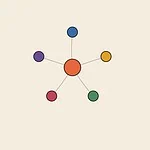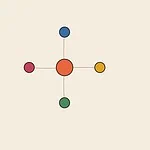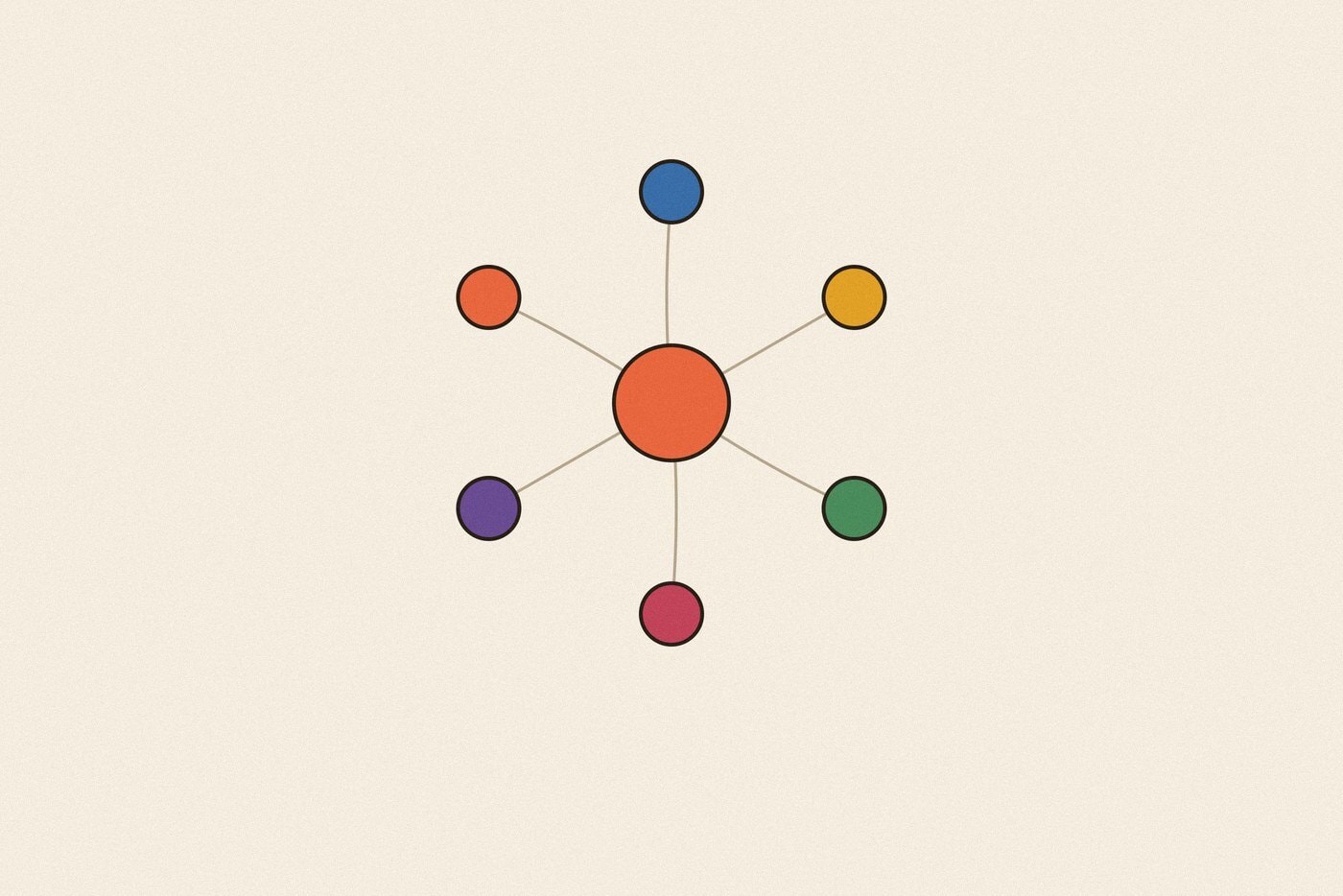
Write a topic in the centre of a page, circle it, and let ideas branch outward in every direction, rather than marching down the page in a straight list. Mind Mapping gives a child a genuinely different, often far more natural way to organise their own thinking.
Why this helps
Many children find a traditional, linear list genuinely harder to work with than their actual thoughts tend to flow, since real thinking tends to branch and connect in ways a straight list can’t easily capture. A mind map lets ideas spread outward exactly as they occur to a child, connected to whatever sparked them, which often produces richer thinking and makes the information considerably easier to recall later.
What you need
A large sheet of paper, a few taped together works well for bigger topics. Coloured pens or markers.
How to play
Write the central topic in the middle of the page and draw a circle around it. Branch outward with lines to the major components or categories related to that topic, like spokes on a wheel, writing one short word or phrase on each line.
As each branch develops further detail, add smaller branches off the main lines to capture that detail, continuing to build outward in whatever direction the thinking naturally goes. Adding small drawings or symbols next to a branch, alongside the words, often helps a child remember it even better, since some children think more easily in pictures than in words alone.
When this works especially well
Mind mapping is particularly useful for planning a project, organising ideas before writing something longer, or simply working through a topic that feels overwhelming as a single block, breaking it into branches tends to make it feel considerably more manageable. It also works well as a family activity, with everyone contributing branches to a shared topic on one large page.
Why a non-linear format helps so many children
A traditional list demands that ideas be put in order immediately, which can interrupt the natural flow of thinking before it’s fully developed. A mind map removes that requirement entirely, ideas can be added wherever they naturally connect, with organisation happening gradually and visually rather than being forced from the very first word. For a child who finds a blank, lined page intimidating, a mind map’s open, branching structure is often a far more natural, more inviting way to start.
A page that starts with a single circled word and grows outward into a web of connected ideas gives a child a genuinely different way to think, one that often captures how their mind actually works considerably better than a straight list ever could.