Write an idea on a small card, pass it to the person next to you, and let them add to it or spin it into something new before passing it on again. Idea Cards keeps creative thinking moving around a table, with everyone building on everyone else’s contributions rather than just their own.
Why this helps
A brainstorm where everyone works entirely in their own head tends to stay limited to each individual’s own thinking. Passing physical cards around, and genuinely building on whatever’s already written rather than starting fresh each time, produces ideas that no single person in the family would likely have reached entirely on their own.
What you need
Small cards or sticky notes, several per person. Pens.
How to play
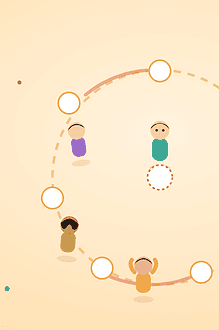
Pose a genuine question or problem for the family to think about together. Each person writes one idea on a card and places it in front of the person next to them, rather than keeping it for themselves.
Each person, when they receive a card, reads what’s there and adds a new idea inspired by it, either building directly on it or taking it in a related but different direction, then passes their own newly written card on to the next person. Keep the cards circulating for several rounds.
Variations
For a smaller family, use a shared pile in the centre of the table instead of passing hand to hand: everyone writes ideas on cards and places them face up in the middle, and anyone can pick up any card at any point for inspiration, adding a new idea of their own to a fresh card.
Why building on someone else’s idea beats only generating your own
Left entirely to their own thinking, most people tend to circle back to familiar, comfortable ideas. Being handed someone else’s half-formed idea and asked to build on it specifically pushes a different kind of thinking, extending, combining, or reacting to something that wasn’t your own starting point, which tends to produce genuinely more varied and surprising results than everyone brainstorming in isolation.
A stack of small cards, passed and built upon around the table, turns an ordinary family brainstorm into something closer to a genuine collaboration, with every idea becoming raw material for the next person’s thinking, rather than staying locked inside one person’s head.