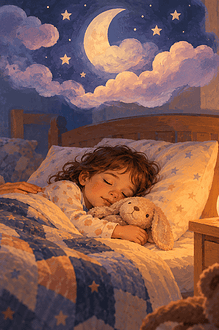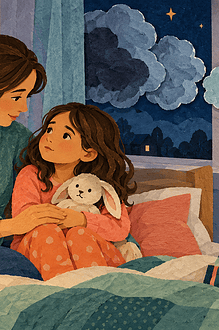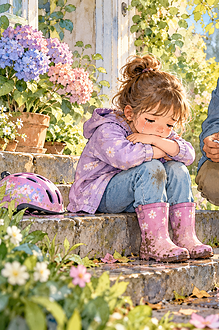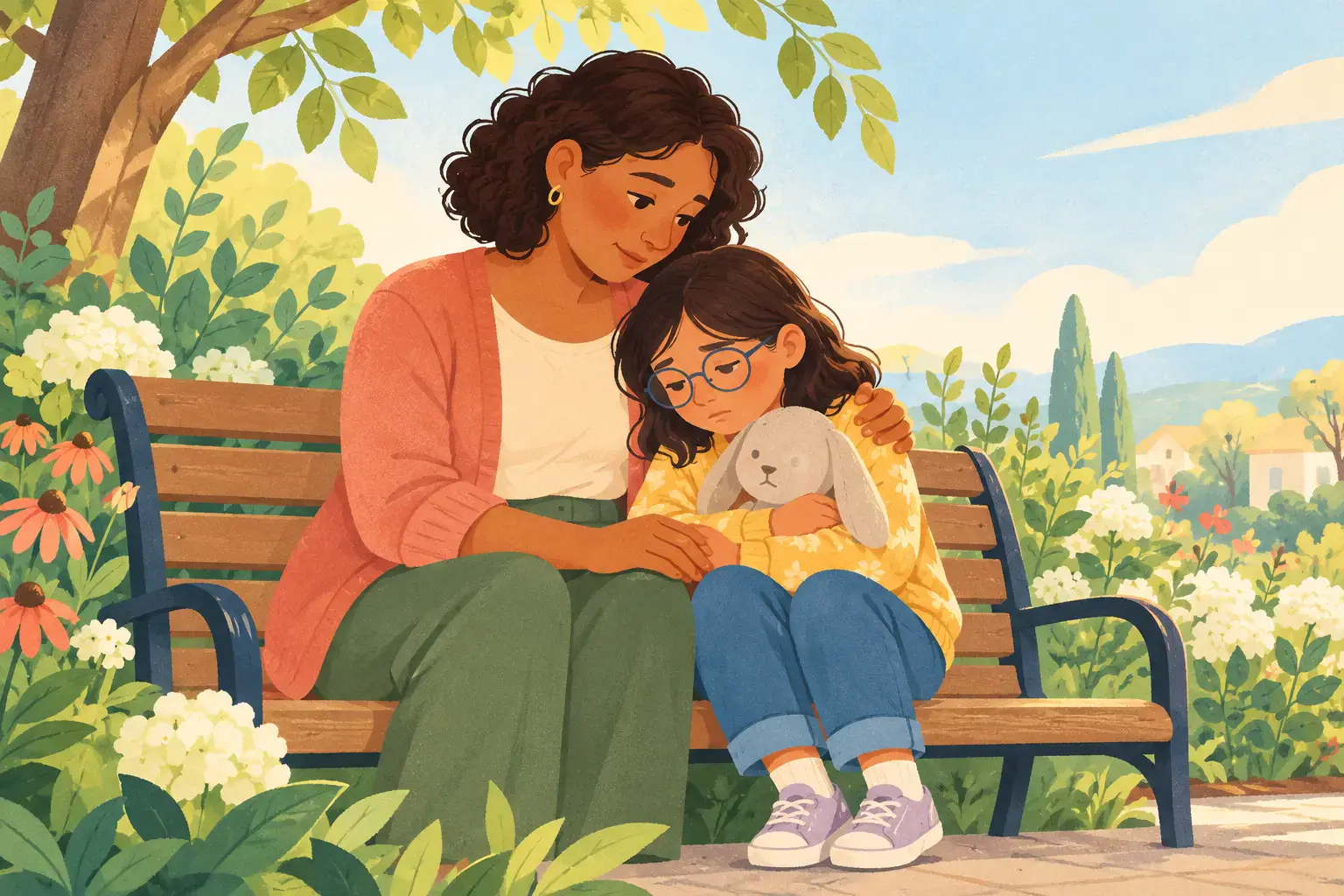
A child may ask a question about someone who died and then go back to a game. Later, the sadness returns at bedtime. Grief can move in and out of an ordinary day. There is no single way a child has to look or behave to show that someone mattered.
When trauma makes grieving harder
Childhood traumatic grief involves trauma reactions connected to a death that interfere with grieving. Even a happy memory can bring back frightening thoughts about how the person died. A qualified professional can assess what is happening; quietness or tears alone do not establish a diagnosis.
Nightmares, distressing memories, avoidance, sleep problems or difficulties concentrating may need attention, especially when they disrupt school, relationships or daily life. Seek advice if you are unsure how your child is coping.
Offer a choice of ways to be together
- Invite conversation without demanding it. Try, “We can talk about them now, or I can just stay beside you.”
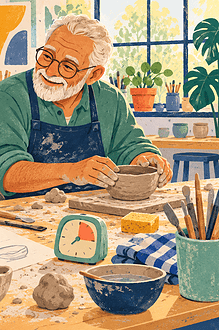
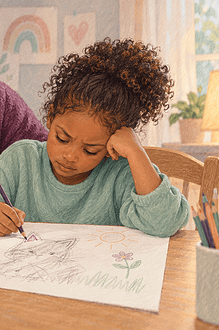
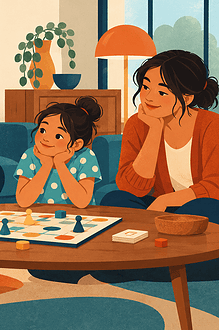
- Make room for drawing, play, music or sitting quietly. A child does not need to produce a memory or explain a feeling on request.
- Answer questions honestly in language they understand. If you do not know an answer, say so rather than making a promise you cannot keep.
- Ask before offering physical comfort. Some children want closeness; others want space with a trusted person nearby.
Make one part of today easier
Choose an ordinary task you can support: packing the school bag together, preparing a familiar meal or agreeing who will be nearby at bedtime. Ask which part feels difficult instead of assuming. You might offer two options: “Would you like me to walk in with you, or wait by the gate?”
With your child’s involvement where appropriate, tell a trusted school contact what support would help. Agree how to handle questions from classmates and who the child can go to during a difficult moment. Protect their privacy; they should not have to retell the death to everyone.
Get support for both of you
A paediatrician or mental health professional experienced in childhood trauma and bereavement can help you find appropriate care. You do not need to wait for a crisis or try to decide by yourself whether the grief is “normal”. Treatment and support can help; avoid predictions of permanent damage.
If your child talks about wanting to die, has harmed themselves or cannot stay safe, seek urgent local emergency care and stay with them. Take any immediate safety concern seriously.
Your own grief deserves support too. Ask another trusted adult for a specific piece of help, such as a school pickup or a meal, so you have space to rest and seek care.