
“Just one more run” makes sense in a game where a fresh attempt is always waiting. If your child enjoys Subway Surfers, it helps to look at the actual experience together before deciding how it fits into family life.
What the game involves
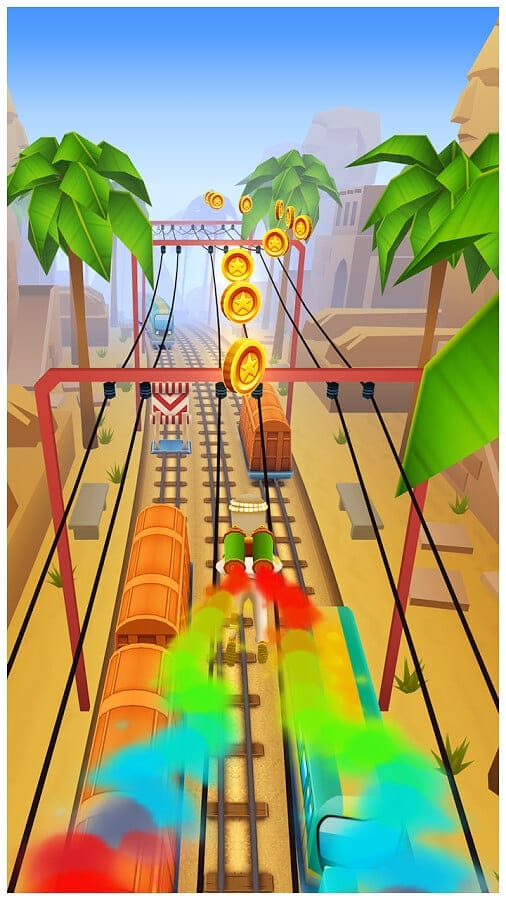
Subway Surfers is a fast-moving endless-runner game from SYBO. Players dodge obstacles, collect items and try to keep a run going. Its railway setting is fantasy; explain clearly that real tracks, trains and stations are never places to imitate the game.
The current App Store listing includes in-app purchases and advertising-related privacy information. Check the listing for your region, the installed version and your child’s device. An age rating is useful information, rather than a personalised decision about suitability.
Five things to check together
- The pace. Watch a short session. Is your child enjoying the challenge, or becoming distressed by repeated losses or pressure to continue?
- Purchases. Require adult authorisation for spending. Explain the difference between coins earned in play and payments using real money.
- Advertising. Notice what is shown and what happens when an offer is tapped. Your child can ask you before following a link or accepting an offer.
- Privacy. Enter age information accurately. Review permissions, account connections and any public display name. Avoid identifying school, location or contact details in a username.
- The ending. Agree a time window and what will happen afterwards. A run-based game may not offer a natural final level, so give a short reminder before the agreed finish.
If switching off becomes difficult
Talk outside the middle of play. Ask which part makes stopping hard: losing progress, wanting a reward or being close to a record. Choose a predictable finish and an ordinary next activity together. If the plan repeatedly fails, reduce the friction or pause access while you work out a better one.
Look at the whole day, including sleep, school, movement, relationships and other interests. One argument over a game does not establish an addiction. Seek qualified advice if gaming is persistently disrupting daily life or causing serious distress.
Keep the claims modest
It can be entertainment without being an educational programme. There is no need to claim that the game teaches morality, guarantees better reflexes or provides a necessary introduction to technology. The relevant decision is whether this particular game, with its settings and boundaries, works for your child.