Families are often presented with communication approaches as competing camps. In daily life, many deaf and hard-of-hearing children use more than one language or tool: a signed language, spoken language, writing, gesture, pictures, AAC, captions and hearing technology. The central question is not “Which method wins?” It is “Does this child have dependable access to rich language, relationships and learning throughout the day?”
Learn what the options actually are
Natural signed languages are full languages with their own grammar; they are not simply spoken words acted out. Spoken-language approaches build listening and speech access, often with hearing aids or cochlear implants when appropriate. Some families use a bilingual or bimodal approach, supporting a signed language alongside a spoken/written language. Cued speech or other visual systems may make elements of spoken language visible. AAC can provide pictures, symbols, text or voice output for children who need additional ways to express themselves.
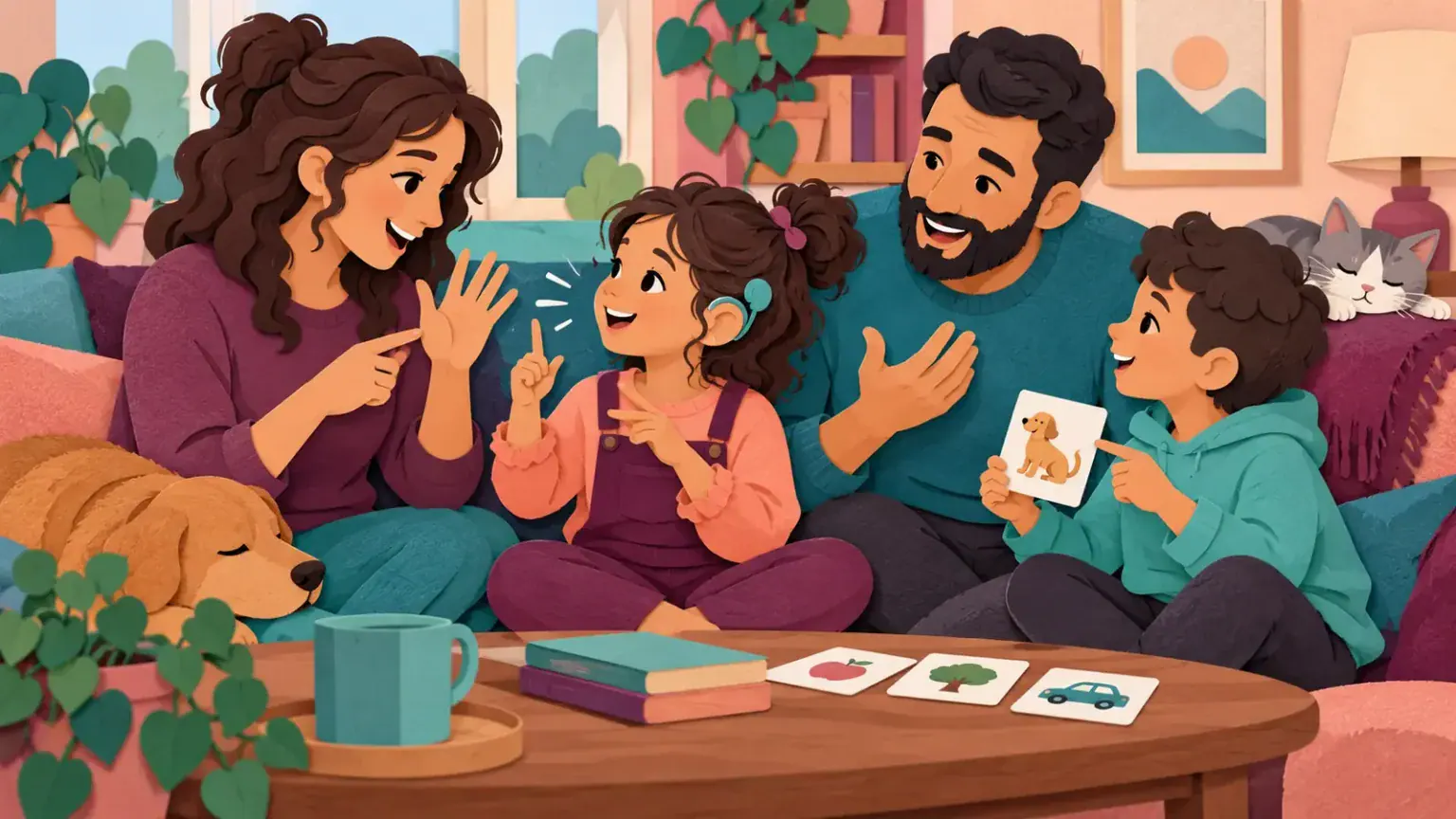
These tools are not necessarily exclusive. A child may sign at home, use speech with some relatives, read captions, type to a friend and use AAC for complex messages. The mix can change with fatigue, noise, device access, language development and personal identity.
Prioritize accessible language now
Do not wait for a device, therapy outcome or perfect diagnosis before surrounding a child with meaningful communication. Respond to facial expression, gaze, gesture, sign, sound and AAC as communication. Share stories, jokes, routines and explanations—not only labels and requests. If adults are learning a signed language, seek fluent models and deaf adults as well as classes. A few household signs are useful, but they do not replace a complete language environment.
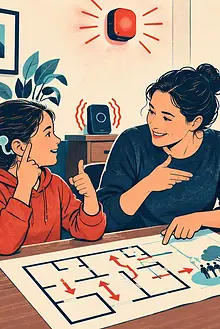
Hearing technology can improve access to sound but does not create effortless listening in every setting. Background noise, distance, device downtime and individual hearing profiles matter. Keep a visual or text-based route available. No child should lose their only way to understand because a battery failed.
Ask balanced questions of professionals
- How will this approach provide full language access today, not only after months of progress?
- How will we measure receptive and expressive language in all the child’s languages and modalities?
- Can we meet families and deaf or hard-of-hearing adults with varied experiences?
- What support is available for our home language and culture?
- What happens when technology is unavailable or the child is tired?
- How will nursery or school communicate directly with the child?
A professional should explain benefits, limits and uncertainties without shaming families. Device candidacy and programming belong with a pediatric audiology team; language and educational planning should include people qualified in the child’s modalities.
Observe access across the day
Notice whether the child understands conversation at meals, from the back seat, on the playground and in a group—not only one-to-one in a quiet room. Watch for guessing, copying peers, delayed responses, withdrawal or exhaustion. Ask older children directly which modes work best in each setting.
Keep a short access diary for two weeks: setting, communication mode, what the child understood, what they expressed and what barrier appeared. Use this to change the environment, not to grade the child. Captions, better lighting, reduced distance, a remote microphone, an interpreter or a quieter group may matter more than asking the child to “listen harder.”
Support the whole family
Choose realistic ways for siblings, grandparents and caregivers to learn. Practise during enjoyable routines rather than turning every interaction into therapy. Make sure the child can communicate privately and spontaneously with several people, not only through one parent who interprets everything.
For children who use AAC as part of their communication, our article AAC Beyond a Diagnosis explains how to model messages without pressure. If speech development is the first concern that led you here, Could hearing be affecting your child’s speech? covers signs and next steps.
Revisit without framing change as failure
A child’s needs and preferences can evolve. Review language growth, school access, friendships, identity and fatigue at least yearly and after major changes. Adding a signed language, captions or AAC does not mean spoken-language work failed. Choosing to use a device sometimes and not others is not automatically rejection. Listen to the child’s experience.
Good communication planning creates more routes, more partners and more belonging. The outcome to protect is not performance in one modality; it is a child who can understand, express, learn, connect and say what they want in the places that make up their life.